HomeEverythingEducationTV
Equities & FundsCrypto & Digital AssetsAI & TechnologyBusiness & CorporateUS Politics & PolicyGeopolitics & Global RiskMacro, Rates & FXCommodities & EnergyEuropean Politics & MarketsAsia-PacificReal Estate & Property
Story archiveAll categories
← All Stories

China achieves reusable orbital rocket capability, rivaling US

Created at 13 Jul · 9:06 AM1 source↑ Market-relevant
IN SHORT

China successfully recovered the first stage of a Long March-10B rocket after an orbital launch test, marking a significant breakthrough in reusable rocket technology. This achievement positions China to compete with US firms like SpaceX in lowering launch costs and expanding space access.

✉Newsletter

PiQ Daily

Pick your topics. Get only what matters, on your cadence.

Key Numbers

6 minutestime after separation for booster return

Who's Involved

China Aerospace Science and Technology Corporation
Rocket-maker that achieved reusable rocket breakthrough
SpaceX
US firm with established reusable rocket technology
Blue Origin
US competitor that has also recovered and reused rocket boosters
China achieves reusable orbital rocket capability, rivaling US

↳ Why This Matters

China's successful development of reusable orbital rocket technology significantly lowers the barrier to space access, potentially enabling cheaper satellite deployments and increasing competition in the global space market, which has implications for both commercial and military applications.

Key facts

  • China successfully recovered the first stage of a Long March-10B rocket after an orbital launch test.
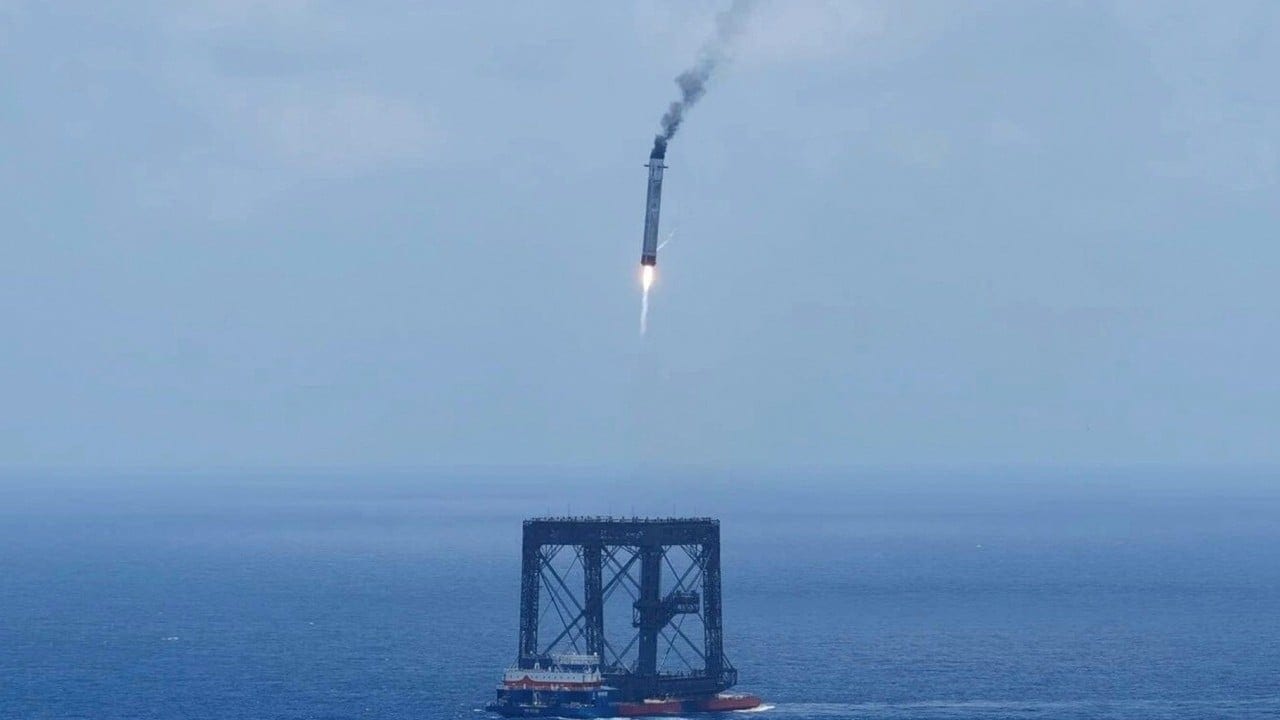
  • The recovery utilized a novel technique involving engines positioning the stage over a floating platform.
  • This achievement makes China the second country, following the United States, to possess reusable orbital rocket capability.
  • The successful test is expected to significantly lower China's space launch costs.
  • The Long March-10B rocket also successfully deployed a satellite into orbit.

China has successfully recovered the first stage of a Long March-10B rocket during an orbital launch test, a significant breakthrough that positions the country to compete with the United States in reusable rocket technology. The launch and recovery occurred on Friday, with the booster stage being captured at sea by a floating platform.

This achievement marks China as the second nation, after the US, to develop controlled recovery of reusable orbital rocket stages. The technique employed differs from SpaceX's method of using hydraulic legs, instead utilizing the rocket's engines to position itself over the recovery vessel. State media reported the success as a historic breakthrough that will accelerate China's space access capabilities and help it establish itself as a strong aerospace nation.

The reusable rocket technology is considered crucial for reducing the cost and turnaround time of space launches, offering strategic advantages in space exploration, satellite infrastructure development, and potentially military applications. While China's national security rules may limit direct competition with US and European launch providers, reusable rockets could enable its satellite communications networks and data centers to compete with offerings like SpaceX's Starlink, particularly in global markets.

This development follows several recent failed tests by various Chinese companies in the crowded space sector, highlighting the race to achieve reusable launch milestones. Elon Musk's SpaceX has been a leader in this field for nearly a decade, underpinning its Starlink network and work for NASA and the U.S. Space Force. Other US companies like Blue Origin and Rocket Lab are also developing reusable rocket technology.

Frequently asked questions

It makes China the second country after the US to achieve controlled recovery of a reusable orbital rocket stage, which is crucial for lowering launch costs and increasing space access.

Instead of using hydraulic landing legs like SpaceX, China's method uses the rocket's engines to position itself over a floating platform for capture.

It is a new series of rockets designed by China Aerospace Science and Technology Corporation (CASC) and is critical for China's space ambitions, including potential crewed moon missions.

What Happens Next

01CASC will attempt to reuse the booster by the end of the year.

Get the newsletter.

Pick the topics you actually care about. We'll email when there's news worth your time, on the cadence you choose. Cancel any time from your account.

Cadence

How It Developed

China successfully launched a Long March-10B rocket on Friday.
The rocket's first stage was recovered at sea using a novel technique.
This marks China as the second country, after the US, to achieve controlled recovery of a reusable orbital rocket stage.
The successful test is seen as a major breakthrough for China's reusable rocket technology.
China aims to establish itself as a strong aerospace nation with this capability.
Reusable rockets are key to lowering launch costs and increasing space access.

Sources

T1
China joins US in reusable orbital rocket capabilitySouth China Morning Post
T2
China is catching up to Elon Musk's reusable rockets | TechCrunchtechcrunch.com
T2
China reports reusable rockets breakthrough as it vies to catch up with the US | CNNcnn.com

Related Stories

China aims to challenge SpaceX's launch dominance via IPOs
13 Jul · 8:36 AM
China develops optical chip technology for AI, claims 100x speed increase
13 Jul · 6:06 AM
Hong Kong expands autonomous vehicle testing as Baidu increases trials
13 Jul · 7:15 AM
Tencent Launches AI Assistant 'Xiaowei' on WeChat
13 Jul · 1:06 AM
Indian firms eye Chinese LLMs amid cost concerns
13 Jul · 2:56 AM