HomeEverythingEducationTV
Equities & FundsCrypto & Digital AssetsAI & TechnologyBusiness & CorporateUS Politics & PolicyGeopolitics & Global RiskMacro, Rates & FXCommodities & EnergyEuropean Politics & MarketsAsia-PacificReal Estate & Property
Story archiveAll categories
← All Stories

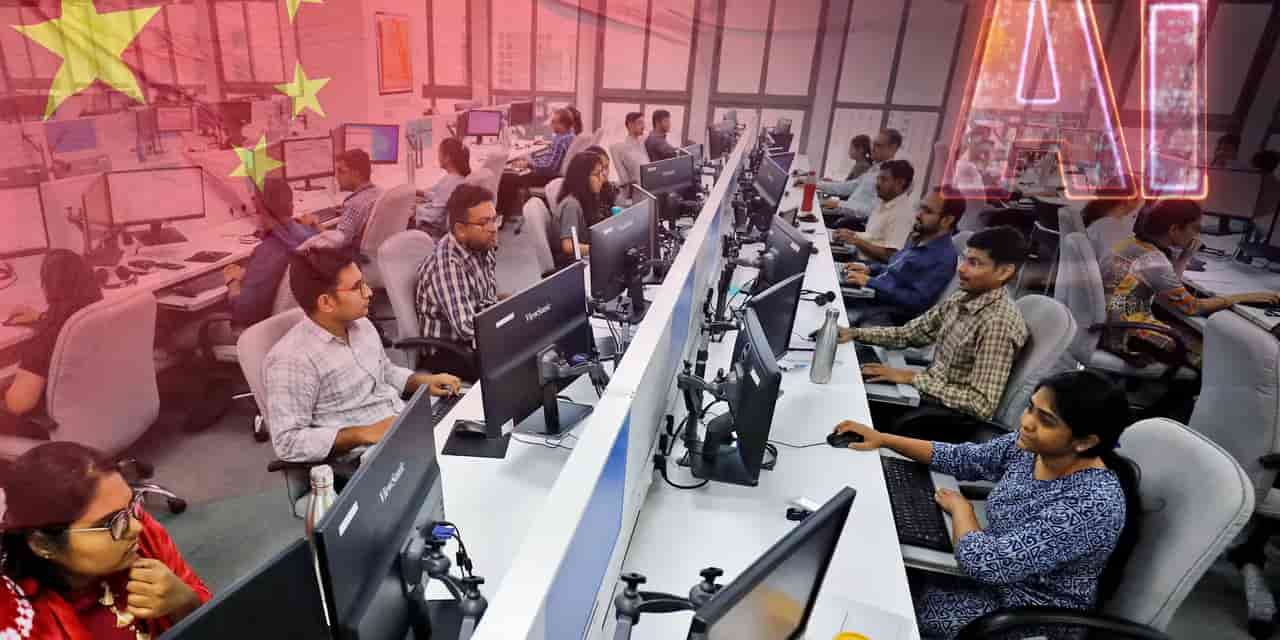
Indian firms eye Chinese LLMs amid cost concerns

Created at 13 Jul · 2:56 AM1 source↑ Market-relevant
IN SHORT

Indian companies are increasingly adopting Chinese large language models (LLMs) from developers like DeepSeek, Alibaba, and Moonshot AI to manage AI expenses. This trend raises concerns about India's AI sovereignty and its ability to foster domestic innovation in the rapidly evolving field.

✉Newsletter

PiQ Daily

Pick your topics. Get only what matters, on your cadence.

Key Numbers

90-95%cost reduction for DeepSeek LLM training and deployment
$6 millionapproximate cost to run DeepSeek's model
one-tenthcost of DeepSeek's model per million tokens vs. OpenAI

Who's Involved

DeepSeek
Chinese AI developer with a low-cost LLM
Alibaba
Chinese tech giant offering LLMs
Moonshot AI
Chinese AI developer
Darshan Hiranandani
CEO of Hiranandani Group and Yotta
Rajeev Chandrasekhar
Former minister of state for electronics and IT
Ganesh Natarajan
Chairman of GTT Data Solutions
Aakrit Vaish
Advisor, IndiaAI
CP Gurnani
Former CEO of Tech Mahindra
Srikanth Velamakanni
Co-founder and group CEO of Fractal
Arvind Thakur
Former CEO, NIIT Technologies
Balaraman Ravindran
Founder and Head of Wadhwani School of Data Science and AI, IIT Madras
Y Kiran Chandra
Centre Head of viswam.ai
Indian firms eye Chinese LLMs amid cost concerns

↳ Why This Matters

The increasing adoption of Chinese LLMs by Indian companies highlights a critical juncture for India's AI ambitions, potentially impacting its technological sovereignty and the growth of its domestic AI industry.

Key facts

  • Indian companies are turning to Chinese LLMs from DeepSeek, Alibaba, and Moonshot AI to cut AI expenses.
  • DeepSeek's LLM is noted for its significantly lower training and deployment costs compared to Western counterparts.
  • The affordability of these models could enable more Indian startups and researchers to engage in AI development.
  • Experts highlight the need for India to develop its own AI ecosystem and secure access to resources like GPUs.
  • Concerns are raised about India's potential over-reliance on foreign technology, particularly from China.

Indian companies are increasingly turning to Chinese large language models (LLMs) from developers like DeepSeek, Alibaba, and Moonshot AI to manage their artificial intelligence expenditures. This trend highlights India's growing reliance on China for advanced technologies, despite ongoing geopolitical tensions.

The emergence of DeepSeek, an LLM developed at a significantly lower cost than its Western counterparts, has prompted discussions about India's AI strategy and the need for greater government support and investment in domestic AI capabilities. Experts suggest that the reduced cost of building and deploying high-quality LLMs, exemplified by DeepSeek, could democratize AI development, making it more accessible to Indian startups and researchers.

However, concerns persist regarding India's AI sovereignty and the potential risks associated with depending on foreign technology. While DeepSeek's models are accessible via APIs and offer substantial cost savings per token compared to providers like OpenAI, questions remain about its fully open-source nature, as the training data has not been made publicly available. This situation serves as a wake-up call for India to accelerate its AI ambitions by fostering a supportive ecosystem, ensuring adequate funding, and cultivating a risk-tolerant mindset among its innovators.

Frequently asked questions

Indian companies are turning to Chinese LLMs primarily due to cost pressures, as models like DeepSeek are significantly cheaper to train and deploy than Western alternatives.

The main concerns revolve around India's AI sovereignty and the potential for over-reliance on foreign technology, particularly from China, which could hinder the development of India's own AI ecosystem.

While DeepSeek's model is released under an MIT license allowing free reuse and modification, it is not considered fully open-source because its training data has not been made publicly accessible.

Models like DeepSeek offer a significant cost reduction, with training and deployment costs estimated to be 90-95% lower than other LLMs, and the cost per token being about one-tenth of OpenAI's charges.

What Happens Next

01India aims to accelerate its AI ambitions through supportive ecosystems and funding.
02Indian AI startups are expected to cause disruptions in the future.

Get the newsletter.

Pick the topics you actually care about. We'll email when there's news worth your time, on the cadence you choose. Cancel any time from your account.

Cadence

How It Developed

Indian companies are increasingly using Chinese LLMs to reduce AI costs.
DeepSeek's LLM, trained at a fraction of Western costs, has gained attention.
Experts debate India's AI strategy and the need for government support.
The affordability of models like DeepSeek could democratize AI development in India.
Concerns exist about India's reliance on foreign AI technology.
DeepSeek's model is available via API and has a significantly lower cost per token than OpenAI.
The MIT license allows free reuse and modification of DeepSeek's model, though training data is not fully public.

Sources

T1
Indian companies look to Chinese LLMs as AI costs biteNikkei Asia
T2
DeepSeek's fast rise sparks debate on Indian AI modelseconomictimes.indiatimes.com
T2
Chinese AI Models Challenge ChatGPT and Claude Dominancetheaicronicle.com
T2
Will DeepSeek's disruptive LLM model ease India's foray into LLMs?thehindubusinessline.com

Related Stories

China Tech Giants Vie to Develop Advanced AI Assistant
13 Jul · 1:06 AM
Meta to produce AI chip in September, aiming to double computing capacity
12 Jul · 6:56 PM
Indian scientists create detailed 3D atlas of human brainstem
13 Jul · 12:21 AM
AI aids humanitarian efforts from space rover tech to hunger mapping
12 Jul · 11:36 AM
Japan trials AI facial recognition to find missing people
13 Jul · 4:06 AM