US, S. Korea, Japan Sign MOU on Small Modular Reactor Deployments | PiQ Markets
2 storiesUS Politics & PolicyWhite House & presidential decisions / executive ordersUS-Europe relations (NATO, trade tariffs)US-China trade war
US, S. Korea, Japan Sign MOU on Small Modular Reactor Deployments
window 24h
IN SHORT
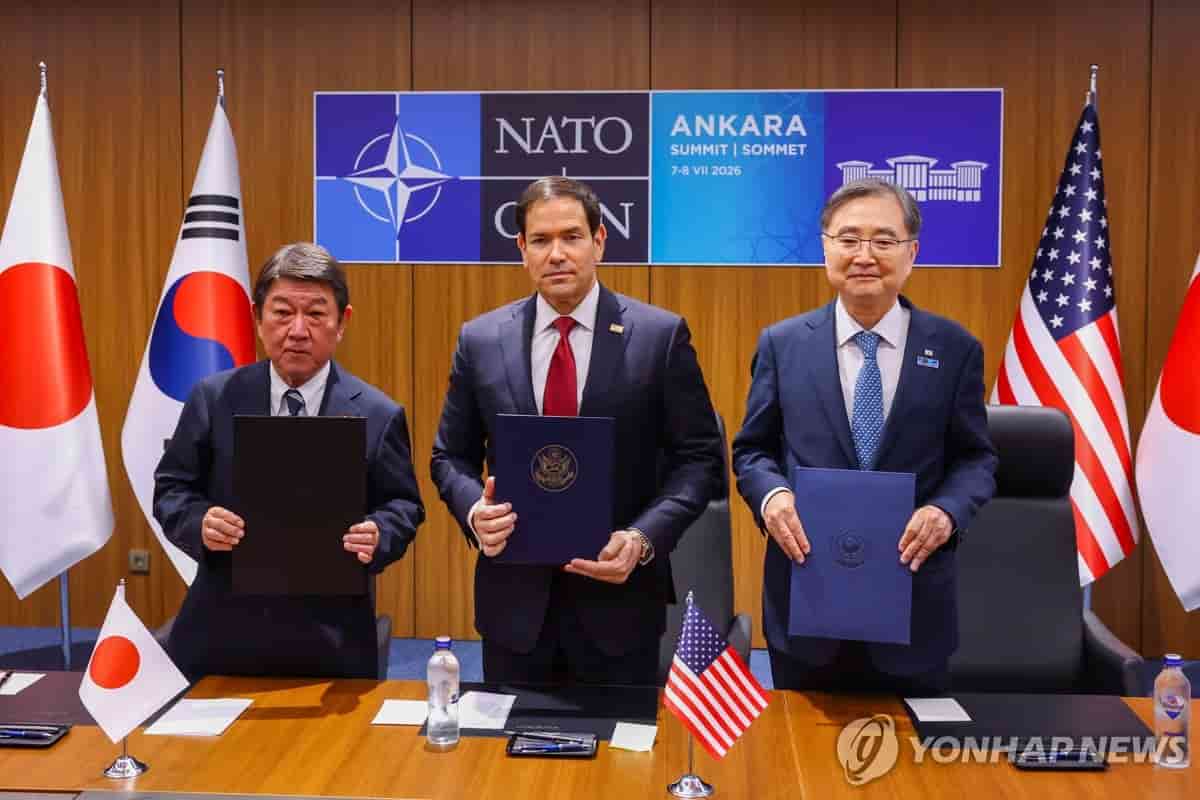
The United States, South Korea, and Japan have signed a memorandum of understanding to cooperate on deploying small modular reactors in third countries, focusing on the Indo-Pacific region. This agreement aims to accelerate the adoption of SMR technology and was signed by diplomats who also reaffirmed their commitment to North Korea's denuclearization. Meanwhile, alumni groups from South Korea's Army, Navy, and Air Force military academies are protesting a government plan to unify these institutions, arguing the integration is being rushed without adequate consideration.
✉Newsletter
PiQ Daily
Pick your topics. Get only what matters, on your cadence.
Who's Involved
South Korea
nation signing MOU on SMRs and planning military academy integration
United States
nation signing MOU on SMRs
Japan
nation signing MOU on SMRs
North Korea
subject of denuclearization commitment
Army military academy alumni
group opposing military academy integration
Navy military academy alumni
group opposing military academy integration
Air Force military academy alumni
group opposing military academy integration
1 / 2
Key facts
The U.S., South Korea, and Japan signed an MOU on small modular reactor deployments.
The cooperation framework aims to accelerate SMR deployment in third countries.
The Indo-Pacific region is a primary focus for SMR deployments.
Diplomats reaffirmed commitment to North Korea's denuclearization.
Alumni groups from South Korean military academies oppose integration.
The government plans to unify the Army, Navy, and Air Force military academies.
Alumni argue the integration is being pushed hastily without sufficient review.
Alumni are calling for the government to halt the integration plan.
South Korea, the United States, and Japan have established a framework for trilateral cooperation aimed at accelerating the deployment of small modular reactors (SMRs) in third countries. The memorandum of understanding (MOU) specifically targets the Indo-Pacific region for these SMR deployments. The signing of this agreement by diplomats from the three nations also included a reaffirmation of their shared commitment to the denuclearization of North Korea.
In a separate development within South Korea, alumni associations representing the nation's Army, Navy, and Air Force military academies are actively opposing a government initiative to integrate these distinct institutions. These alumni groups contend that the proposed unification is being pursued too rapidly, without the necessary thorough review or public debate required for such a significant structural change. They are urging the government to halt the integration plan.
The SMR cooperation agreement signifies a strategic alignment between the U.S., South Korea, and Japan to promote advanced nuclear energy solutions globally, particularly in regions seeking reliable and potentially cleaner energy sources. The focus on third countries suggests an export-oriented strategy for SMR technology developed by these nations. The concurrent mention of North Korea's denuclearization highlights the broader geopolitical context in which this energy cooperation is taking place, indicating a coordinated approach to regional security and economic development.
The opposition to the unification of military academies by their alumni groups points to potential internal debates within South Korea regarding defense structure and institutional identity. The alumni's call for a pause suggests concerns about the operational impact, educational standards, or historical significance of these academies if they are merged.
↳ Why This Matters
South Korea, the United States, and Japan have established a framework for trilateral cooperation aimed at accelerating the deployment of small modular reactors (SMRs) in third countries. The memorandum of understanding (MOU) specifically targets the Indo-Pacific region for these SMR deployments. The signing of this agreement by diplomats from the three nations also included a reaffirmation of their shared commitment to the denuclearization of North Korea.
Frequently asked questions
The MOU aims to establish a framework for trilateral cooperation on accelerating the deployment of small modular reactors in third countries, particularly in the Indo-Pacific region.
The ministers reaffirmed their commitment to the denuclearization of the Korean Peninsula and agreed to continue efforts to maintain peace and stability through dialogue and diplomacy.
They agreed to strengthen practical cooperation in economic security and supply chain resilience, as well as in areas like artificial intelligence and quantum technology.
What Happens Next
01The three foreign ministers agreed to continue meeting and maintaining close communication as frequently as possible.
02They will work to deliver tangible results in various areas of trilateral cooperation.
Get the newsletter.
Pick the topics you actually care about. We'll email when there's news worth your time, on the cadence you choose. Cancel any time from your account.