Trump scales back South Korea drills, allies question US commitment
window 24h
IN SHORT
President Donald Trump has ordered a reduction in joint military drills with South Korea, sparking concerns among allies about U.S. commitment to the region. Trump also voiced frustration over South Korea's investment pledges, linking them to security cooperation. U.S. Forces Korea Commander Gen. Xavier Brunson met with South Korean Defense Minister Ahn Gyu-back following the directive. Despite the order to scale down exercises, the Pentagon stated no changes have been made to ongoing drills, while the State Department reiterated openness to dialogue with North Korea. Separately, Trump commented on receiving great respect from North Korean leader Kim Jong Un.
Who's Involved
Donald Trump
U.S. President ordering reduction in joint military drills
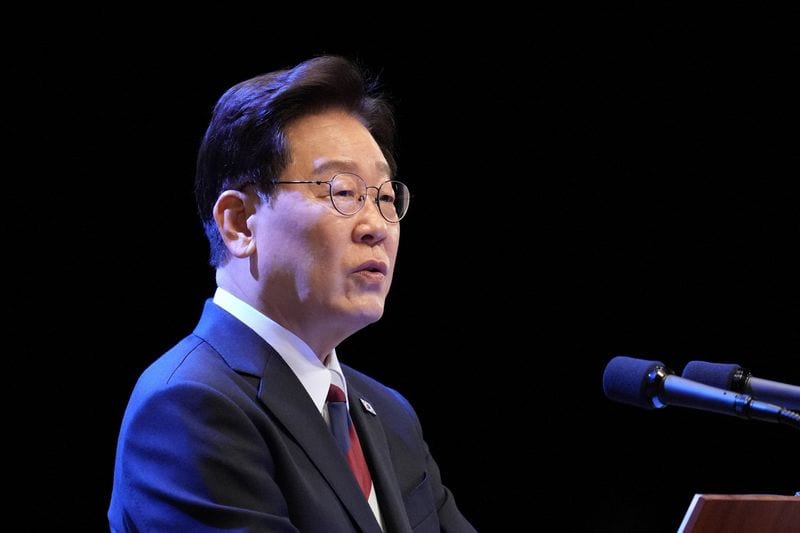
Lee Jae Myung
South Korean President advocating for self-defense and U.S. commitment
Xavier Brunson
U.S. Forces Korea Commander meeting with South Korean defense minister
Ahn Gyu-back
South Korean Defense Minister meeting with U.S. Forces Korea Commander
Pentagon
U.S. Department of Defense stating no changes to ongoing drills
State Department
U.S. Department of State reiterating openness to dialogue with North Korea
Kim Jong Un
North Korean leader described as treating Trump with great respect
1 / 4
Key facts
President Donald Trump ordered a reduction in joint military drills with South Korea.
South Korean President Lee Jae Myung advocates for stronger self-defense and U.S. commitment.
President Trump expressed frustration with South Korea's investment pledges.
U.S. Forces Korea Commander Gen. Xavier Brunson met with South Korean Defense Minister Ahn Gyu-back.
The Pentagon stated there are no changes to ongoing South Korea-U.S. military exercises.
The State Department reiterated the U.S. remains open to dialogue with North Korea without preconditions.
President Donald Trump stated Kim Jong Un treated him with great respect.
Trump believes his approach is making the region safer.
President Donald Trump has ordered a reduction in joint military drills with South Korea, a move that has raised concerns among allies regarding the U.S. commitment to the 70-year-old alliance. South Korean President Lee Jae Myung has advocated for strengthened self-defense capabilities and a steadfast U.S. commitment.
President Trump also expressed frustration with South Korea's slow pace in fulfilling investment pledges, directly linking these pledges to security cooperation and troop commitments. He questioned the value of the joint military exercises and South Korea's responsiveness to his requests for support in Iran. In response to the directive to scale down regular combined military exercises, U.S. Forces Korea Commander Gen. Xavier Brunson met with South Korean Defense Minister Ahn Gyu-back at the defense ministry.
Despite President Trump's order, the Pentagon has stated that there are no changes to the ongoing South Korea-U.S. military exercise. The State Department has reiterated the U.S. position of remaining open to dialogue with North Korea without preconditions. In a separate statement, President Donald Trump remarked that North Korean leader Kim Jong Un has treated him with great respect, asserting that his approach is contributing to regional safety.
These developments highlight ongoing tensions and strategic re-evaluations within the U.S.-South Korea alliance, particularly concerning burden-sharing and the approach to regional security challenges posed by North Korea.
↳ Why This Matters
President Donald Trump has ordered a reduction in joint military drills with South Korea, a move that has raised concerns among allies regarding the U.S. commitment to the 70-year-old alliance. South Korean President Lee Jae Myung has advocated for strengthened self-defense capabilities and a steadfast U.S. commitment.
Frequently asked questions
President Trump has cited his relationship with North Korean leader Kim Jong Un and concerns over cost and provocation as reasons for scaling back the drills.
The alliance has seen shifts from confrontational rhetoric towards North Korea to diplomatic engagement, with periods of suspended joint drills and ongoing negotiations on burden-sharing, trade, and investment.
Key issues include the cost of maintaining U.S. troops, South Korea's contribution to defense spending, trade tariffs, and South Korean investment in U.S. projects.
South Korean President Lee Jae Myung advocates for stronger self-defense, a firm U.S. defense commitment, and has boosted defense spending.
What Happens Next
01Further negotiations on defense cost-sharing are expected.
02South Korea may seek greater latitude in uranium enrichment and spent fuel reprocessing.
03The impact of the reduced drills on North Korea's behavior will be closely watched.