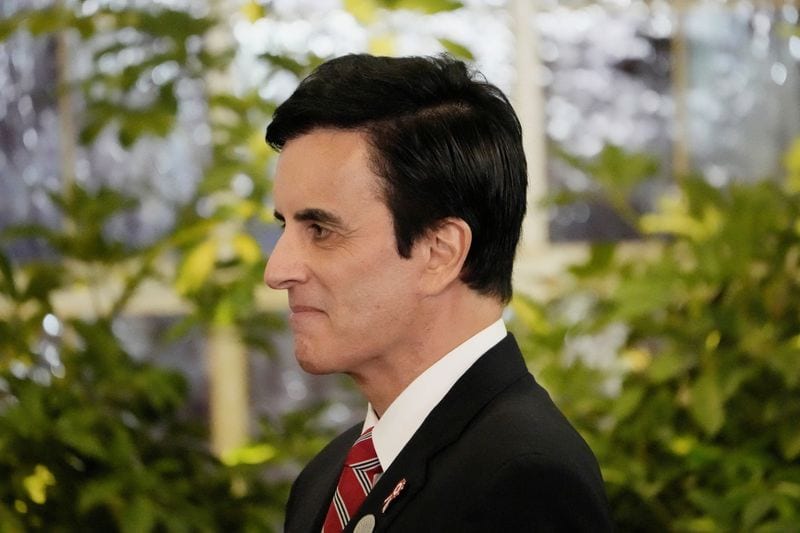
Trump's unofficial Venezuela adviser Mauricio Claver-Carone departs role
window 24h
IN SHORT
Mauricio Claver-Carone, an unofficial adviser who influenced U.S. policy on Venezuela and its oil resources during the Trump administration, has departed his role. Sources indicate his exit was involuntary, though he asserts it was voluntary. Meanwhile, Peru's new Foreign Minister Carlos Espá aims to strengthen ties with the United States, viewing it as a strategic partner. Espá also plans to mend relations with Mexico and Colombia and engage with Venezuela.
✉Newsletter
PiQ Daily
Pick your topics. Get only what matters, on your cadence.
Who's Involved
Mauricio Claver-Carone
unofficial adviser who influenced U.S. policy on Venezuela and its oil resources
Carlos Espá
Peru's new Foreign Minister seeking stronger U.S. ties and regional diplomacy
United States
strategic partner sought by Peru and influential in U.S. policy toward Venezuela
Venezuela
country whose oil resources were influenced by U.S. policy and with which Peru plans to engage
Mexico
country with which Peru plans to restore diplomatic ties
Colombia
country with which Peru plans to restore diplomatic ties
Key facts
Mauricio Claver-Carone has departed his role as an unofficial adviser.
Claver-Carone influenced U.S. policy toward Venezuela and its oil resources.
Sources suggest Claver-Carone was forced out of his role.
Claver-Carone claims his departure was voluntary.
Peru's new Foreign Minister Carlos Espá seeks stronger ties with the United States.
Espá views the United States as a strategic partner.
Espá plans to restore diplomatic ties with Mexico and Colombia.
Espá plans to initiate steps with Venezuela.
Mauricio Claver-Carone, who served as an unofficial adviser and significantly shaped U.S. policy concerning Venezuela and its oil resources during the Trump administration, has stepped down from his position. While multiple sources suggest that Claver-Carone was compelled to leave his role, he himself has stated that his departure was voluntary.
In separate developments, Peru's newly appointed Foreign Minister, Carlos Espá, has articulated his intention to deepen the nation's relationship with the United States, characterizing the U.S. as a strategic partner. Espá also indicated plans to re-establish diplomatic ties with Mexico and Colombia. Furthermore, he signaled the initiation of steps to engage with Venezuela.
Claver-Carone's influence was particularly noted in shaping U.S. policy related to Venezuela's oil sector. His departure marks a shift in the unofficial advisory capacity concerning this region. The administration's approach to Venezuela has been a significant foreign policy focus, involving sanctions and diplomatic efforts aimed at influencing the political situation in the country.
Peru's foreign policy under Espá signals a renewed focus on regional diplomacy and strengthening alliances. The intention to restore ties with Mexico and Colombia, and to engage with Venezuela, suggests a broader strategy for regional stability and cooperation. The emphasis on the U.S. as a strategic partner indicates a continuation of existing alliances while seeking to leverage these relationships for mutual benefit.
↳ Why This Matters
Mauricio Claver-Carone, who served as an unofficial adviser and significantly shaped U.S. policy concerning Venezuela and its oil resources during the Trump administration, has stepped down from his position. While multiple sources suggest that Claver-Carone was compelled to leave his role, he himself has stated that his departure was voluntary.
Frequently asked questions
Mauricio Claver-Carone served as an unofficial adviser who played a leading role in shaping U.S. policy toward Venezuela, including decisions on debt restructuring and oil deals.
Centerview Partners secured a contract worth over $150 million, without a competitive bidding process, to restructure Venezuela's approximately $200 billion in debt, a deal Claver-Carone was instrumental in arranging.
No, Claver-Carone held no formal government position but wielded significant influence. The State Department stated he is a private citizen who does not currently have an official role.
Alejandro Betancourt is a Venezuelan businessman whom Claver-Carone acknowledged using as an intermediary with the Venezuelan government due to his understanding of the oil business.
What Happens Next
01It remains to be seen how the U.S. approach to business in Venezuela will change following this shakeup.
Get the newsletter.
Pick the topics you actually care about. We'll email when there's news worth your time, on the cadence you choose. Cancel any time from your account.