Key facts
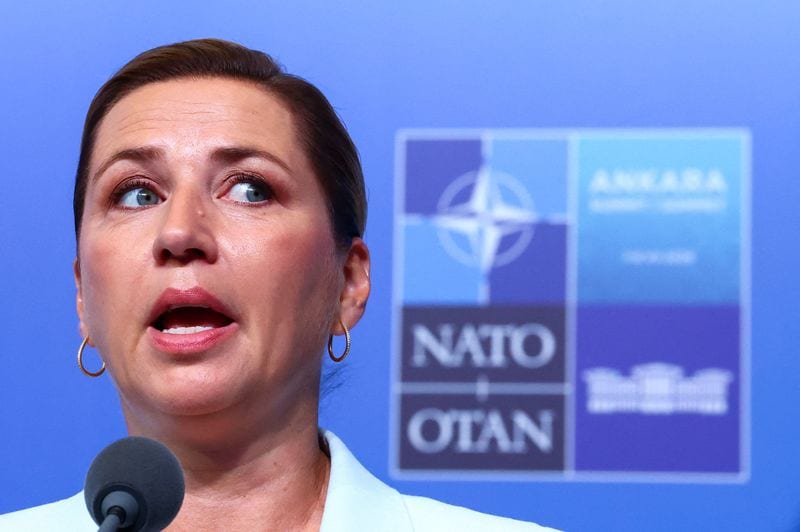
- Denmark's Prime Minister Mette Frederiksen stated Denmark will defend all NATO territory.
- Greenland is explicitly included in Denmark's defense commitment to NATO.
- Mette Frederiksen rejected U.S. President Donald Trump's acquisition proposal for Greenland.
- Frederiksen called Trump's acquisition proposal "absurd."
- Donald Trump cited Danish underinvestment in Arctic security.
- Donald Trump threatened to withdraw U.S. forces from Europe.
- Former NATO chief George Robertson warned the UK about a "frosty" NATO welcome.
- The UK's potential reception is linked to its defense spending.
- Five NATO members are projected to meet the 3.5% of GDP defense spending target by 2026.
- The target year for meeting the 3.5% GDP defense spending is 2026.
Danish Prime Minister Mette Frederiksen has firmly stated that Denmark will defend "every inch of NATO," explicitly including Greenland, in direct response to U.S. President Donald Trump's proposal to acquire the territory. Frederiksen characterized Trump's acquisition idea as "absurd" and made it clear that Denmark is not for sale. This declaration comes after President Trump cited Danish underinvestment in Arctic security as a justification for his interest in purchasing Greenland. President Trump also issued a broader threat, indicating a potential withdrawal of U.S. forces from Europe if allied nations do not sufficiently support his policies and defense initiatives.
In a separate but related development concerning NATO's internal dynamics and defense commitments, former NATO chief George Robertson has cautioned the United Kingdom about a potentially "frosty" reception at an upcoming summit. This warning stems from concerns over the UK's current defense spending levels. Updated data from NATO reveals a broader trend among member states, with only five nations currently projected to meet the alliance's defense spending target of 3.5% of their Gross Domestic Product (GDP) by the year 2026. This highlights ongoing challenges within the alliance regarding burden-sharing and the fulfillment of agreed-upon defense investment goals.
The situation underscores persistent tensions within NATO regarding defense spending and strategic priorities. President Trump's focus on allied contributions, particularly in the Arctic security context, reflects a broader push for increased military investment from European members. Denmark's strong stance on its sovereignty over Greenland, a strategically important territory in the Arctic, directly challenges this U.S. initiative. The UK's situation, as highlighted by Robertson, points to the internal pressures NATO members face in meeting financial commitments amidst evolving geopolitical landscapes.