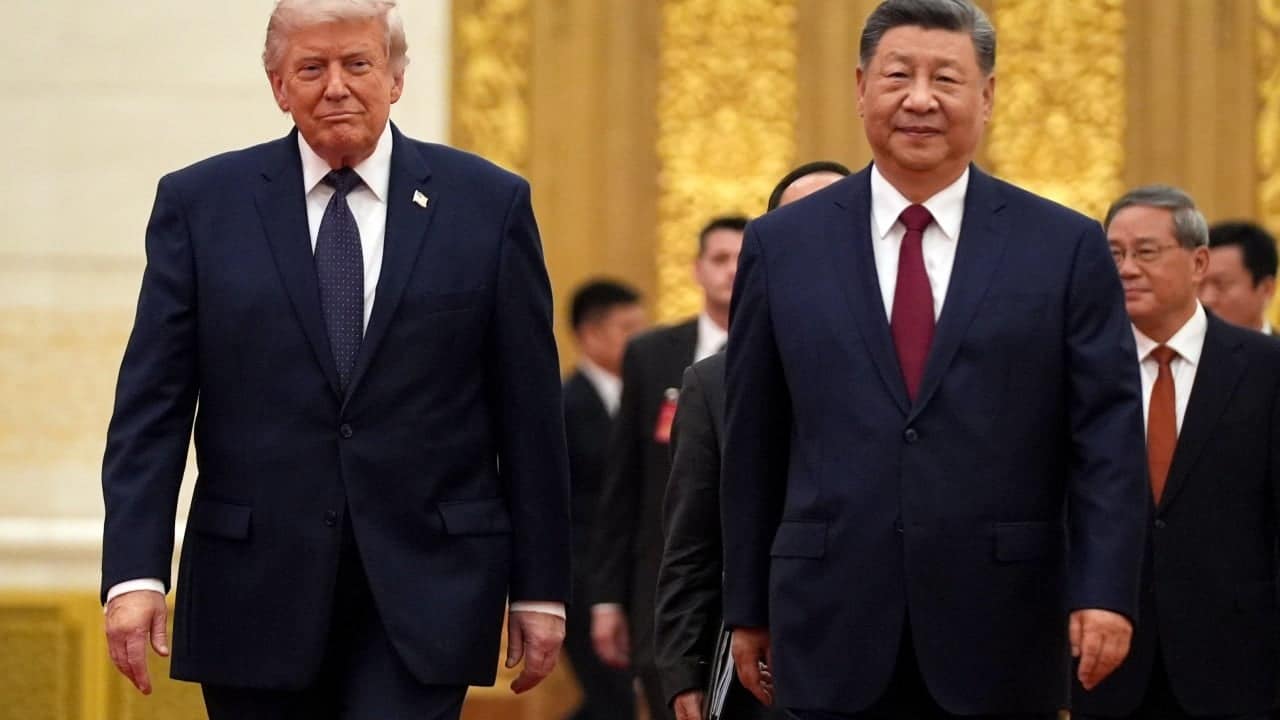
Key facts
- China is closely monitoring political instability within the Trump White House.
- President Xi Jinping is planning a visit to the US.
- Past periods of US uncertainty have impacted US-China relations.
- Some US policymakers are questioning the 'China threat' narrative.
- These policymakers advocate for a more nuanced approach to engaging Beijing.
- This represents a debate about the effectiveness of current US foreign policy strategies.
China is closely monitoring the political instability within the Trump White House, a development that precedes an anticipated visit by President Xi Jinping. This period of internal US political flux is being watched with attention in Beijing, as it echoes past instances where uncertainty in Washington has influenced the trajectory of US-China relations. The current situation in the White House is thus being viewed through the lens of historical precedents that have shaped bilateral interactions.
In parallel, a discernible shift is occurring among some US policymakers who are beginning to question the prevailing narrative that frames China solely as a 'threat.' This growing cohort suggests that the current approach, which often relies on a singular 'China threat' playbook, may be insufficient or even counterproductive. They are advocating for a more nuanced and multifaceted strategy for engaging with Beijing, one that acknowledges the complexities of the relationship beyond a simple adversarial framework.