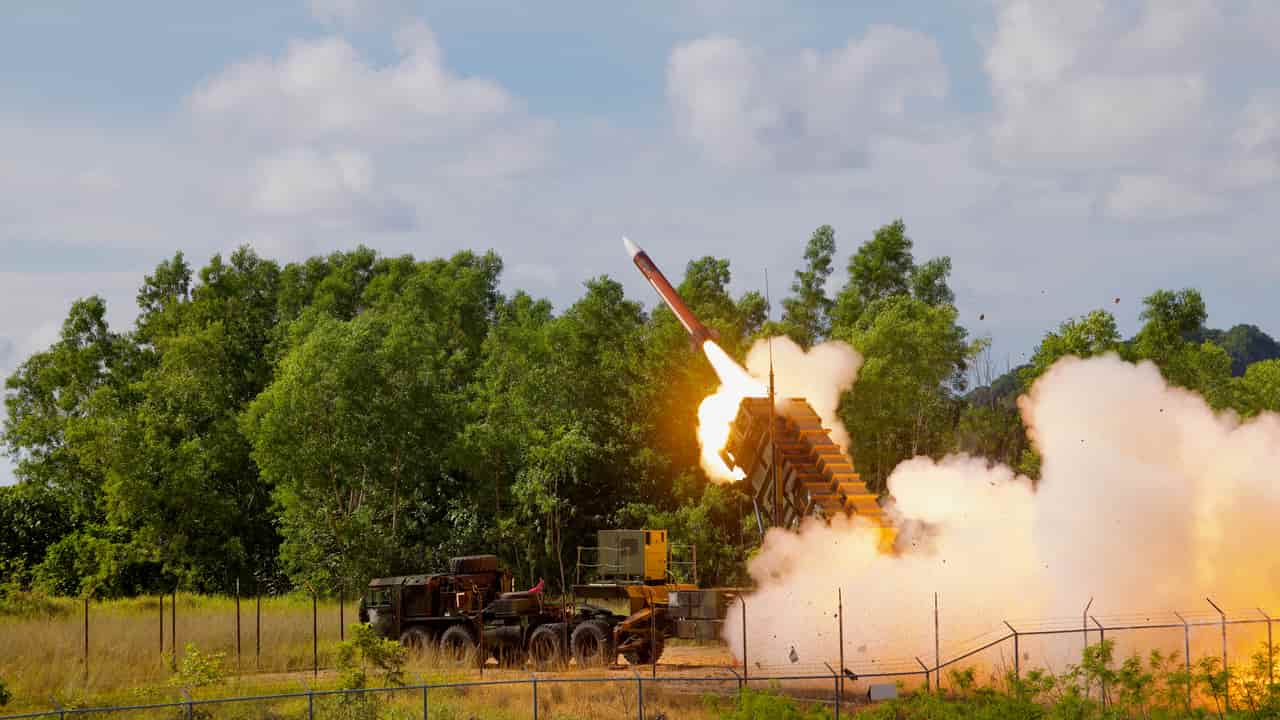
The United States is experiencing a critical shortage of key munitions, a situation exacerbated by the ongoing conflict with Iran, according to reports from Bloomberg Economics and the Center for Strategic and International Studies (CSIS).
The CSIS report details that while the war against Iran is a significant factor, it is not the sole reason for the depleted inventories. The U.S. has used approximately half of its initial inventory for munitions like Patriot, THAAD, and PrSM, and about one-third for others such as JASSM, SM-2/3/6, and Tomahawk. While current supplies may suffice for the Iran conflict, the risk arises from potential future wars, particularly with China, Russia, or North Korea.
Furthermore, the post-Cold War strategy shifted focus from preparing for a great power war to handling two limited regional conflicts, leading to a substantial reduction in munitions procurement. The defense industrial base itself underwent significant consolidation after the Cold War, with the number of prime contractors drastically reduced and the remaining structure optimized for efficient peacetime production rather than surge capability.
Even munitions not heavily used in the Iran conflict, such as long-range anti-ship missiles critical for a potential war against China, have existing inventories that would rapidly dwindle. While cheaper alternatives exist, they come with trade-offs in range and operational vulnerability.