Key facts
- A federal judge blocked the Federal Labor Relations Authority (FLRA) from centralizing labor representation decisions.
- The FLRA's action was deemed arbitrary and capricious by U.S. District Judge Denise Casper.
- The judge ruled that the shift would increase caseloads and processing times for representation matters.
- The FLRA's top body has a 2-1 Republican majority appointed by President Donald Trump.
- The previous system, in place since 1983, delegated authority to regional directors for most cases.
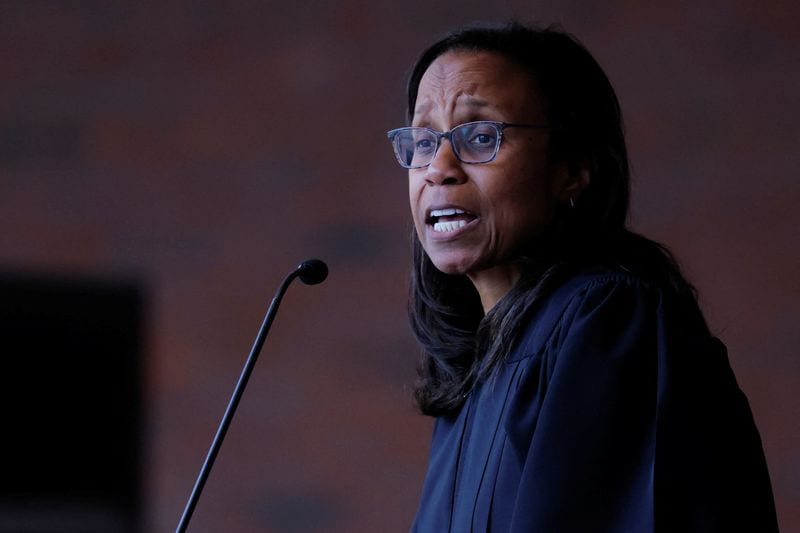
A federal judge on Monday blocked a Trump-era policy change by the Federal Labor Relations Authority (FLRA) that would have shifted authority over all labor representation decisions for federal employees to its top body. Chief U.S. District Judge Denise Casper in Boston ruled that the FLRA's action was arbitrary and capricious, failing to provide an adequate explanation for revoking a system that had been in place since 1983.
Casper, appointed by President Barack Obama, stated that shifting to a system where the three-member FLRA panel must reach a collective decision on all matters would increase the agency's caseload and the time it takes to process and adjudicate representation cases. The FLRA, which currently has a 2-1 Republican majority appointed by President Donald Trump, had argued that the old system resulted in duplicative filings and was time-consuming.
Unions, including the AFL-CIO and the American Federation of Government Employees, sued in April after the agency announced the new policy. They argued that the FLRA violated the Administrative Procedure Act by failing to explain how shifting the majority of cases, which the three-member body typically does not hear, to presidential appointees would streamline anything. Under the previous rule, adopted during President Ronald Reagan's tenure, authority was delegated to regional directors to determine appropriate bargaining units, order elections, and certify results, with only a small fraction of cases being challenged on appeal.