Key facts
- The USDA is using drones equipped with infrared sensors for aerial surveillance of animals in Texas.
- AI is being researched to analyze drone imagery for screwworm detection.
- The Sterile Insect Technique, involving the release of sterile male flies, is the primary method for eradication.
- New sterile fly production facilities are being established in South Texas and Arizona.
- Mexico has reported over 500 human screwworm cases in 2025 and 2026.
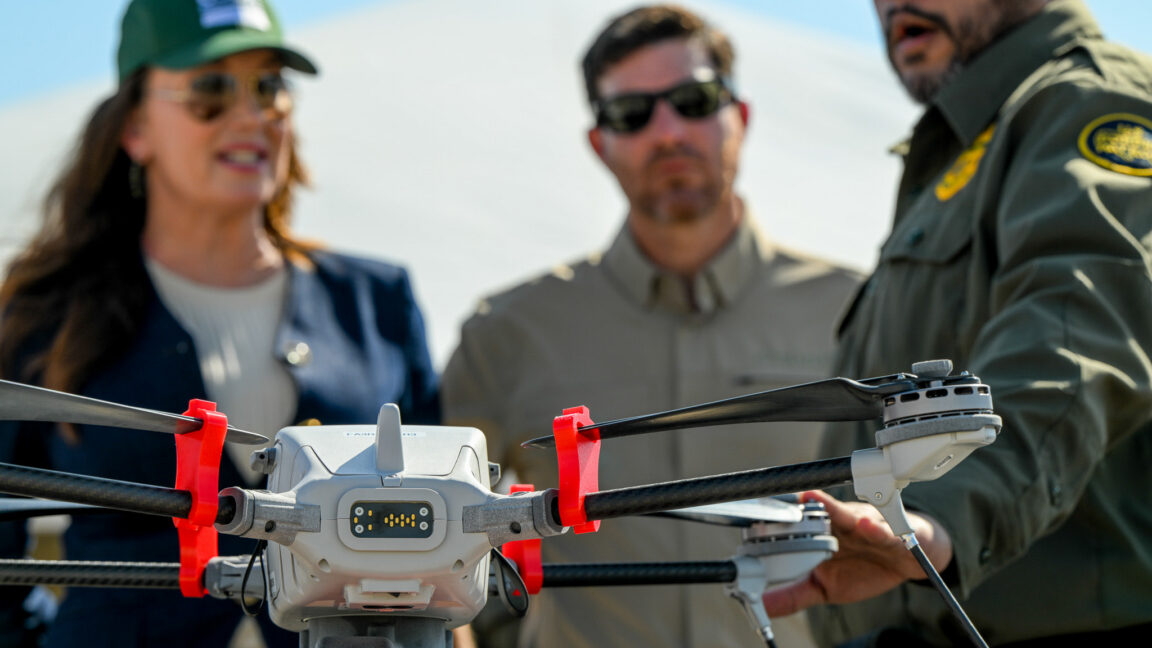
The U.S. Department of Agriculture is intensifying its efforts to combat the spread of flesh-eating screwworms in Texas by deploying advanced drone surveillance technology and expanding sterile fly production. Drone teams, utilizing infrared sensors for early morning detection of warm-blooded animals, are surveying livestock and wildlife on ranches with landowner permission. The USDA is also exploring the use of artificial intelligence to analyze drone imagery for identifying wounds and prioritizing inspections.
Beyond aerial surveillance, the department has employed stationary cameras for over 26,000 animal observations and set up more than 8,000 fly traps, though no screwworm detections have been made in traps despite confirmed animal cases. Drones are considered a crucial 'force multiplier' for surveying animals in challenging terrain, but the USDA emphasizes that the proven eradication method remains the release of sterile male flies.
This Sterile Insect Technique was previously successful in eradicating screwworms from the U.S. and Central America. However, the flies reappeared in 2022, breaching the Darién Gap and migrating northward, resulting in the current U.S. animal cases. To counter this, the USDA jointly manages a facility with Panama that releases approximately 100 million sterile flies weekly. A similar volume is released in Mexico following a $21 million renovation of a fruit fly facility.
In response to the new U.S. cases, the USDA is collaborating with the U.S. Army Corps of Engineers to construct a new sterile fly production facility at Moore Air Base in South Texas, slated for completion by April 1, 2027. Additionally, Agriculture Secretary Brooke Rollins announced a $25 million investment for a separate sterile fly facility in Douglas, Arizona, with construction potentially finishing in a few months. While the primary threat in the U.S. is to the livestock industry, Mexico has already recorded over 500 human cases in recent years, with studies indicating an accelerating infestation rate.