Key facts
- The UN Security Council is expected to hold another informal poll on August 21 to select the next Secretary-General.
- Rebeca Grynspan, former Vice President of Costa Rica, was an early frontrunner in the first poll.
- The current Secretary-General, Antonio Guterres, will step down at the end of the year.
- The selection process requires a resolution adopted by the Security Council with at least nine votes in favor and no vetoes from the five permanent members.
- Multiple rounds of polling are anticipated, with a final decision possibly in late September or early October.
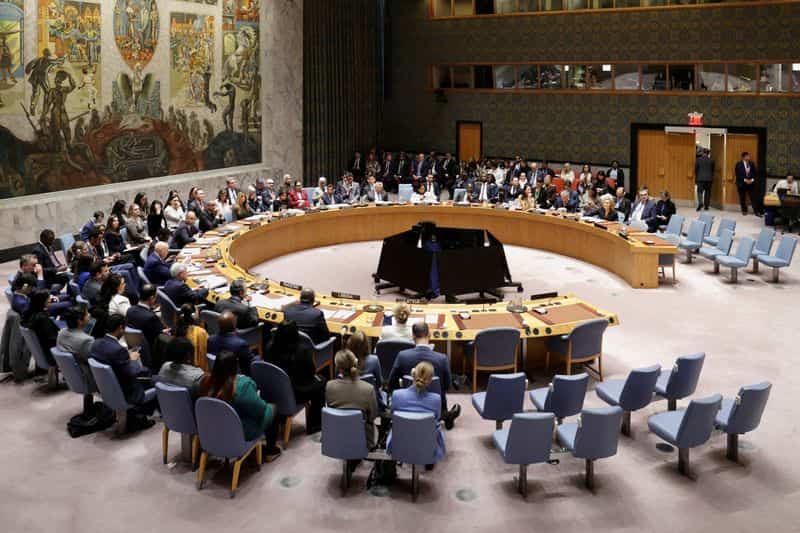
The United Nations Security Council is preparing for another informal poll to select the successor to Secretary-General Antonio Guterres, who will conclude his second five-year term at the end of the year. Denmark, holding the council's rotating presidency for August, aims to schedule this next poll for August 21, though a final decision is not imminent.
The first straw poll, held last week, indicated Rebeca Grynspan, former Vice President of Costa Rica, as an early frontrunner among the seven current candidates. Following her were former Guyanese Foreign Minister Carolyn Rodrigues-Birkett and Rafael Grossi, head of the UN nuclear watchdog. Other candidates include former Chilean President Michelle Bachelet, former Ecuadorean Foreign Minister Maria Fernanda Espinosa, former Senegalese President Macky Sall, and Ugandan diplomat Olara Otunnu.
Christina Markus Lassen, Denmark's UN Ambassador and the Security Council president for August, stated the council is "aiming for and hoping to schedule" the next poll. She indicated that the use of color-coded ballots, which reveal "discourage" votes from the five permanent members (China, France, Russia, the United Kingdom, and the United States), would likely only occur if the process was nearing a final consensus candidate. Lassen expressed uncertainty about reaching that stage yet.
The successor will face the challenge of revitalizing a United Nations perceived by critics as a bloated bureaucracy with declining stature. Avoiding a veto from any of the five permanent members, who hold widely differing world views, is crucial for the selection process. Precedent suggests that multiple rounds of polling may continue for several weeks, with a conclusion potentially in late September or early October. The process could also be extended if new candidates emerge or if consensus remains elusive. Ultimately, the Security Council adopts a resolution recommending a candidate to the 193-member UN General Assembly, a step that has historically been a formality.