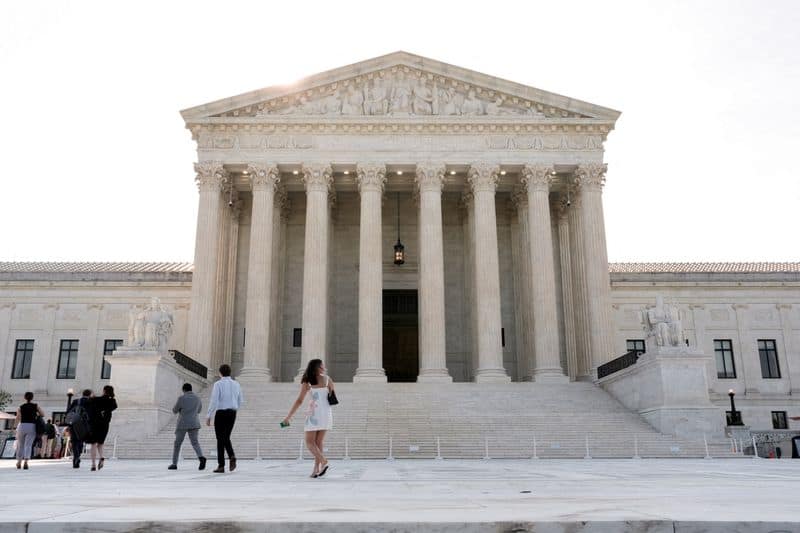
Key facts
- President Donald Trump will ask the Supreme Court to rehear a case on birthright citizenship.
- The Supreme Court recently ruled that individuals born in the U.S. have a constitutional right to citizenship.
- Trump's executive order aimed to restrict birthright citizenship for children of undocumented immigrants and some temporary visitors.
- The Supreme Court's decision was a 6-3 ruling based on the 14th Amendment.
- Rehearings of decided cases by the Supreme Court are rare, with the last instance occurring approximately 60 years ago.
President Donald Trump has announced his intention to seek an immediate rehearing from the U.S. Supreme Court regarding a case on birthright citizenship. This move comes a week after the high court rejected his executive order that aimed to curtail the long-standing policy. The Supreme Court's rules permit such requests, though granting rehearings is exceptionally rare, with the last instance occurring about six decades ago. Trump expressed strong disapproval of the court's prior decision, calling it a "miscarriage of justice" that could "destroy America." The 14th Amendment of the U.S. Constitution, along with subsequent Supreme Court rulings, has upheld birthright citizenship since 1868. The recent 6-3 decision, authored by Chief Justice John Roberts, affirmed that children born in the U.S. to parents who are undocumented or temporarily present are citizens at birth, as they are "subject to the jurisdiction thereof." Justice Brett Kavanaugh also concurred that Trump's executive order violated the Constitution. Following the ruling, Trump indicated a commitment to pursuing legislative avenues to end birthright citizenship through Congress.