All NewsEducationTV
Equities & FundsCrypto & Digital AssetsAI & TechnologyBusiness & CorporateUS Politics & PolicyGeopolitics & Global RiskMacro, Rates & FXCommodities & EnergyEuropean Politics & MarketsAsia-PacificReal Estate & Property
Story archiveAll categories
← All Stories

Trump signs order reducing childhood vaccines, challenging state laws

Created at 11 Aug · 8:58 PM1 source↑ Market-relevant
IN SHORT

President Donald Trump signed an executive order recommending fewer routine childhood vaccinations and directing the Justice Department to challenge state vaccine laws. Physicians and vaccine makers rejected the move, citing scientific consensus on vaccine benefits and safety.

✉Newsletter

PiQ Daily

Pick your topics. Get only what matters, on your cadence.

Key Numbers

11diseases recommended for universal childhood immunization
18diseases recommended by U.S. CDC in late 2024
90days for federal health department to work with manufacturers on MMR solution
1suggested number of appointments for vaccinations by Trump
14average number of vaccines across comparable nations

Who's Involved

Donald Trump
President who signed executive order on childhood vaccinations
Robert F. Kennedy Jr.
Health Secretary advocating for vaccine schedule overhaul
Justice Department
Directed to challenge state vaccine laws
American Academy of Pediatrics
Rejected order, citing parental confusion and delayed vaccination
Infectious Diseases Society of America
Stated order would expose children to preventable illness
National Foundation for Infectious Diseases
Stated order would expose children to preventable illness
Trump signs order reducing childhood vaccines, challenging state laws

↳ Why This Matters

The executive order could lead to confusion among parents, potentially reduce vaccination rates, and increase the risk of preventable diseases. It also signals a shift in federal health policy that challenges established scientific consensus and state-level autonomy in healthcare decisions.

Key facts

  • President Donald Trump signed an executive order reducing routine childhood vaccinations from 18 to 11 diseases.
  • The order moves vaccines for COVID-19, flu, rotavirus, hepatitis A and B, meningitis, and RSV into 'high-risk' or 'shared clinical decision-making' categories.
  • It directs the Justice Department to challenge state laws that conflict with parental authority and vaccine exemptions.
  • Medical groups, including the American Academy of Pediatrics, rejected the order, citing decades of scientific evidence showing no link between vaccines and autism and the benefits of immunization.
  • Splitting the MMR vaccine into single-disease shots is not currently feasible as standalone vaccines are not licensed in the U.S.

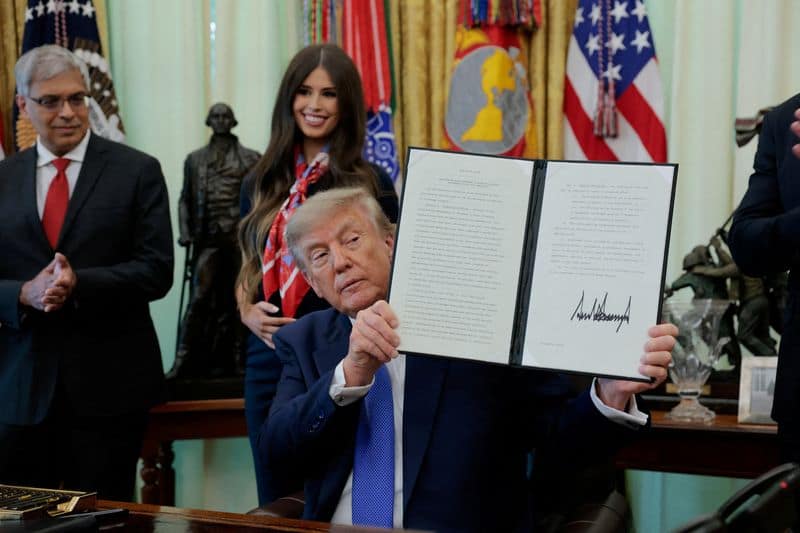
President Donald Trump signed an executive order on Monday that aims to reduce routine childhood vaccinations and challenges state vaccine laws. The order, which physicians and vaccine makers have rejected, advances a long-standing goal of Health Secretary Robert F. Kennedy Jr. and reaffirms a previous vaccine schedule overhaul that was halted by a federal court.

The executive order recommends universal childhood immunization against 11 diseases, a reduction from the 18 diseases previously recommended by the U.S. CDC in late 2024. Vaccines for COVID-19, the flu, rotavirus, hepatitis A, hepatitis B, bacterial meningitis, and RSV are moved to a "high-risk groups or populations" category or a "shared clinical decision-making" category, recommended only for children with underlying conditions or in consultation with a doctor. The order also suggests splitting the combination measles, mumps, and rubella (MMR) vaccine into three single-disease shots and spreading immunizations across separate visits.

Legally, the order instructs the attorney general to sue over state laws that are perceived to conflict with parental authority, religious freedom, disability accommodations, and equal protection, including religious and medical exemptions from vaccine mandates. The immediate impact on families is expected to be minimal, as parents can still request the shifted vaccines, and the White House stated the order does not affect the Vaccines for Children program. However, splitting shots across more visits could lead to increased appointments and potential out-of-pocket costs, with officials not specifying how these would be covered. Pediatricians warn that the conflicting federal message may cause some parents to delay or skip vaccinations.

Some elements of the order cannot be implemented immediately. Splitting the MMR vaccine is not currently possible because no company sells licensed standalone measles, mumps, or rubella vaccines in the United States. Officials indicated the federal health department would work with manufacturers on a solution within 90 days. The order pressures states to adopt the narrower schedule, as states, not Washington, set school-entry requirements, supported by the Justice Department's directive to sue over exemption laws.

Major medical groups have broadly rejected the order, stating that no new science justifies the changes. The American Academy of Pediatrics warned that the order would sow parental confusion and delay vaccination, reiterating that decades of studies show no link between vaccines and autism. They estimate that replacing the combined MMR shot with single-disease versions would take about a decade. Other groups, including the Infectious Diseases Society of America and the National Foundation for Infectious Diseases, expressed concern that the order would expose more children to preventable illness and death.

Public health experts build vaccine schedules based on disease spread, age-specific risks, and effectiveness. The timing and combination of shots are designed to protect children at the safest and most effective times, typically within the first 12 to 18 months of life. The AAP states that multiple vaccines do not overwhelm a child's immune system. While the previous U.S. schedule targeted 18 diseases, which is comparable to countries like South Korea and Brazil, it was higher than the average of about 14 across comparable nations.

Frequently asked questions

The executive order recommends reducing the number of routine childhood vaccinations from 18 to 11 diseases and moves several vaccines to a 'high-risk' or 'shared clinical decision-making' category.

Vaccines for COVID-19, the flu, rotavirus, hepatitis A, hepatitis B, bacterial meningitis, and RSV are moved to a less universal recommendation category.

The order instructs the attorney general to sue over state laws that conflict with parental authority, religious freedom, disability accommodations, and equal protection, particularly concerning vaccine mandates and exemptions.

Major medical groups, including the American Academy of Pediatrics, have rejected the order, citing decades of scientific evidence that shows no link between vaccines and autism and highlighting the benefits of immunization.

What Happens Next

01The federal health department will work with manufacturers on a solution for standalone measles, mumps, and rubella vaccines within 90 days.
02The Justice Department will challenge state laws related to vaccine mandates and exemptions.
03States will be pressured to adopt the narrower vaccination schedule.

Get the newsletter.

Pick the topics you actually care about. We'll email when there's news worth your time, on the cadence you choose. Cancel any time from your account.

Cadence

How It Developed

President Donald Trump signed an executive order on childhood vaccinations.
The order recommends universal immunization against 11 diseases, down from 18.
Vaccines for COVID-19, flu, rotavirus, hepatitis A and B, meningitis, and RSV are moved to 'high-risk' or 'shared clinical decision-making' categories.
The order suggests splitting the MMR vaccine into single-disease shots and spreading immunizations across more visits.
The Justice Department is instructed to challenge state laws conflicting with parental authority and vaccine exemptions.
The administration expects private insurers to continue covering the shifted vaccines without copays.
Officials stated that splitting the MMR vaccine into single-disease shots is not currently possible as no company sells licensed standalone versions in the U.S.
Major medical groups, including the American Academy of Pediatrics, broadly rejected the order, citing lack of new science and potential for parental confusion and delayed vaccinations.

Sources

T1
Explainer-Trump's childhood vaccine order: what it does and what doctors sayReuters

Related Stories

Hong Kong urges parents to vaccinate children amid US jab limits
11 Aug · 4:06 PM
Trump claims baseless link between vaccines and autism
11 Aug · 2:56 AM
Trump administration exempts US firms from beneficial ownership reporting
11 Aug · 9:06 PM
ACLU, groups sue to block Trump effort to curtail birthright citizenship
11 Aug · 2:54 PM
Judge blocks USPS mail-in voting restrictions
11 Aug · 9:12 PM