Key facts
- U.S. President Donald Trump stated that trade negotiations with Canada have stalled.
- Trump suggested that Canada might face tariffs rather than a negotiated trade deal.
- A deadline of August 1 has been set for imposing new or higher tariffs on Canadian goods.
- Canadian officials have indicated they will not sign a deal that is not in Canada's best interest.
- Sources described the U.S.-Canada trade talks as chaotic and one-sided.
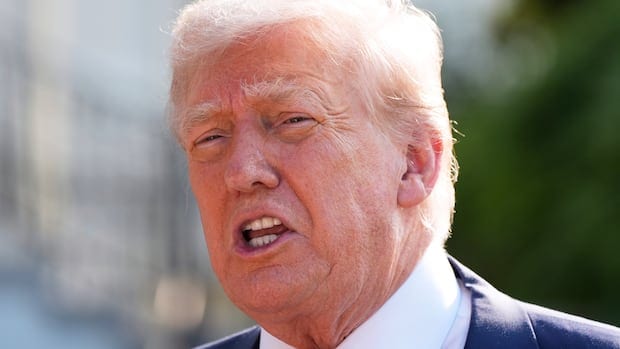
U.S. President Donald Trump has indicated that trade negotiations with Canada have stalled, suggesting that tariffs may be imposed on Canadian goods rather than a new trade deal being reached. Trump stated that he has "not really had a lot of luck with Canada" and that "Canada could be one where there's just a tariff, not really a negotiation." This comes as an August 1 deadline looms for the U.S. to impose new or higher tariffs on many of its trading partners.
Trump sent a letter to Prime Minister Mark Carney on July 10, threatening to impose a 35 percent tariff on Canadian exports currently subject to a 25 percent tariff, citing national security concerns related to fentanyl trafficking. Most Canadian goods are exempt from this specific tariff if they meet the North American content rules of the Canada-U.S.-Mexico Agreement (CUSMA). Separately, Canadian steel and aluminum face a 50 percent U.S. tariff, and Canadian energy and potash are subject to a 10 percent tariff.
Canadian officials, including Trade Minister Dominic LeBlanc and Ambassador Kirsten Hillman, have downplayed the likelihood of reaching an agreement by the August 1 deadline. They have emphasized that Canada will only sign a deal that is in its best interest and that they will take the necessary time to secure the best outcome for the Canadian economy and workers. Sources familiar with the negotiations described the talks as chaotic and one-sided, with U.S. officials, including Commerce Secretary Howard Lutnick and Treasury Secretary Scott Bessent, recycling grievances and offering no clear path forward. Trump mentioned progress in talks with Australia, the European Union, and China, but specifically criticized Canada's approach.