Key facts
- President Donald Trump signed an executive order directing Americans to receive separate measles, mumps, and rubella vaccines.
- Currently, no individual measles, mumps, or rubella vaccines are licensed for use in the United States.
- Merck & Co and GSK, the manufacturers of the combined MMR vaccine, stated there is no scientific evidence supporting the separation of these vaccines.
- Experts suggest that developing and obtaining FDA approval for separate single-disease vaccines could take up to a decade.
- Public health experts expressed concern that the order could increase vaccine hesitancy and lead to more vaccine-preventable illnesses.
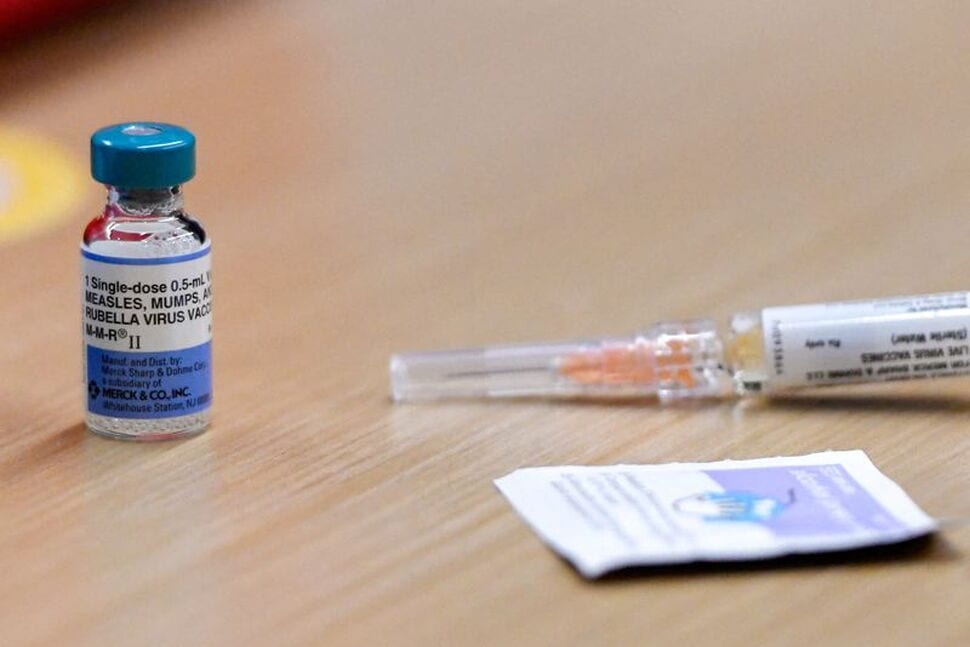
President Donald Trump's recent executive order mandating separate measles, mumps, and rubella (MMR) vaccines faces significant logistical and regulatory hurdles, according to experts. Currently, no single-disease shots for these illnesses are licensed in the United States; only combined MMR vaccines are available, produced by Merck & Co and GSK.
Both Merck and GSK have stated that there is no published scientific evidence to support the separation of these vaccines, emphasizing the decades of safety data supporting their combined formulations. Experts estimate that the process of developing, manufacturing, testing for safety and efficacy, and obtaining FDA approval for individual vaccines could take as long as 10 years, even with expedited pathways. This process would involve establishing new manufacturing processes and potentially expanding production capacity.
Trump's order, signed on Monday, aims to provide what he described as "gold-standard" protection, suggesting that fewer vaccinations would achieve this. However, public health experts have voiced concerns that this move could increase vaccine hesitancy, potentially leading to a rise in vaccine-preventable diseases. Major medical groups, including the CDC, recommend the combined MMR vaccine to minimize the number of injections and ensure children receive protection against all three diseases.
A White House official indicated that the administration would collaborate with the private sector to facilitate the availability of separate vaccine options, relying on market-based solutions. However, legal experts note that vaccine manufacturers might choose to delay or forgo investment in developing these separate shots, potentially waiting out the current administration.