Key facts
- President Donald Trump is expected to reiterate claims that the 2020 election was stolen.
- Experts warn these claims could undermine the integrity of upcoming U.S. elections, including the November midterms.
Experts warn that President Donald Trump's continued claims of a stolen 2020 election, expected to be reiterated in an upcoming address, threaten the integrity of U.S. elections, including the November midterms. These allegations lack credible evidence and aim to cast doubt on future results.
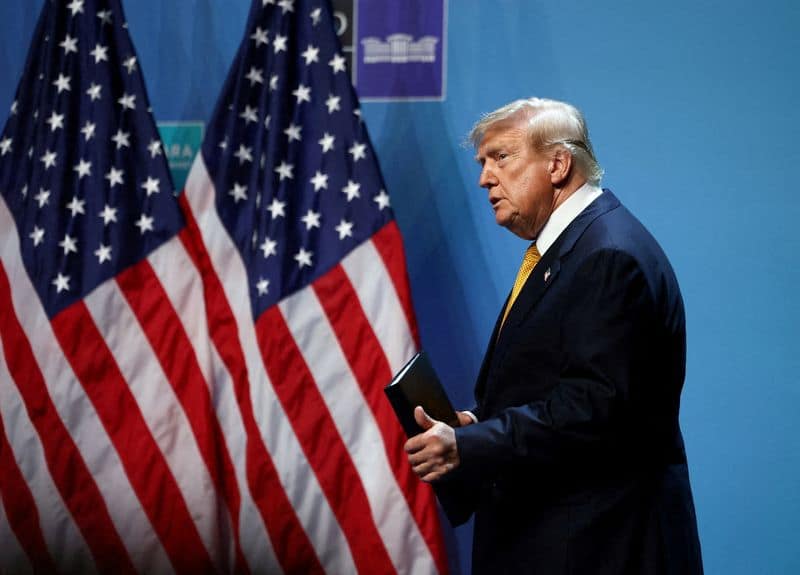
President Trump's continued promotion of unsubstantiated claims about election integrity poses a significant risk to democratic processes, potentially eroding public trust in future elections and influencing voter behavior in critical upcoming contests.
President Donald Trump is expected to reiterate claims that the 2020 election was stolen from him in an upcoming national address, a move that experts warn could threaten the integrity of future U.S. elections, including the November midterms.
Sources familiar with the matter told Reuters that Trump's speech would likely cover purported voting machine vulnerabilities and potentially controversial intelligence regarding China's intentions or abilities to disrupt the 2020 vote. These topics are central to conspiracy theories suggesting foreign powers influenced the election outcome in favor of Democrat Joe Biden.
However, eight analysts, academics, and security experts told Reuters that the 2020 election was one of the most transparent and audited in history, with no credible evidence of meaningful tampering. Three experts suggested that renewed allegations of foreign interference are part of Trump's strategy to gain control over U.S. elections and to delegitimize any future election he does not win.
Eva Galperin, director of cybersecurity at the Electronic Frontier Foundation, stated that the purpose of these litigations is to set the stage for the midterms, allowing the Trump administration to claim illegitimacy for any election not in their favor. Eddie Perez of the OSET Institute agreed, noting that if his party loses, Trump can then "cry foul."
White House spokeswoman Karoline Leavitt commented that reports on the speech's content are speculative and that "nobody knows yet what President Trump will ultimately say." Trump continues to maintain he won the 2020 election, recently posting an altered photo of Biden wearing an "I Lost to Trump" hat.
While foreign hackers do attempt to influence U.S. elections and voting machines can be hacked, Princeton professor emeritus Andrew Appel noted that no credible evidence has been produced for the former. He dismissed outlandish theories involving satellites, special ink, or imported ballots as technologically nonsensical. An unclassified summary of a secret assessment from Trump's own intelligence agencies alleged that Russian spies boosted Trump, Iranians sought to undercut him, and China remained uninvolved in the 2020 election. Renee DiResta of Georgetown University suggested that attempts to retroactively alter this assessment serve to promote a narrative that elections are rigged, necessitating increased federal control.