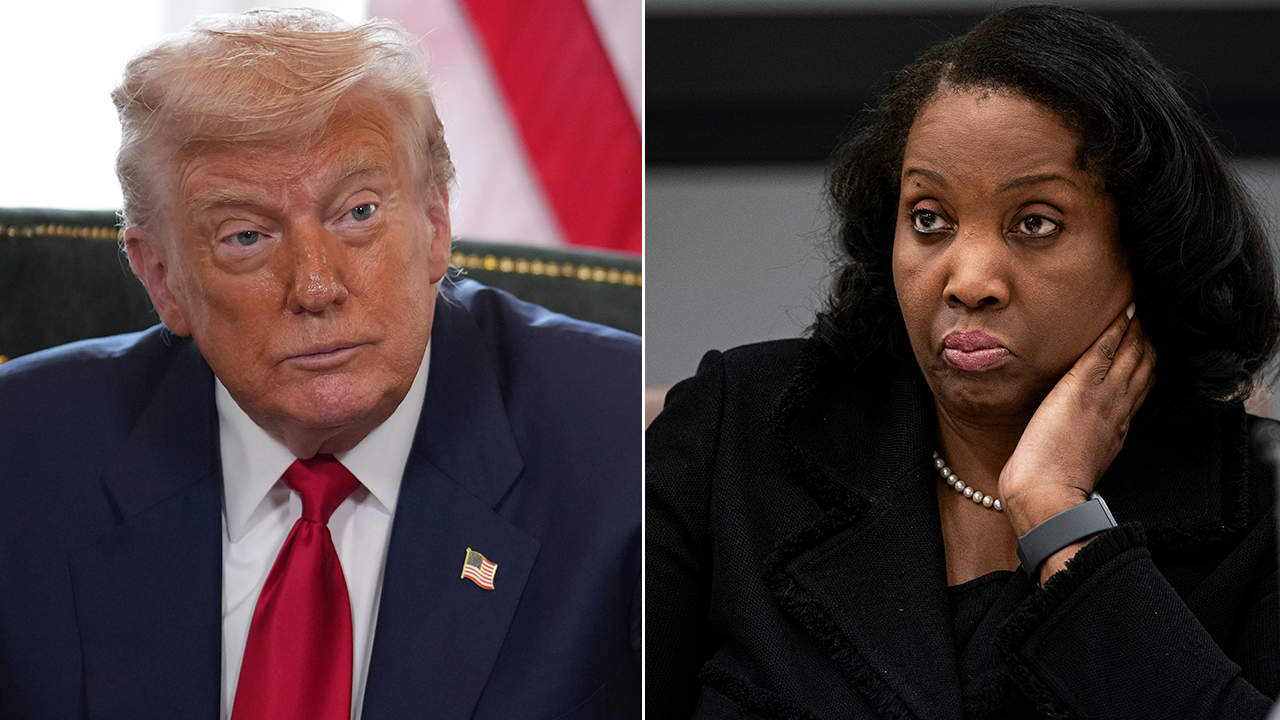
U.S. President Donald Trump is continuing his efforts to remove Federal Reserve Governor Lisa Cook, despite a previous Supreme Court ruling that blocked his initial attempt. The White House recently sent Cook a letter indicating the president is "considering" her removal and demanding she respond to unproven mortgage fraud allegations within three weeks.
Trump initially cited mortgage fraud in his attempt to dismiss Cook, the first Black woman to serve as a Fed governor. Cook has denied these allegations, asserting they are a pretext to remove her due to differing monetary policy views. In June, the Supreme Court, in a 5-4 decision, rejected Trump's bid to fire Cook, emphasizing the importance of the central bank's independence from political interference. Chief Justice John Roberts authored the majority opinion, which was supported by fellow conservative Justice Brett Kavanaugh and the court's three liberal justices. Justices Thomas, Alito, Gorsuch, and Barrett dissented.
The Supreme Court's decision specifically carved out an exception for the Federal Reserve, distinguishing it from other independent agencies due to its unique structure, history, and role in the U.S. financial system. This ruling preserves the Fed's ability to operate free from political pressure, which can influence economic factors such as mortgage rates, job prospects, and inflation responses.
Cook stated that the case was not about mortgage documents but about a "manufactured pretext" to remove her for refusing to let politics influence her work. She views the ruling as a reaffirmation of the Federal Reserve's independence, a principle she believes is crucial for sound economic stewardship. Cook affirmed her commitment to making decisions based on evidence and independent judgment, free from political interference.
This case is one of two significant Supreme Court disputes concerning presidential removal powers, the other being Trump v. Slaughter, which involved the president's dismissal of FTC Commissioner Rebecca Slaughter. In the latter case, the Supreme Court overturned the 1935 Humphrey's Executor v. United States decision, potentially reducing limits on a president's authority to fire officials at various independent federal agencies.