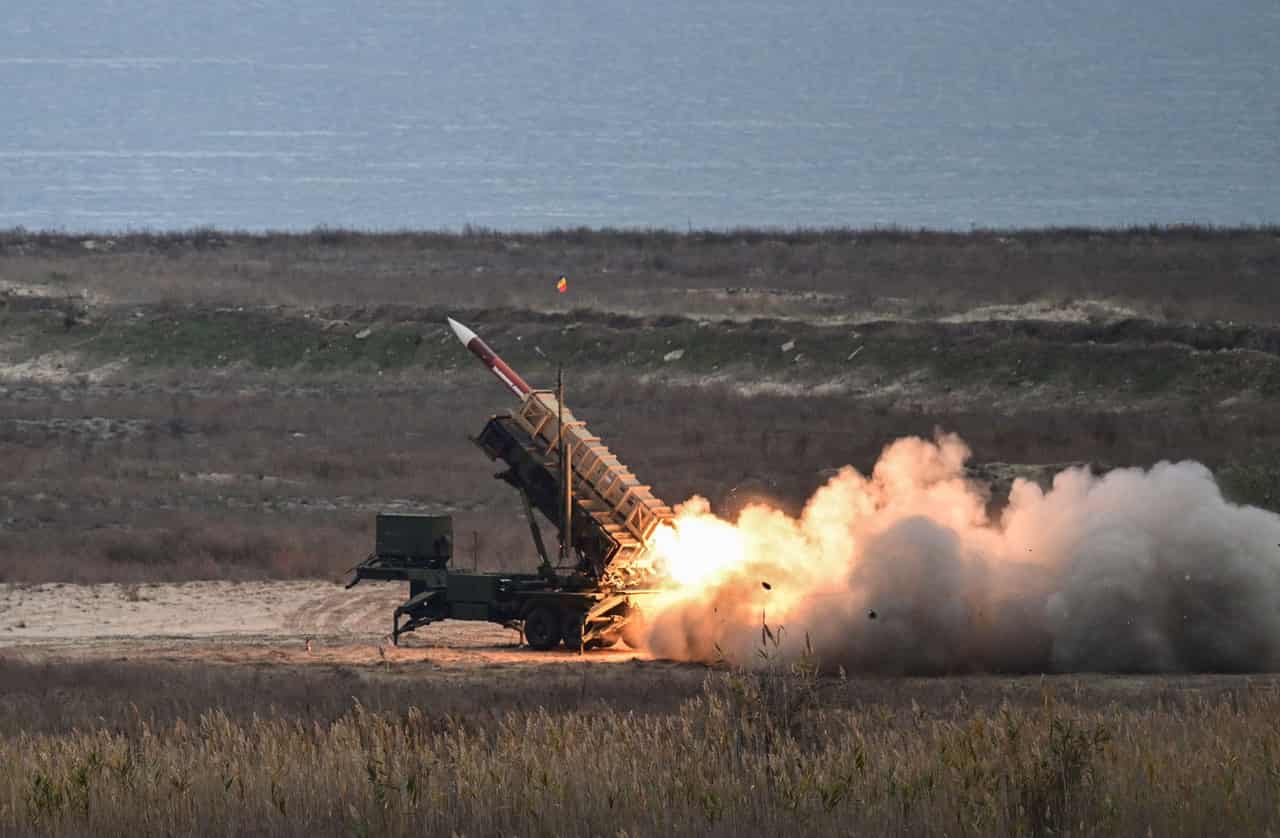
Key facts
- The U.S. has begun the process of granting Ukraine licenses to produce Patriot missiles.
- Lockheed Martin, the U.S. defense company that manufactures the missiles, backs granting Ukraine the licenses.
- President Donald Trump announced the U.S. will grant Ukraine a license to produce Patriot interceptor missiles.
- The decision follows Ukraine's formal request for licensed Patriot production to address an air defense shortage.
- U.S. annual Patriot interceptor production is about 600 missiles, while Ukraine's potential requirement could reach roughly 2,000 per year.
The United States has initiated the process to grant Ukraine licenses for the production of Patriot missiles, a significant move beyond political declarations. A senior Ukrainian official confirmed that Lockheed Martin, the prime contractor for the PAC-3 interceptors, supports this initiative. The official anticipates the licensing process will proceed more rapidly than previously estimated.
During the NATO summit in Ankara on July 8, 2026, U.S. President Donald Trump announced that Washington would provide Ukraine with a production license for Patriot interceptor missiles. This decision directly addresses Ukraine's critical shortage of PAC-3 interceptors, which are essential for countering an intensifying campaign of Russian ballistic missile strikes targeting domestic infrastructure. The licensing framework is intended to reduce the strain on direct U.S. military stockpiles by establishing a long-term, independent manufacturing capability within Ukraine's defense industry.
The bilateral agreement authorizes the transfer of technical production rights for the Patriot air defense system to help meet Ukraine's estimated annual deficit of 2,000 interceptors. However, the operational deployment of these missiles is contingent upon localized tooling, secure component supply chains involving over 400 specialized suppliers, and formal coordination with prime defense contractors Lockheed Martin and RTX. The current U.S. annual output of Patriot interceptors stands at approximately 600 missiles, falling significantly short of Ukraine's potential requirement for sustained coverage of key locations and assets.
President Trump stated that the U.S. possesses Patriot missiles but in limited quantities, acknowledging the need to support Ukraine without depleting its own stocks. This license is viewed as a political solution to an industrial shortage rather than an immediate delivery mechanism. The Patriot system's complexity means that production arrangements will require detailed agreements between companies regarding technology transfer, U.S.-controlled elements, assembly locations, component exports, and certification rules before missiles can be operationally accepted.
Analysts and officials have cautioned that while the license represents a long-term strategic win, it does not immediately resolve Ukraine's current air defense crisis. The production of new interceptors depends on contracts, export approvals, company participation, industrial tooling, trained labor, certified facilities, secure component flows, and months of preparation before any missile can enter Ukrainian service. Some sources indicated that production might occur in Germany or another European country to avoid Russian strikes.