Key facts
- President Trump has approved a 30-year civil nuclear cooperation deal with Saudi Arabia.
- The agreement may permit Saudi Arabia to enrich uranium domestically.
- The pact is expected to be submitted to Congress soon.
- Sources indicate the deal lacks safeguards against nuclear weapons development and the IAEA's Additional Protocol.
- The agreement is a 123 Agreement, required for U.S. entities to work with foreign countries on nuclear technology.
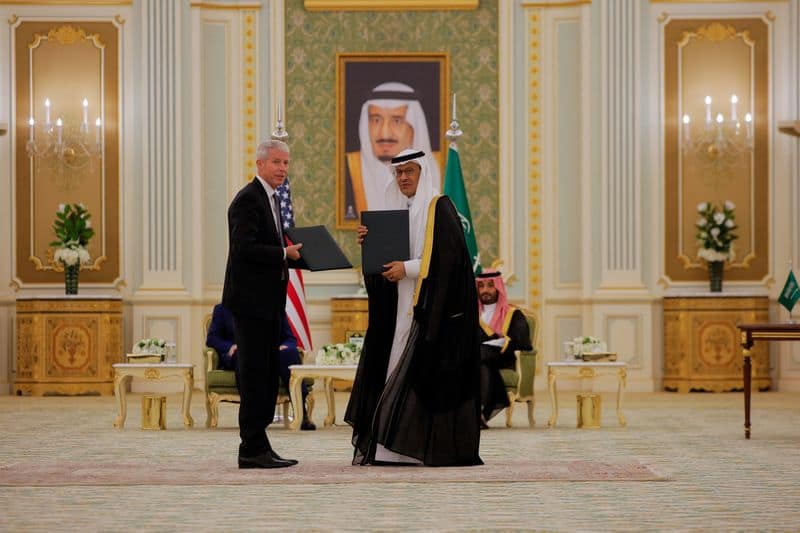
The Trump administration is preparing to submit a 30-year nuclear energy pact with Saudi Arabia to Congress, which sources say omits safeguards against using nuclear materials for weapons programs. The agreement, known as a 123 Agreement, is required for the U.S. and American companies to collaborate with Saudi entities on developing a civil nuclear industry. While the pact provides a legal pathway for cooperation on the nuclear fuel cycle, including uranium enrichment, it does not obligate the U.S. to transfer related capabilities or technology. Concerns have been amplified by Saudi Crown Prince Mohammed bin Salman's past statements that the kingdom would pursue nuclear weapons if Iran developed them. Unlike agreements with the UAE, Morocco, and others, this deal reportedly lacks the "Gold Standard" to block enrichment and reprocessing, and the IAEA's "Additional Protocol" for broader oversight.
U.S. Energy Secretary Chris Wright previously stated the preliminary agreement was not about enrichment and contained nonproliferation standards from the Atomic Energy Act. However, sources familiar with the deal indicate it does not include the stringent measures that could prevent materials from being used in nuclear weapons programs. The administration plans to submit the agreement to Congress for a review period of approximately 90 days, during which lawmakers could object. Blocking the pact would require a joint resolution with a two-thirds majority to override a potential presidential veto.