Key facts
- Thailand's government is promoting local defense procurement to develop its domestic industry.
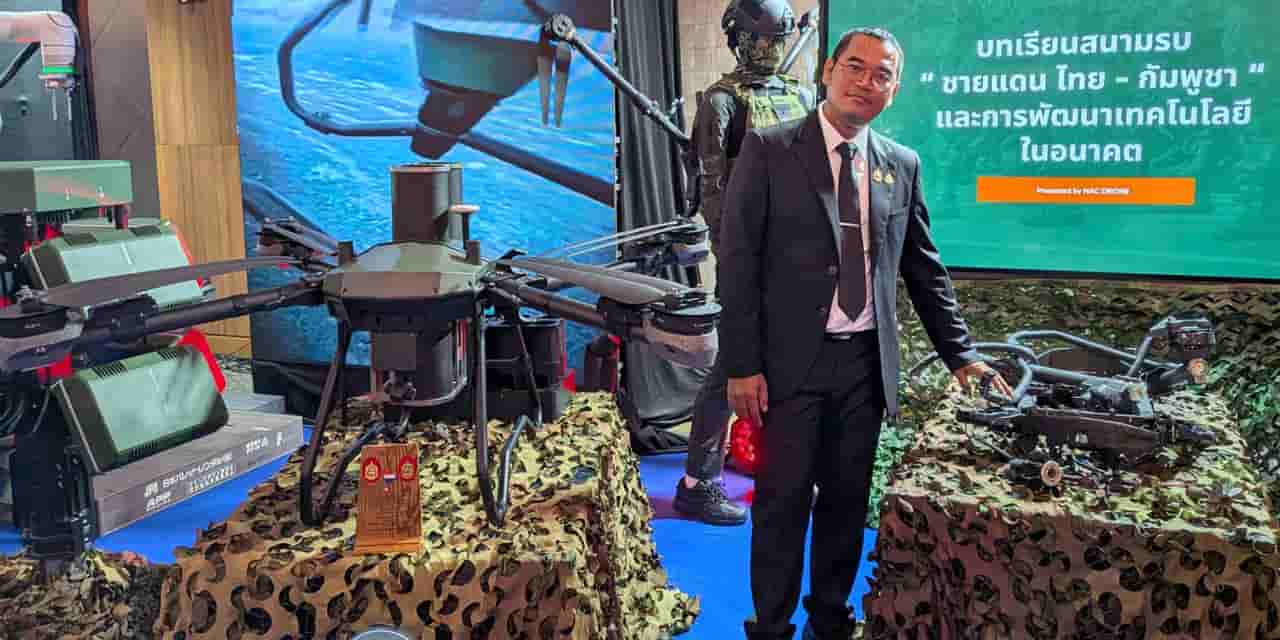
- Companies from non-defense sectors, such as agricultural drones and satellite services, are seeking military contracts.
- The Thai military is investing in advanced equipment like helicopters, fighter jets, and unmanned systems.
- The defense budget is approximately $6 billion annually, with a focus on modernization and technology transfer.
- Thailand aims to reduce its dependence on imported defense equipment.
Thailand's strategic push to increase local defense procurement is creating new avenues for businesses, prompting companies from sectors such as agricultural drones and satellite services to pursue military contracts. This initiative is driven by the government's National Security Strategy, which prioritizes safeguarding the nation, modernizing armed forces, and neutralizing regional arms races.
The Thai government aims to reduce its reliance on defense imports by fostering domestic industry development through technology transfer and supporting local growth. The Ministry of Defense emphasizes the need for a technologically advanced military to address emerging security threats, advocating for strategic procurement aligned with regional capabilities. In 2025, approximately one percent of Thailand's GDP was allocated to defense, with the Royal Thai Army receiving the largest share of the roughly $6 billion annual budget.
Leading sub-sectors for defense and security equipment in Thailand include security and safety equipment, electronic warfare, and counter-unmanned aerial systems. Opportunities for growth are particularly strong in unmanned vehicles and counter-UAS for military applications, with potential for sales and joint development of platforms for air, land, and sea.
The Ministry of Defense's Five-year Ministry of Defense Reorganization Plan aims to increase efficiency by reducing personnel, equipping the military with advanced defense capabilities, and enhancing its ability to cope with multiple threats. Concurrently, the International Military Security Cooperation Plan (2023-2028) focuses on strengthening international relations with allied nations through joint exercises and exchanges to build trust.