Key facts
- The National Assembly is poised to vote on a bill that would remove the prosecution's direct investigative authority.
- The main opposition People Power Party (PPP) has been filibustering the legislation.
- The ruling Democratic Party (DP), holding 161 seats, expects to secure enough votes to end the filibuster.
- The proposed reform involves dismantling the prosecution and establishing two new agencies for investigations and indictments.
- A separate bill to shorten the review period for fast-tracked legislation from 330 to 90 days has also been introduced.
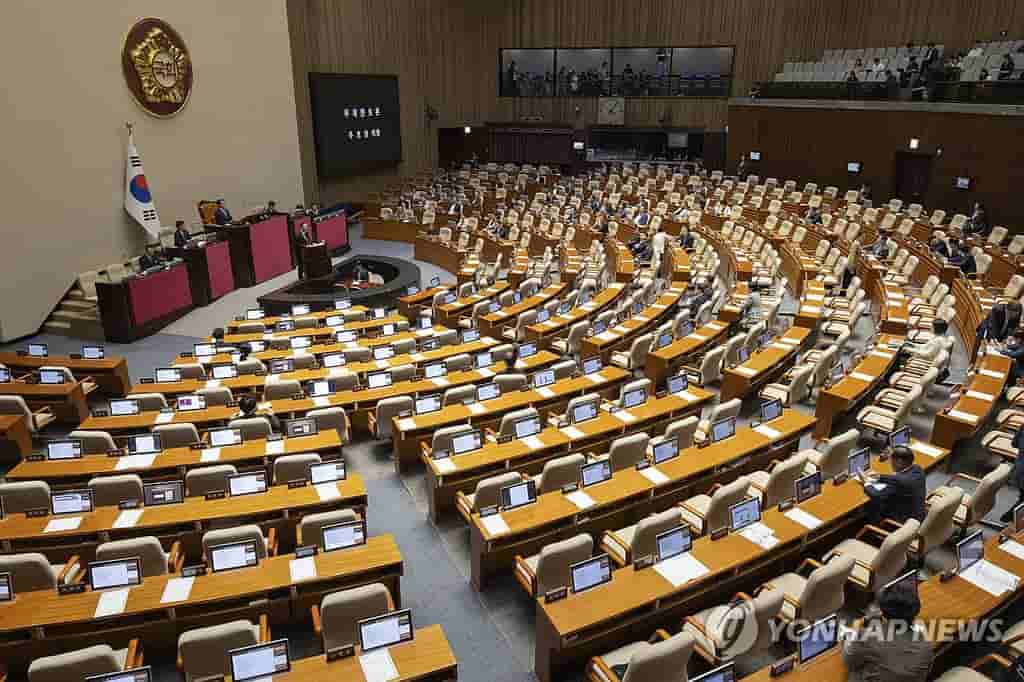
SEOUL, July 31 (Yonhap) -- The National Assembly, led by the ruling Democratic Party (DP), was set Friday to vote on a bill that would strip the prosecution of its direct investigative powers as an opposition filibuster to block the move neared its 24-hour mark.
The DP is expected to push for the passage of the revision to the Criminal Procedure Act during a plenary session at around 4 p.m., after ending a filibuster launched by the main opposition People Power Party (PPP) the previous day.
If approved, the revision would strip the prosecution of its authority to conduct direct investigations, including supplementary investigations. The ruling party has been pushing ahead with prosecution reform legislation that calls for dismantling the prosecution and creating two new agencies, each tasked with handling investigations and indictments.
A filibuster can be stopped after 24 hours if at least three-fifths of all parliament members, or 180 lawmakers, vote to end it. With support from minor opposition parties and independents, the DP, which holds 161 seats in the Assembly, is expected to secure enough votes to terminate the filibuster and bring the bill to a vote.
The Assembly will also introduce a revision to the National Assembly Act aimed at shortening the review period for bills designated for fast track from a maximum of 330 days to 90 days. The PPP plans to stage another filibuster against the measure, though it will automatically end at midnight when the current extra parliamentary session expires. The bill is expected to be put to a vote at the first parliamentary plenary session next month.