Key facts
- South Korea's presidential office denied allegations of discriminatory targeting of Coupang by the government.
- A U.S. House committee report accused South Korea of "discriminatory attacks" and "economic discrimination against foreign companies."
- National Security Adviser Wi Sung-lac stated that investigations are conducted without discrimination and in accordance with due process.
- The report claimed Coupang was a "consistent target" of the South Korean government.
- South Korea's National Assembly stated its hearings were lawful and part of ordinary practice, not targeting a specific company.
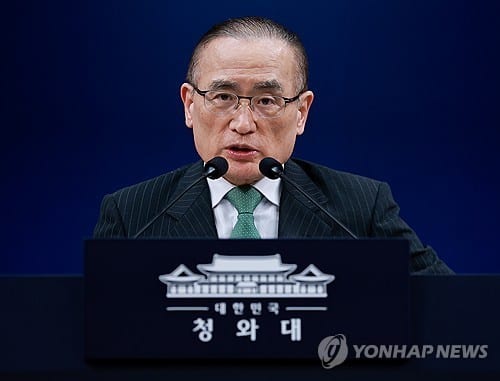
South Korea's presidential office has refuted claims made in a recent U.S. House committee report that alleged discriminatory targeting of e-commerce firm Coupang Inc. National Security Adviser Wi Sung-lac stated that the report's assertions of discriminatory, targeted investigations and unfair regulations are untrue.
Wi emphasized during a press briefing that South Korea does not discriminate against companies based on nationality and conducts investigations in accordance with due process. He noted that Coupang itself acknowledged a data leak affecting over 33 million user accounts, which could also impact U.S. citizens. Wi drew a parallel to a hypothetical U.S. scenario involving a similar data breach.
The security adviser also denied allegations concerning the National Intelligence Service or a high-level presidential official's involvement in retrieving an IT gadget from China related to the data breach. He suggested the report may have solely reflected Coupang's claims and that South Korea will communicate its position through continued dialogue.
The South Korean National Assembly also issued a statement expressing regret over the U.S. report, deeming its assessment based on limited facts. Lawmakers asserted that parliamentary hearings, including one with Coupang's interim CEO Harold Rogers, were lawfully convened and followed standard procedures, not targeting a specific company. They also defended the use of interpretation services during hearings.
The foreign ministry similarly expressed regret over the report and committed to ongoing consultations with the U.S. to prevent the issue from impacting the broader alliance.