Key facts
- Senators questioned Jay Clayton and Todd Blanche about subpoenas issued to New York Times journalists.
- The subpoenas were related to a New York Times report on security concerns with President Donald Trump's new Air Force One.
- Clayton stated the subpoenas were part of an ongoing national security investigation.
- The New York Times' executive editor called the subpoenas a 'retaliatory abuse of prosecutorial power'.
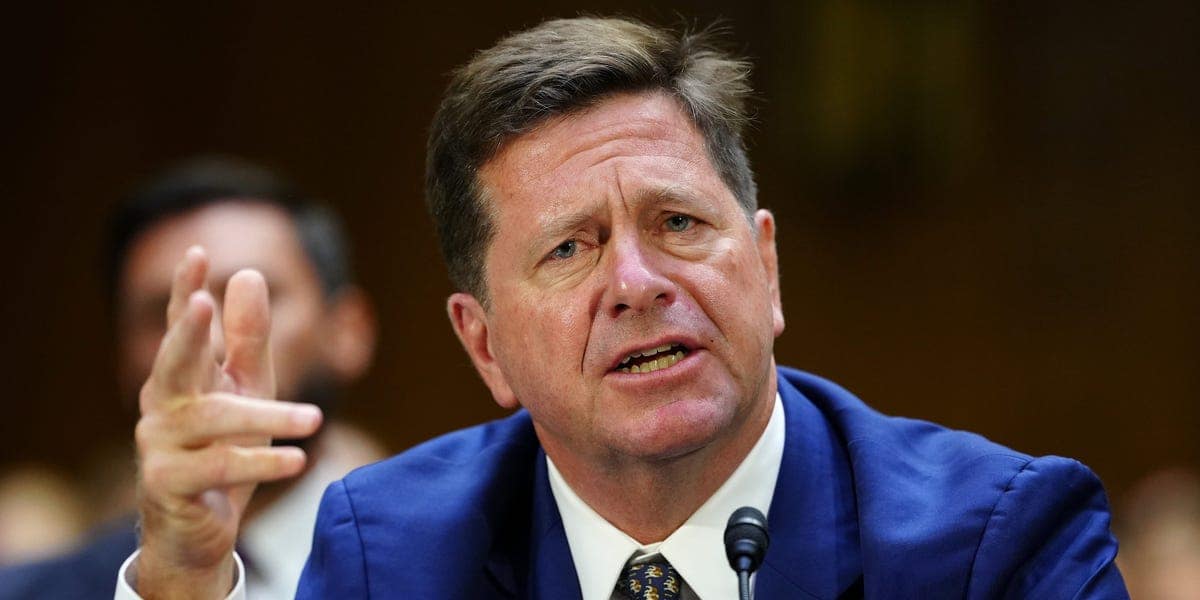
Senators on Capitol Hill pressed top Justice Department officials regarding the decision to subpoena New York Times journalists over a report detailing security flaws in President Donald Trump's new Air Force One plane. In separate hearings, Jay Clayton, the U.S. Attorney for the Southern District of New York and a nominee for director of national intelligence, defended the subpoenas as part of an ongoing national security investigation.
Clayton stated he followed required processes and that the decision was a consultative exercise with prosecutors. The subpoenas were issued to five New York Times reporters—Julian Barnes, Eric Lipton, Tyler Pager, Eric Schmitt, and Adam Goldman—who had published an investigation into the security concerns of the modified Boeing 747-8 aircraft, which reportedly lacks the advanced antimissile defense capabilities of the previous Air Force One.
During Clayton's confirmation hearing before the Senate Intelligence Committee, Senator Ron Wyden criticized the action as a 'flagrant attack' on journalists and questioned the unusual step of subpoenaing reporters. Clayton assured that efforts were made to limit intrusion into the free press's operations.
Concurrently, at the Senate Judiciary Committee, Todd Blanche, President Trump's nominee for attorney general, was questioned by Senator Peter Welch about supporting the subpoenas. Blanche likened the journalists to 'material witnesses' in a car crash, stating the goal was to identify who provided classified national security information.
The New York Times' Executive Editor, Joe Kahn, condemned the subpoenas as a 'retaliatory abuse of prosecutorial power' and a 'naked attempt to intimidate individual reporters.' The Times plans to seek to quash the subpoenas and vowed to defend its staff and ensure accountability reporting is not impeded.
The article also notes that during the Trump administration, the Justice Department has adopted a more aggressive stance toward journalists, with former Attorney General Pam Bondi having previously eased policies for obtaining media information.