Key facts
- South Korea and the U.S. agree on the need to "stably" manage the Coupang issue to avoid burdening bilateral relations.
- A U.S. House Judiciary Committee report alleged "discriminatory attacks" on Coupang by the South Korean government.
- A White House official voiced concerns about Coupang being "singled out" by South Korea.
- Seoul's foreign ministry stated the committee report was one-sided and did not include South Korea's position.
- South Korea is seeking to minimize negative impacts from ongoing U.S. Section 301 trade investigations.
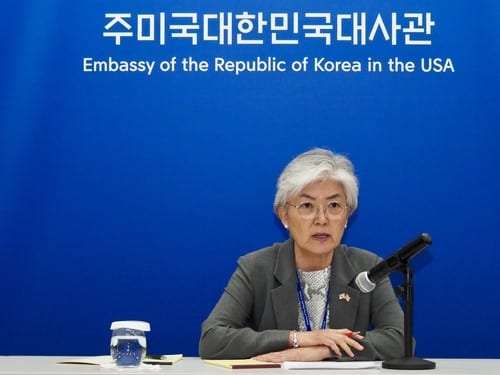
South Korea and the United States share the understanding that they must "stably" manage issues involving U.S.-listed e-commerce giant Coupang Inc. in a way that does not "burden" bilateral relations, according to Seoul's top envoy to Washington. Ambassador Kang Kyung-wha stated that both governments recognize the need for stable management of the situation.
Kang's remarks came after a House Judiciary Committee report and a White House official recently criticized South Korea's regulatory probes into Coupang's massive data leak as "discriminatory." The House Judiciary Committee's interim staff report accused the South Korean government of "discriminatory attacks" on Coupang and other American-owned businesses, claiming Coupang has been a "consistent target."
A White House official echoed these concerns, stating that Coupang is being "singled out" by President Lee Jae Myung's administration and expressing worry over the "discriminatory" targeting of the company. Seoul's foreign ministry has expressed regret over the committee report, asserting that it appears to reflect Coupang's claims in a "one-sided" manner and omits Seoul's perspective and factual information provided to the committee.
Ambassador Kang also addressed U.S. trade investigations under Section 301 of the 1974 Trade Act, which could result in new tariffs on South Korea and other countries. She indicated that her embassy will maintain close consultations with the U.S. to minimize any potential negative impact from these investigations. South Korea has emphasized the importance of balancing interests between the two nations, and the U.S. has reportedly expressed willingness toward this goal. The Office of the U.S. Trade Representative has initiated Section 301 investigations into 60 countries, including South Korea, China, and Japan, concerning forced labor. Proposed tariffs of 12.5 percent have been suggested for South Korea and numerous other economies. These investigations also aim to uncover "unfair" trade practices related to "structural" excess capacity and production.