Key facts
- Russia's only registered anti-war party, Yabloko, has been banned from the upcoming parliamentary election.
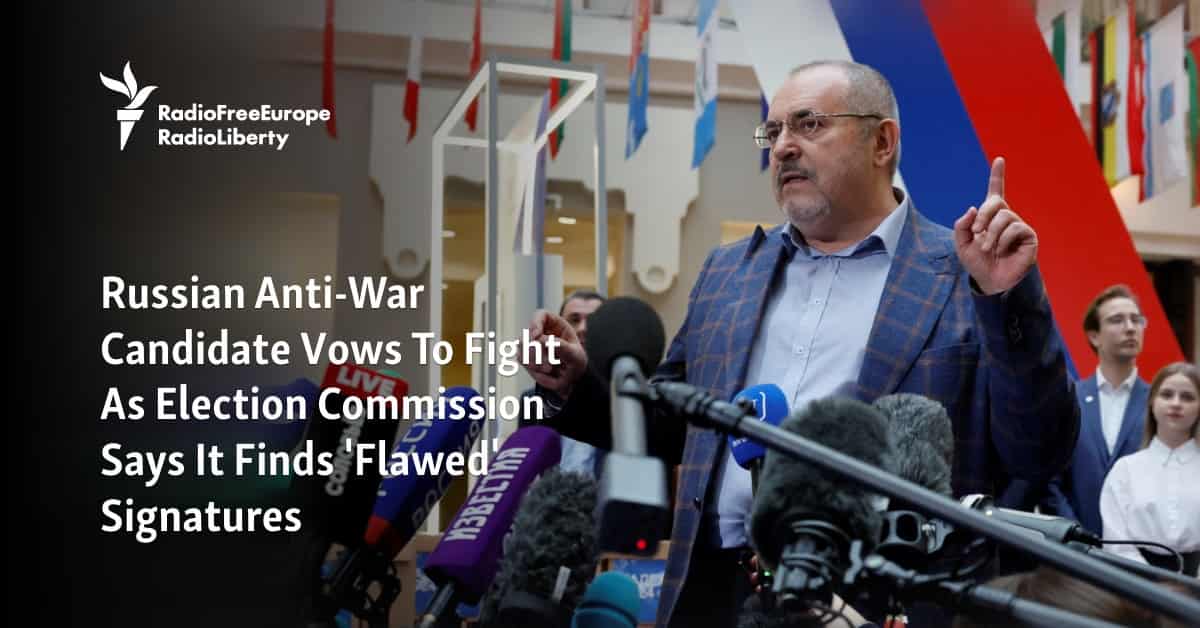
- Anti-war presidential candidate Boris Nadezhdin has been disqualified from running against Vladimir Putin.
- The Central Election Commission cited irregularities in Nadezhdin's support signatures as grounds for disqualification.
- Nadezhdin plans to appeal the decision to the Supreme Court.
- Yekaterina Duntsova, another anti-war candidate, was also previously disqualified.
Russia's electoral landscape has tightened further with the disqualification of an anti-war party and a prominent presidential candidate. Yabloko, the country's sole registered anti-war political party, has vowed to appeal a Supreme Court ruling that bars it from participating in the upcoming parliamentary elections. This decision significantly curtails avenues for expressing opposition to the ongoing conflict in Ukraine.
In parallel, Boris Nadezhdin, an anti-war candidate who had gained unexpected traction for the presidential election in March, has been banned by Russia's Central Election Commission. The commission cited irregularities in over 9,000 of the more than 100,000 signatures of support he submitted, exceeding the allowable error rate. Nadezhdin, a veteran politician who has openly criticized the invasion of Ukraine, has stated his intention to challenge the ruling in the Supreme Court.
This move follows the earlier disqualification of another anti-war candidate, Yekaterina Duntsova, who was rejected due to alleged errors in her paperwork. The electoral commission has so far registered four candidates for the presidential election, including Vladimir Putin, who is widely expected to secure another term. Nadezhdin's campaign had garnered significant attention, with thousands of Russians queuing in cold weather to support his bid, highlighting a segment of the population seeking an alternative voice against the war. Analysts suggest his growing support may have become politically embarrassing for the Kremlin.