Key facts
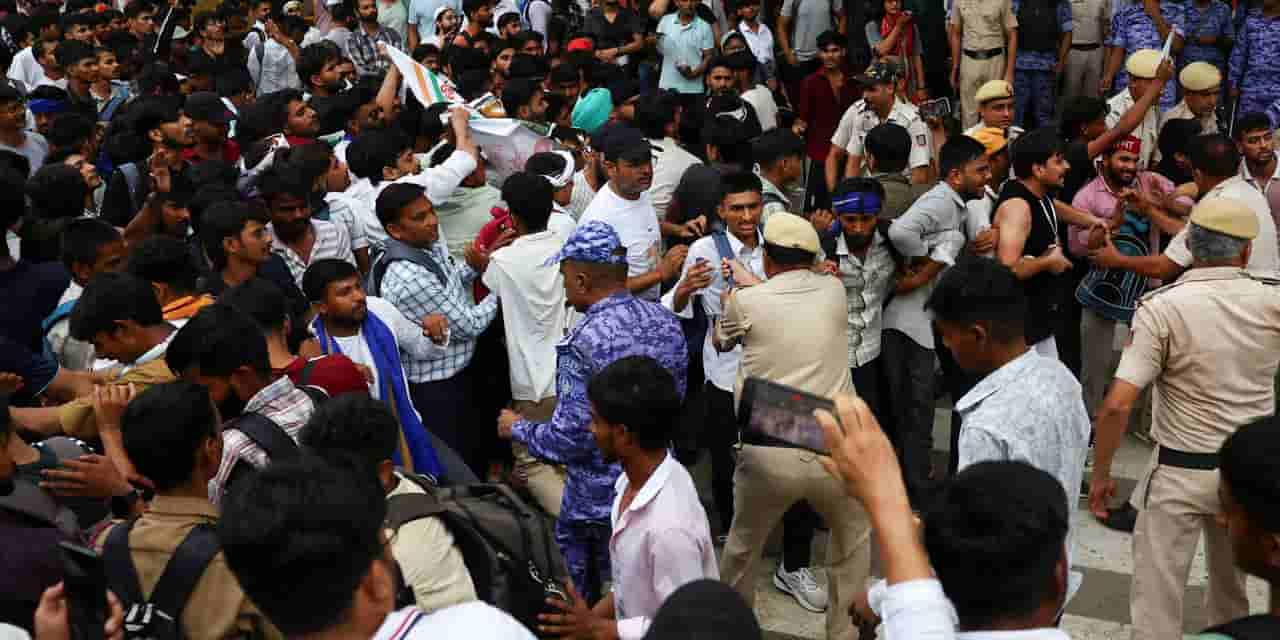
- Police used batons against supporters of India's "cockroach" movement attempting to march on parliament in New Delhi.
- The movement protests against examination paper leaks and high youth unemployment.
- Authorities denied permission for the protest, citing security concerns.
- Thousands of supporters gathered at the Jantar Mantar protest site.
- Protesters chanted slogans demanding the resignation of the education minister and prime minister.
Police in New Delhi used batons to disperse supporters of India's "cockroach" movement who were attempting to march on parliament on Monday. The youth-led movement, protesting widespread examination paper leaks and high youth unemployment, is seen as a significant challenge to Prime Minister Narendra Modi's government.
Authorities had denied permission for the protest, with Delhi's Deputy Commissioner of Police Sachin Sharma stating the protest site was overcrowded and could lead to an untoward situation. Thousands of protesters gathered at the Jantar Mantar site, chanting slogans demanding the resignation of Education Minister Dharmendra Pradhan and Prime Minister Modi.
The movement gained momentum after national medical school entrance test papers were leaked in May, affecting over 2 million students. Protesters like Adi Nathan, a 21-year-old student, expressed frustration over corruption and paper leaks, stating, "We want this corruption to end."
Activist Sonam Wangchuk, who had joined the sit-in and begun an indefinite hunger strike, was forcibly moved to a hospital by police on Saturday. In a note from the hospital, Wangchuk stated he would end his fast if the government took responsibility for failures in the education system or if protesters were allowed to reach parliament and lawmakers assured them their issues would be addressed.
The "cockroach" movement, initially gaining traction online with 22 million Instagram followers, has broadened its appeal and drawn support from some opposition parties. Analysts suggest the movement reflects growing frustration among young Indians over unemployment and examination irregularities.