Key facts
- Paul Weiss law firm negotiated a deal with the Trump administration to avoid sanctions.
- Nine law firms collectively pledged $940 million in pro bono services to settle with the administration.
- Paul Weiss committed $40 million in pro bono services as part of its agreement.
- Four firms that sued the Trump administration won favorable rulings in federal district court.
- Legal experts suggest such actions could intimidate attorneys from representing certain clients.
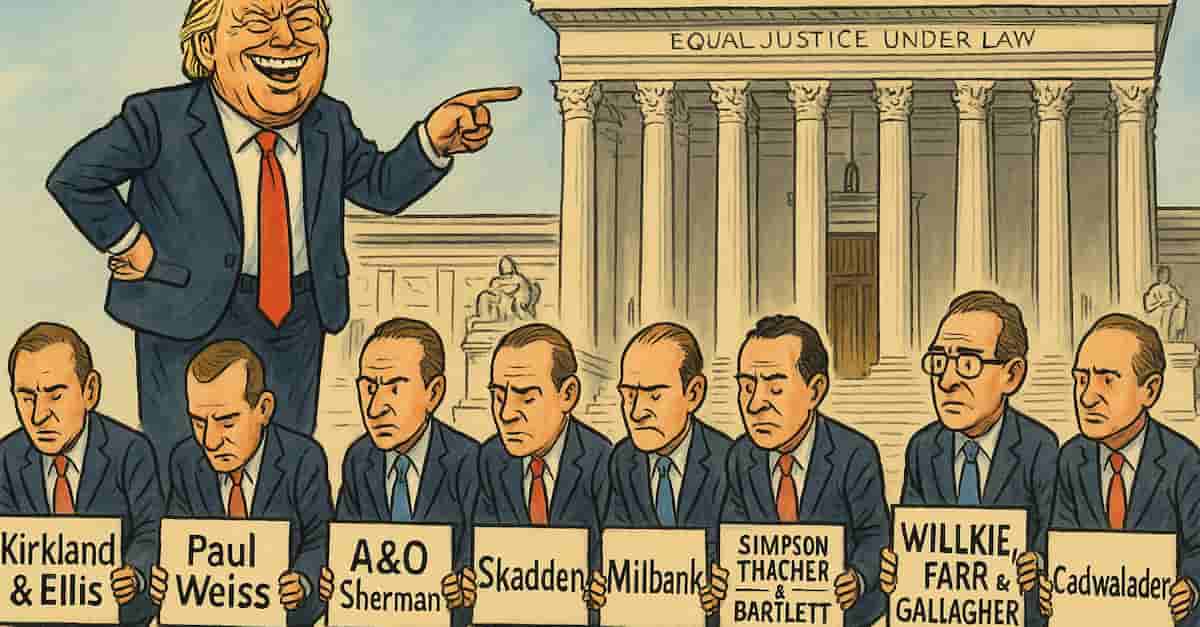
The second administration of U.S. President Donald Trump implemented unprecedented actions targeting American law firms and lawyers who had previously represented positions adverse to him. These actions included issuing executive orders and presidential memoranda designed to limit attorneys' access to government buildings, halt consideration for future government employment, cancel government contracts, and prevent companies using targeted firms from obtaining federal contracts.
In response, nine of the country's largest firms, including Paul, Weiss, Rifkind, Wharton & Garrison (Paul Weiss), capitulated to Trump's demands. They agreed to provide a total of $940 million in pro bono services in exchange for an assurance from the president not to issue punitive executive orders against them. Paul Weiss, notably, was the sole firm targeted by an executive order that did not sue the administration, instead opting to negotiate a deal to avoid sanctions and restore access, with its former managing partner Brad Karp meeting Trump in person.
Conversely, four firms—Perkins Coie, WilmerHale, Jenner & Block, and Susman Godfrey—chose to fight the administration's orders. These firms successfully obtained federal district court rulings that found the executive orders violated their First Amendment rights to advocate for clients and causes. The administration's subsequent decision to appeal these rulings after initially indicating it would abandon the appeal has been described as a rare and inexplicable reversal.