HomeEverything
Equities & FundsCrypto & Digital AssetsAI & TechnologyBusiness & CorporateUS Politics & PolicyGeopolitics & Global RiskMacro, Rates & FXCommodities & EnergyEuropean Politics & MarketsAsia-PacificReal Estate & Property
← All Stories

National Assembly Elects Committee Chairs Amid Opposition

Created at 30 Jun · 2:30 PM1 source↑ Market-relevant
IN SHORT

South Korea's National Assembly, controlled by the ruling Democratic Party, elected chiefs for 11 parliamentary committees. The main opposition People Power Party criticized the move, boycotting the session and vowing non-cooperation.

✉Newsletter

PiQ Daily

Pick your topics. Get only what matters, on your cadence.

Key Numbers

11parliamentary committees with elected chiefs
161DP seats in the 300-seat National Assembly

Who's Involved

Democratic Party (DP)
Ruling party that elected committee chairs
People Power Party (PPP)
Main opposition party that boycotted the session
Cho Jeong-sik
Assembly Speaker who announced election results
Han Byung-do
DP floor leader
Rep. Jeong Jeom-sig
PPP floor leader who criticized the move
National Assembly Elects Committee Chairs Amid Opposition

↳ Why This Matters

The unilateral election of parliamentary committee chairs by the ruling party, despite opposition, signals potential legislative gridlock and strained inter-party relations in South Korea, impacting the government's ability to pass future legislation.

Key facts

  • The National Assembly elected chiefs for 11 parliamentary committees.
  • The ruling Democratic Party (DP) unilaterally pushed for the elections.
  • The main opposition People Power Party (PPP) boycotted the session and criticized the move.
  • Disagreements over committee chairmanships, especially the judiciary committee, led to the impasse.
  • The DP holds a majority in the Assembly, enabling unilateral decisions.

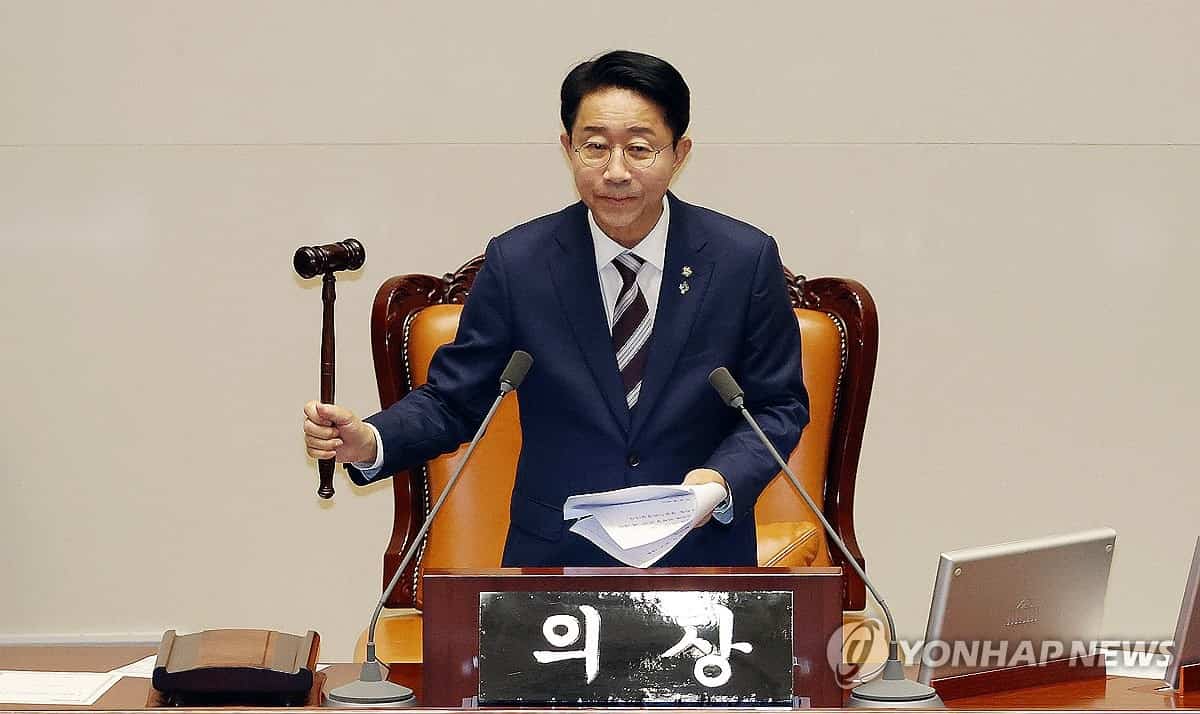
SEOUL, June 30 (Yonhap) -- The ruling Democratic Party (DP)-controlled National Assembly elected the chiefs of 10 parliamentary standing committees and a special budget committee on Tuesday, a move met with opposition from the main opposition People Power Party (PPP).

The elections for the 11 committee chairs occurred during a plenary session, following a failure by the ruling and opposition parties to reach an agreement on the formation of parliamentary standing committees for the latter half of the Assembly's term. The DP unilaterally recommended candidates for the positions.

The PPP criticized the DP's actions, boycotting the plenary session and vowing not to cooperate with the activated standing committees. The parties had been in negotiations for weeks over the distribution of committee chairmanships, with significant disagreement over who should lead the judiciary committee, a key panel for approving bills.

DP floor leader Han Byung-do and his PPP counterpart, Rep. Jeong Jeom-sig, held last-minute talks but could not find a compromise. Jeong emphasized that "checks and balances would be undermined" if the PPP did not chair the judiciary committee.

The DP, holding 161 out of 300 seats, has the majority needed to elect committee chiefs unilaterally. Assembly Speaker Cho Jeong-sik reportedly appointed members to the committees, a decision the PPP deemed unilateral and has formally protested.

With the current impasse over the 11 committees, the selection process for the remaining seven committee chairs is also anticipated to be contentious.

Frequently asked questions

The Democratic Party (DP) controls the National Assembly, holding 161 out of 300 seats.

The People Power Party (PPP) boycotted the session due to the ruling DP's unilateral election of committee chairs without reaching a compromise on power-sharing.

The judiciary committee is a key panel that has the power to approve bills before they are put to a plenary vote, making its chairmanship a point of contention.

What Happens Next

01The process to select chairs for the remaining seven committees is expected to be difficult.
02The PPP has vowed not to cooperate with the activated standing committees.

Get the newsletter.

Pick the topics you actually care about. We'll email when there's news worth your time, on the cadence you choose. Cancel any time from your account.

Cadence

How It Developed

The ruling Democratic Party elected chiefs for 10 parliamentary standing committees and a special budget committee.
The People Power Party criticized the unilateral elections and boycotted the plenary session.
Rival parties failed to agree on committee chair distribution, particularly for the judiciary committee.
The DP, holding a majority, proceeded with the elections without opposition consensus.
The PPP filed a protest document against the unilateral appointment of committee members.

Sources

T1
Nat'l Assembly elects parliamentary committee chairs amid PPP oppositionYonhap News Agency

Related Stories

National Assembly confirms Han Seong-sook as Prime Minister
30 Jun · 2:30 PM
Rival parties fail to agree on parliamentary committee formation
30 Jun · 7:41 AM
South Korea parliament confirms Han Seong-sook as prime minister
30 Jun · 1:31 PM
South Korea to implement facial verification for new mobile phones
30 Jun · 4:45 AM
Indonesia scales back military training after participant deaths
30 Jun · 4:36 AM