Key facts
- Four Democratic candidates for Maine's U.S. Senate seat debated on Thursday.
- Candidates focused attacks on Republican Senator Susan Collins and President Donald Trump.
- Nirav Shah was highlighted for his debate performance and personal narrative.
- Shenna Bellows faced difficulty answering a question about a U.S. raid in Venezuela.
- The candidates largely supported progressive policies, including Medicare for All.
- The Democratic nominee will be selected by 600 delegates next weekend.
Four leading candidates for the Democratic nomination for the U.S. Senate in Maine convened for their first debate on Thursday, focusing their attacks on Republican incumbent Susan Collins and President Donald Trump. The candidates, including Secretary of State Shenna Bellows, former Maine Senate President Troy Jackson, former Maine CDC Director Nirav Shah, and ex-congressional aide Jordan Wood, largely avoided internal disputes, signaling a strategy to unify against Collins.
Nirav Shah emerged as a notable debater, referencing the death of Joan Sebastian Guerrero by an ICE agent and connecting the administration's immigration policies to his background as the son of immigrants. He also criticized Collins for rising costs attributed to tariffs and the Iran war, and for the loss of Affordable Care Act subsidies.
Shenna Bellows faced a challenging moment when questioned about a potential U.S. raid to abduct Venezuelan President Nicolas Maduro, admitting confusion and requesting forgiveness. The candidates generally opposed the war in Iran and supported aid to Ukraine.
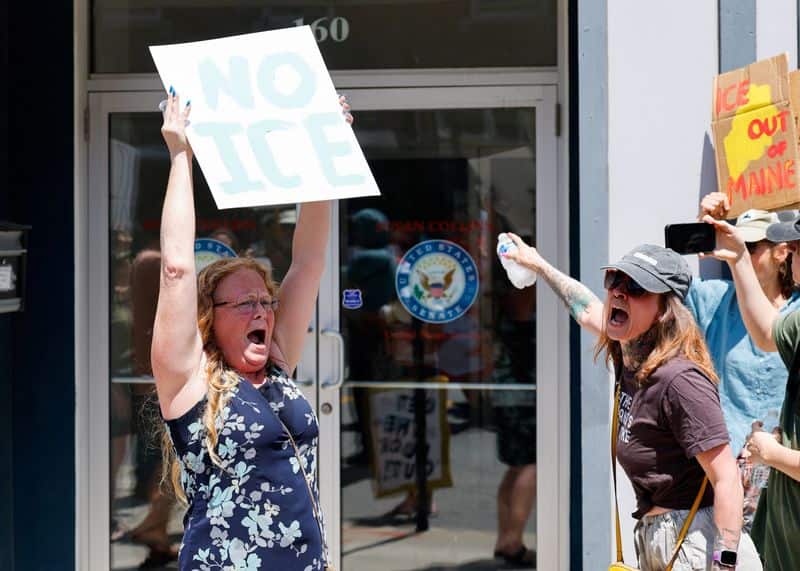
The contenders embraced progressive policies, advocating for Medicare for All, abolishing ICE and the Senate filibuster, and reforming the Supreme Court. Most candidates, except Jackson, accused the Israeli government of committing genocide in Gaza. This alignment with progressive stances could allow Republicans to label the eventual nominee as a "radical Democrat."
Electability was a key theme, with Shah highlighting his primary performance, Bellows emphasizing her fight against Trump, Jackson pointing to his bipartisan appeal as a logger, and Wood advocating for generational change and distancing himself from former candidate Graham Platner.
Approximately 600 delegates will select the nominee next weekend to replace Platner, who withdrew following sexual assault allegations, which he denies.