Key facts
- Laredo, Texas, has seen economic growth attributed to President Trump's tariffs.
- The future economic success of Laredo may be threatened by President Trump's current trade demands.
- The USMCA agreement is scheduled for a critical review in 2026, involving the U.S., Mexico, and Canada.
- Discussions during the USMCA review will cover contentious issues like vehicle content rules and supply chain security.
- The U.S. and Mexico have agreed to a 90-day extension of existing tariff terms, expiring in late October 2025.
- Mexico is actively pursuing trade diversification with regions outside the U.S.
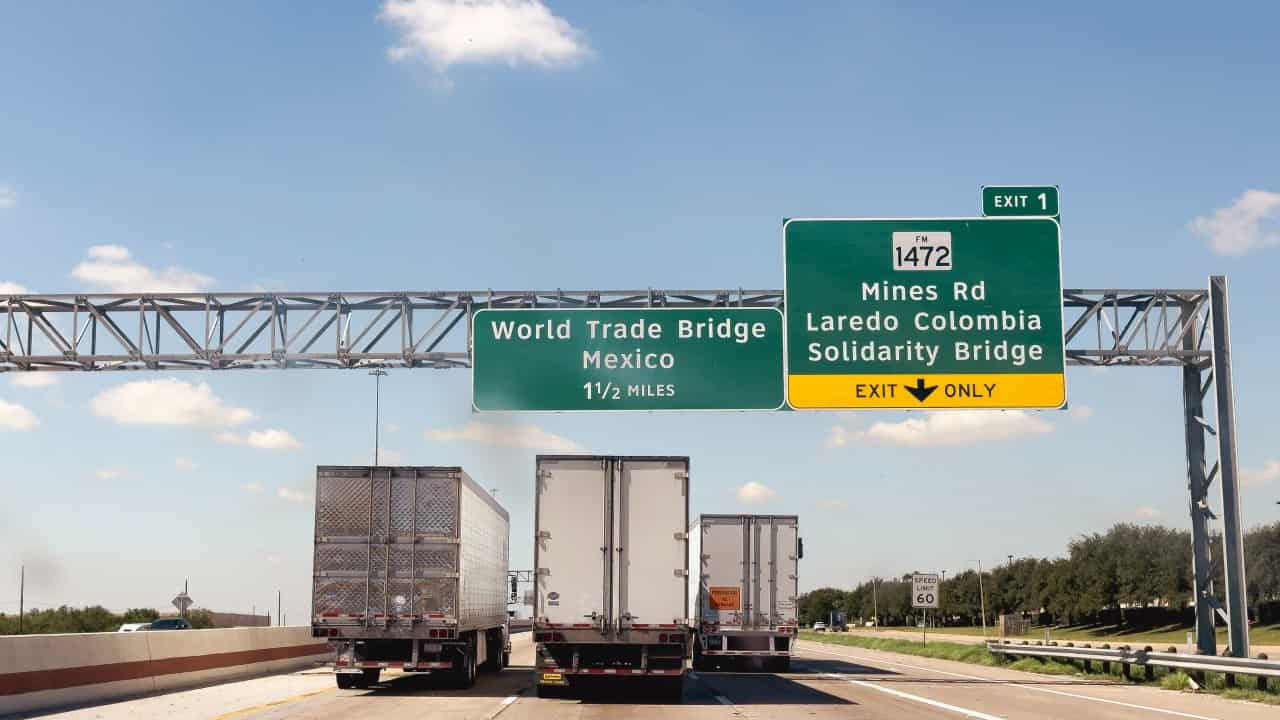
The economy of Laredo, Texas, a major U.S.-Mexico trade hub, is at a critical juncture as President Trump's trade policies, which previously fueled its growth through tariffs, now present potential risks. The city's prosperity is closely linked to the evolving trade relationship between the two nations.
The United States–Mexico–Canada Agreement (USMCA), originally signed in 2018, is slated for a significant review in 2026. This review will determine the agreement's future, potentially extending it for another 16 years or subjecting it to annual evaluations if consensus is not reached. Key areas of negotiation will include vehicle content rules, enforcement of forced labor standards, supply chain security, digital trade, market access in the context of Chinese competition, and agricultural, labor, and environmental commitments.
To facilitate these discussions, the U.S. Trade Representative's office will commence public consultations by October 4, 2025, with a comprehensive report and recommendation due to Congress by January 2, 2026. In the interim, the U.S. and Mexico agreed on July 31, 2025, to extend existing tariff provisions for 90 days, a period that concludes around October 29, 2025, unless further extended. This extension provides a temporary reprieve while deeper negotiations proceed.
Domestic political factors, such as the potential for a U.S. government shutdown at the end of the fiscal year on September 30th, could influence trade discussions. Additionally, Mexico's efforts to manage cartel violence and fentanyl trafficking are under close observation by Washington and may impact trade negotiations. Despite these complexities, the remainder of 2025 is not expected to bring abrupt changes to trade terms, provided key indicators remain within acceptable limits.
Mexican policymakers are proactively preparing for the 2026 review by exploring trade diversification strategies, including agreements with Asian, European, and South American markets to mitigate potential turbulence from the U.S. market. For businesses involved in supply chains, the message is to view these negotiations as a strategic, long-term process rather than a short-term event, as most sourcing and distribution decisions will be finalized before formal talks conclude.
The current tariff extension is seen not as a definitive outcome but as a crucial point for reassessment. It offers an opportunity for businesses and governments to evaluate risk exposures, enhance cross-border resilience, and develop contingency plans. Experts with experience in major border gateways like Laredo emphasize the value of deep, on-the-ground knowledge for navigating these complex trade dynamics.