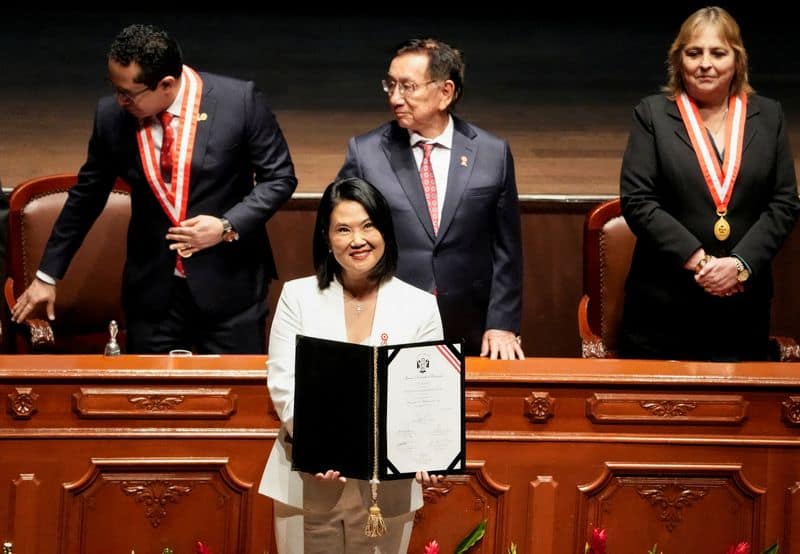
Key facts
- Keiko Fujimori will be sworn in as Peru's president on July 30.
- Fujimori's election signifies a broader rightward political trend in Latin America.
- She aims to foster cooperation with the U.S. and potentially join a regional crime-fighting initiative.
- Peru faces economic challenges, including vulnerability to climate-related shocks, despite resilience from copper exports.
- Her party will be the largest minority bloc in a divided Congress, posing legislative challenges.
Keiko Fujimori is set to be inaugurated as Peru's president, continuing a trend of conservative leaders being elected across Latin America. Voters in the region have expressed frustration with rising crime, sluggish economic growth, and political instability. Fujimori, the 51-year-old daughter of former President Alberto Fujimori, will be Peru's first elected female head of state, marking a significant political comeback for her influential family.
Her presidency follows a decade of political turmoil in Peru, with no leader completing a full five-year term since 2016. Fujimori's election is seen as part of a broader rightward shift in Latin America, with newly elected leaders often advocating for closer ties with the United States and stricter crime policies. Fujimori has indicated a willingness to cooperate with the U.S. administration and expressed interest in Peru joining a U.S.-proposed regional initiative to combat transnational crime.
On the economic front, Peru has shown resilience, largely due to copper exports. However, the economy is vulnerable to climate-related shocks, as seen in a recent slowdown due to weakened agricultural exports and fishing output. The central bank has projected moderate growth for the coming years.
Fujimori narrowly defeated leftist congressman Roberto Sanchez, who has alleged electoral fraud without providing evidence and plans to lead a left-wing opposition in Congress. Her Popular Force party is expected to be the largest minority bloc in a fragmented, bicameral Congress, which could present legislative challenges. The incoming coalition secured the Senate presidency, while the opposition won leadership of the Chamber of Deputies, indicating a potentially difficult period of governance.
Several regional leaders, including Argentina's Javier Milei, Chile's Jose Antonio Kast, and Ecuador's Daniel Noboa, are expected to attend Fujimori's inauguration.