All NewsEducationTV
Equities & FundsCrypto & Digital AssetsAI & TechnologyBusiness & CorporateUS Politics & PolicyGeopolitics & Global RiskMacro, Rates & FXCommodities & EnergyEuropean Politics & MarketsAsia-PacificReal Estate & Property
Story archiveAll categories
← All Stories

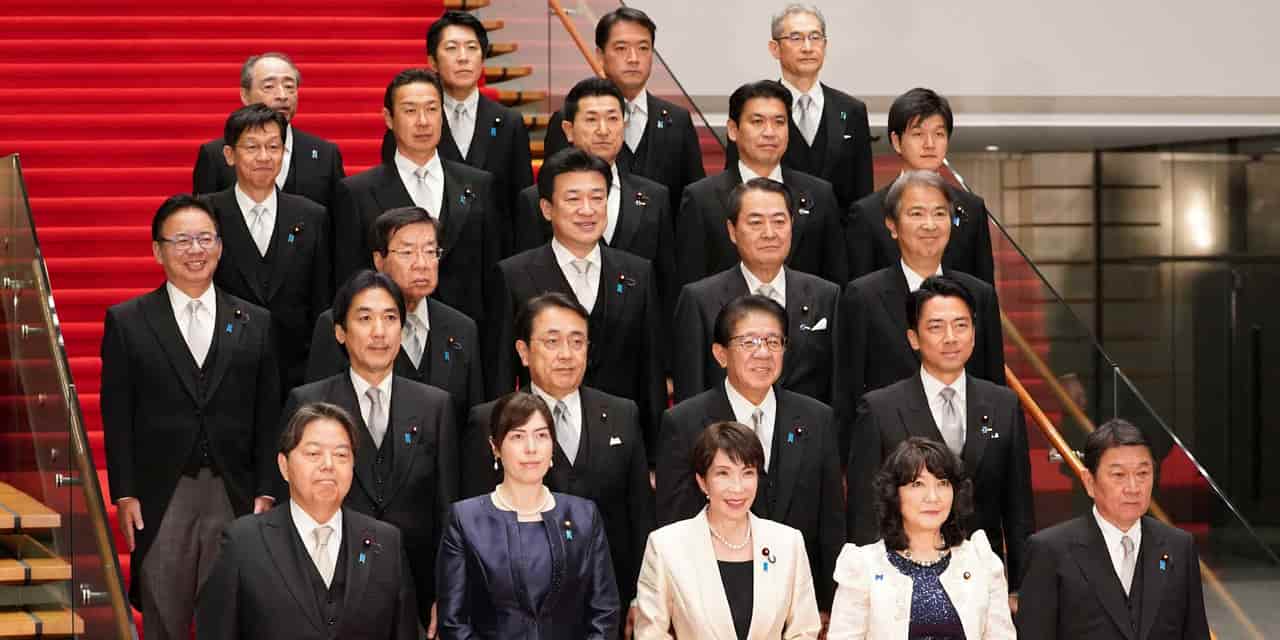
Japan needs quota debate to raise women's representation in politics

Created at 30 Jul · 8:11 PM1 source↑ Market-relevant
IN SHORT

Japan's political landscape faces a significant gender imbalance, with a low representation of women in parliament. A 2018 law encourages parties to aim for gender parity in candidate nominations, but its effectiveness is debated, prompting discussions on implementing quota systems.

✉Newsletter

PiQ Daily

Pick your topics. Get only what matters, on your cadence.

Key Numbers

125thJapan's global ranking in gender gap report
138thJapan's ranking in political representation
8.4%Women in House of Representatives in 1946 election
9.7%Women in House of Representatives in 2021 election
25.8%Women elected in 2022 House of Councillors election

Who's Involved

Mari Miura
Professor of Political Science at Sophia University, expert on gender parity in Japanese politics
Sanae Takaichi
Japanese Prime Minister
Constitutional Democratic Party (CDP)
Political party that fielded over 50% female candidates in 2022 election
Japanese Communist Party (JCP)
Political party that fielded over 50% female candidates in 2022 election
Japan needs quota debate to raise women's representation in politics

↳ Why This Matters

Japan's low representation of women in politics highlights a significant gender imbalance that impacts policy-making and democratic representation. Addressing this issue is crucial for fostering a more inclusive and equitable society and for Japan to improve its standing in global gender equality metrics.

Key facts

  • Japan ranks 138th out of 146 countries in political representation for women.
  • The percentage of women in Japan's House of Representatives has remained stagnant for decades.
  • The 2018 Promotion of Gender Equality in the Political Field Act encourages parties to aim for gender parity in candidate nominations.
  • Some Japanese political parties have increased their female candidate nominations following the 2018 law.
  • Debates continue in Japan regarding the effectiveness of current measures and the potential implementation of quota systems.

Japan faces a persistent challenge in achieving gender equality within its political sphere, with a notably low representation of women in parliament. Despite the passage of the Promotion of Gender Equality in the Political Field Act in 2018, which encourages political parties to nominate an equal number of male and female candidates, the effectiveness of this legislation is under scrutiny. The country's ranking in the World Economic Forum's gender gap report has fallen, particularly in political representation, where it ranks 138th out of 146 countries.

While the 2018 law has prompted some parties, such as the Constitutional Democratic Party and the Japanese Communist Party, to field a higher percentage of female candidates in recent elections, this has not yet translated into a significant overall increase in women's representation. The percentage of women in the House of Representatives has seen minimal change over several decades, hovering around 9.7% in 2021, a slight increase from 8.4% in 1946. The 2022 House of Councillors election saw 25.8% of elected members being women.

Experts and policymakers are now considering more robust measures, including the debate around implementing quota systems, drawing lessons from countries like Germany. Research is being conducted to understand public support for such quotas in Japan and to identify persuasive framing strategies for voters. The goal remains to achieve greater gender balance in politics, a long-term endeavor requiring multifaceted efforts.

Frequently asked questions

Japan ranks 138th out of 146 countries in political representation for women. The percentage of women in the House of Representatives has seen very little increase over the past 70 years, standing at 9.7% in 2021.

The 2018 law encourages political parties to aim for gender parity in candidate nominations. Some parties, like the CDP and JCP, responded by fielding over 50% female candidates in the 2022 Upper House election, though overall progress remains slow.

Discussions are ongoing about implementing quota systems, similar to those in Germany, as a means of affirmative action to redress the gender gap in the legislature.

What Happens Next

01Further debate on the implementation of quota systems for increasing women's political representation in Japan.
02Continued efforts by political parties to set and meet numerical targets for female candidate nominations.
03Research into public support and persuasive framing strategies for gender quotas in Japan.

Get the newsletter.

Pick the topics you actually care about. We'll email when there's news worth your time, on the cadence you choose. Cancel any time from your account.

Cadence

How It Developed

Japan has a long-standing lack of female lawmakers, ranking 138th globally in political representation.
The percentage of women in Japan's House of Representatives has seen minimal increase over 70 years.
The Promotion of Gender Equality in the Political Field Act was passed in 2018, urging parties to equalize male and female candidates.
Some parties, like the CDP and JCP, fielded over 50% female candidates in the 2022 Upper House election.
Discussions are ongoing regarding the implementation of quota systems, drawing lessons from Germany.
Public support for gender quotas in Japan is being explored, focusing on persuasive framing strategies for voters.

Sources

T1
Japan needs quota debate to raise women's representation in politicsNikkei Asia
T2
Toward Gender Parity in Japan: Who Supports Gender Quotas and Why ...bu.edu
T2
Voluntary Party Quotas: Japan's Status Quo and Lessons from Germanykas.de

Related Stories

Malaysia's Anwar seizes on haj fund report ahead of election
30 Jul · 9:41 AM
Ruling party proposes bill to strip prosecution of investigative powers
30 Jul · 12:11 AM
Andy Burnham's mayoral seat up for grabs as he becomes UK Prime Minister
30 Jul · 4:21 AM
US Democratic Senators Urge Treasury to Revive Harriet Tubman $20 Bill Plan
30 Jul · 10:07 AM
Election data manipulation suspected in South Korea's Gyeonggi Province
30 Jul · 7:57 AM