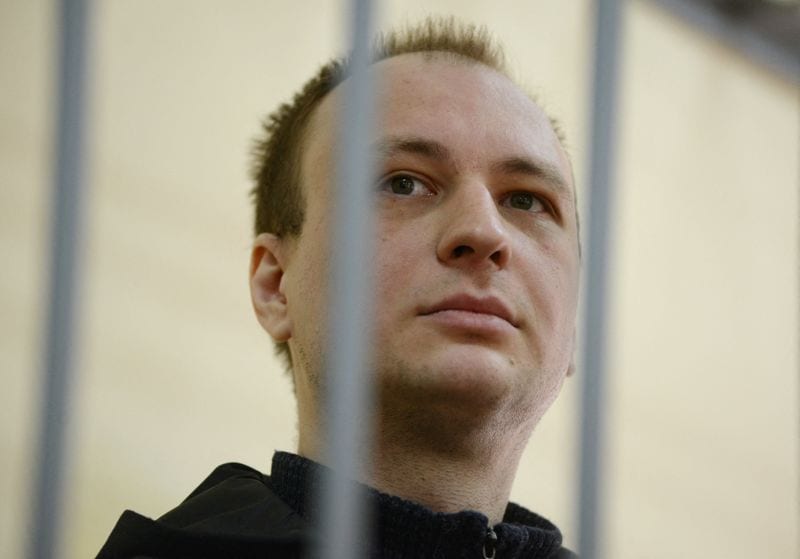
Key facts
- Former U.S. Marine Robert Gilman, jailed in Russia since January 2022, may be near death.
- Gilman was allegedly tortured and injected with mind-altering drugs, leading to a catatonic-like state.
- His sister and advocacy groups are concerned he is not receiving adequate medical care.
- The U.S. State Department has urged Russia to release Gilman for urgent medical treatment.
- Secretary of State Marco Rubio reportedly discussed Gilman's case with Russian Foreign Minister Sergei Lavrov.
A former U.S. Marine, Robert Gilman, who has been imprisoned in Russia since January 2022, may be close to death, according to his sister and two hostage advocacy groups. Gilman, 32, allegedly suffered torture and was injected with mind-altering drugs, leading to a catatonic-like state in June where he is being fed through a tube.
Global Reach, an advocacy group representing Gilman's family, stated that he was moved from a prison hospital to the psychiatric ward of a civilian emergency hospital in Voronezh in late June. His condition, described as a "dissociative stupor," prevents him from communicating or attending court hearings. The World Health Organization's ICD-10 classification system describes this state as a "profound diminution or absence of voluntary movement and normal responsiveness to external stimuli."
Gilman's sister, Lexie Hudson, expressed extreme fear for her brother's life, stating she might never see him again if Russia does not release him. The U.S. State Department has also voiced deep concern over Gilman's health and continued detention, urging Moscow to allow him to receive urgent medical treatment in the United States. Secretary of State Marco Rubio reportedly raised Gilman's case with Russian Foreign Minister Sergei Lavrov during a meeting in Manila on July 23.
Gilman was arrested in January 2022 while traveling by train and was initially accused of kicking a police officer while drunk. His father, Vladimir Gilman, contested these charges in a Boston Globe op-ed, stating his son was ill and accidentally kicked the officer, who was uninjured and dropped the charges. Gilman was sentenced to 4-1/2 years in jail, a sentence that Russian state media reported was extended to 10 years in 2024 for allegedly assaulting prison staff. Lebson and Richards deny this, attributing his transfer to the hospital to harsh conditions and mistreatment.
Gilman's mother has been barred from visiting him in the hospital, despite possessing a judicial order. U.S. consular officials and Gilman's Russian lawyer have also been denied access to him in the hospital, though consular officials were occasionally allowed to visit him in prison. Advocacy groups have drawn parallels to the case of Otto Warmbier, a U.S. college student who died shortly after being released from North Korean detention in a comatose state.