Key facts
- Prime Minister Narendra Modi announced the creation of fast-track courts to address exam paper leaks.
- Protesters and opposition parties rejected the proposal, demanding the resignation of Education Minister Dharmendra Pradhan.
- The protests represent the largest youth challenge to Modi's government since 2014.
- Opposition parties have disrupted parliament's monsoon session over the issue.
- Clashes between protesters and police occurred in New Delhi, resulting in injuries to officers.
Indian Prime Minister Narendra Modi announced on Thursday that "fast-track" courts would be established to prosecute individuals involved in exam paper leaks, marking his first public statement following days of youth protests. The announcement came amid widespread demonstrations demanding the resignation of Education Minister Dharmendra Pradhan.
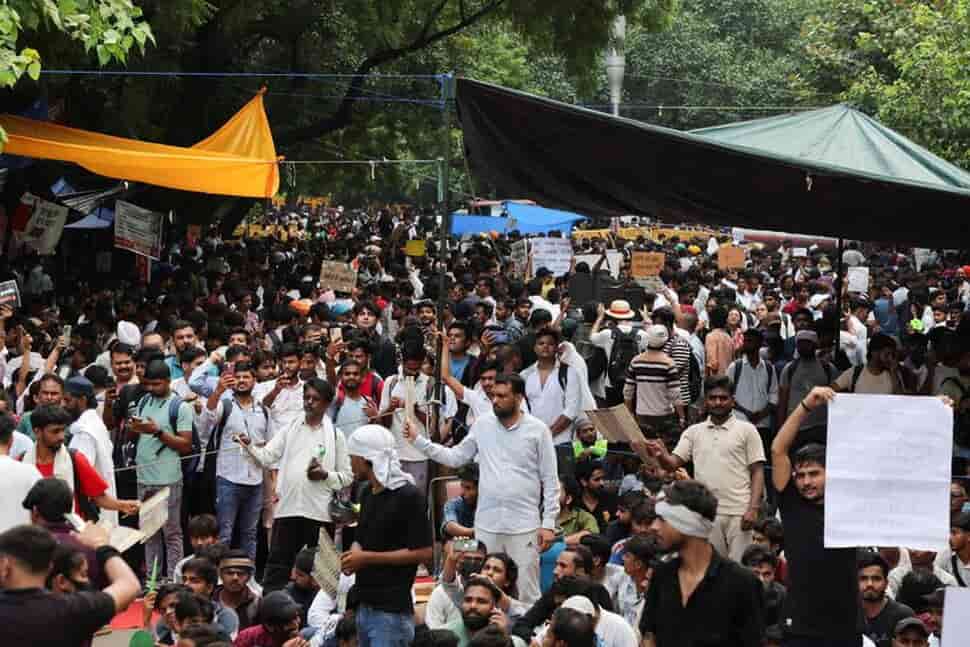
However, protesters and opposition parties swiftly rejected Modi's proposal, insisting on Pradhan's resignation and disrupting parliament for the fourth consecutive day. The protests, which have swelled into the largest youth challenge to Modi's government since he came to power in 2014, have led to clashes between demonstrators and police in New Delhi, with officers deploying tear gas and batons.
Modi stated on X that "fast-track courts" would ensure swift punishment for those who "harm the future of young people." These courts are designed to expedite cases within India's overburdened justice system. The self-named Cockroach Janta Party (CJP), which has been protesting the leaks affecting approximately 2 million students, questioned the effectiveness of such courts and demanded to know why leaks are occurring in the first place. CJP founder Abhijeet Dipke stated their protests would continue until Pradhan resigns.
Opposition leader Rahul Gandhi asserted that Modi himself had harmed the future of young people. Opposition lawmakers protested outside and inside parliament, leading to multiple suspensions of proceedings. Meanwhile, lawmakers from Modi's Bharatiya Janata Party (BJP) and its allies staged a counter-protest, calling for a parliamentary debate on the leaks. The government has accused the opposition of insincerity for not agreeing to a debate.
Late Wednesday, over 10,000 people gathered at the Jantar Mantar protest site, with some protesters reportedly attacking police. By Thursday afternoon, thousands had returned to the site amid heavy security. In response to security concerns, Delhi Metro Rail Corp. announced the closure of 16 stations in central New Delhi.