Key facts
- A U.S. appeals court ruled Enbridge trespassed on land belonging to the Bad River Band of the Lake Superior Tribe of Chippewa Indians.
- The court found Enbridge liable for trespass but extended the deadline for rerouting the pipeline.
- The appeals court ordered a recalculation of damages previously awarded to the tribe.
- The Line 5 pipeline, built in 1953, carries up to 540,000 barrels of oil per day through the Great Lakes region.
A U.S. appeals court has determined that Enbridge trespassed on land belonging to the Bad River Band of the Lake Superior Tribe of Chippewa Indians by running its Line 5 pipeline underneath it. The 7th U.S. Circuit Court of Appeals in Chicago upheld the finding of trespass but modified the remedies ordered by a federal district judge.
The appeals court found the original three-year deadline for Enbridge to reroute the pipeline too aggressive, citing potential harm to consumers and international fallout with Canada due to the 1977 U.S.-Canadian treaty governing transit pipelines. However, Circuit Judge Michael Scudder emphasized that Enbridge must remove the pipeline from tribal land, stating the extended grace period does not signify approval of the company's actions.
Regarding damages, the appeals court ruled that the district judge had abused discretion by "double-counting" Enbridge's profits. A recalculation is required, considering the ongoing nature of the trespass, potential interest owed, and the conduct of both parties concerning a reroute. The court also refused to hold Enbridge liable for nuisance, citing federal law preemption.
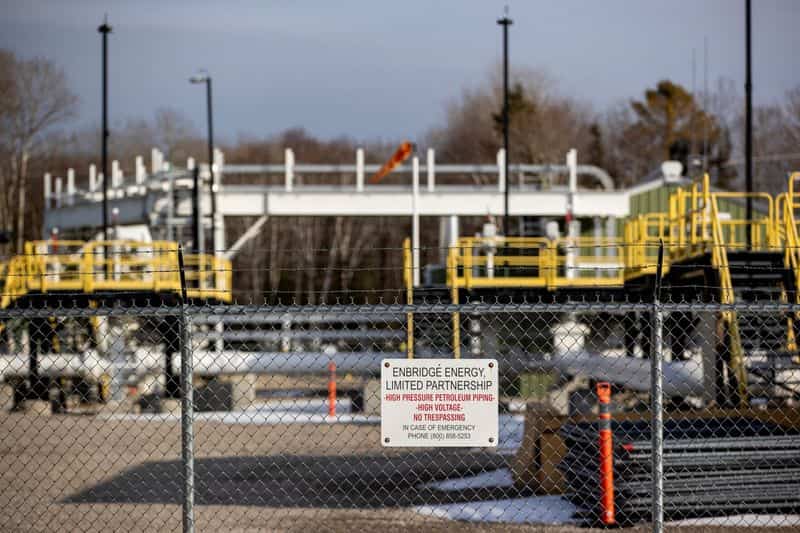
The Line 5 pipeline, constructed in 1953, transports up to 540,000 barrels of oil daily through the Great Lakes region. Approximately 12 miles of the pipeline traverse the Bad River Reservation. The tribe initiated a lawsuit in 2019 after negotiations failed. While Enbridge's easement extends to 2043 on some parcels, its rights-of-way on others expired in 2013.