HomeEverythingEducation
Equities & FundsCrypto & Digital AssetsAI & TechnologyBusiness & CorporateUS Politics & PolicyGeopolitics & Global RiskMacro, Rates & FXCommodities & EnergyEuropean Politics & MarketsAsia-PacificReal Estate & Property
Story archiveAll categories
← All Stories

Costa Rica's President Clashes With Judiciary Over Crime Response

Created at 9 Jul · 5:53 PM1 source↑ Market-relevant
IN SHORT

Costa Rican President Laura Fernandez is in a standoff with the judiciary over budget cuts and proposals to appoint the attorney general, stalling efforts to combat drug-related violence. Judicial officials deny corruption and warn budget cuts threaten checks and balances.

✉Newsletter

PiQ Daily

Pick your topics. Get only what matters, on your cadence.

Key Numbers

twopeople murdered daily on average
17.2homicide rate per 100,000 inhabitants in 2023
38%homicides resulting in conviction
36%increase in prison population since 2020
366incarceration rate per 100,000 inhabitants

Who's Involved

Laura Fernandez
Costa Rica's recently elected President
Evelyn Villarreal
Coordinator of the State of Justice report
Carlo Diaz
Attorney General
Patricia Solano
President of Costa Rica's top criminal court
Gerald Campos
Security Minister
Nayib Bukele
President of El Salvador
Rodrigo Chaves
Former President of Costa Rica
Costa Rica's President Clashes With Judiciary Over Crime Response

↳ Why This Matters

The institutional conflict between Costa Rica's executive and judicial branches risks undermining the nation's ability to combat rising drug-related violence, potentially destabilizing the region and impacting security for cocaine transit to the United States.

Key facts

  • Costa Rican President Laura Fernandez is in a standoff with the country's judiciary.
  • The dispute involves proposed budget cuts to the judiciary and a legislative proposal to shift attorney general appointment power from the Supreme Court to Congress.
  • Fernandez accused the judiciary of being infiltrated by organized crime and blocking her security policies.
  • Judicial officials deny corruption allegations and argue budget cuts threaten democratic checks and balances.
  • Security Minister Gerald Campos highlighted a low conviction rate for homicides as a key problem.

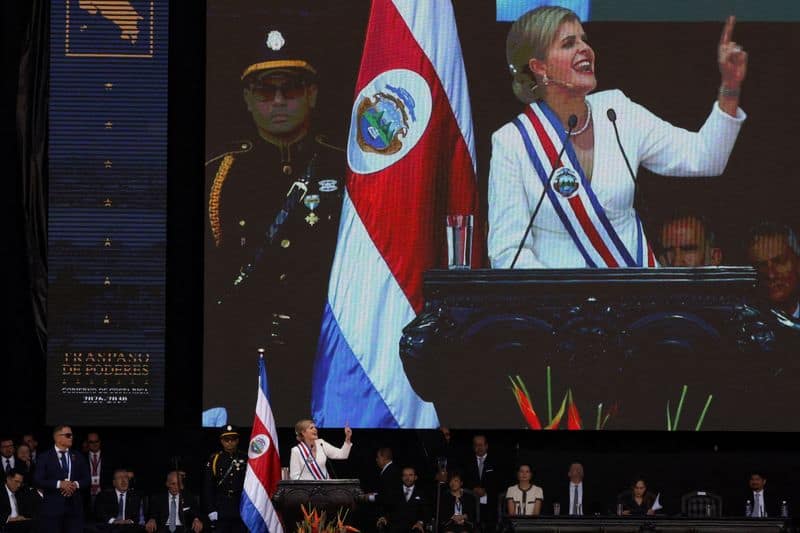
A significant institutional clash is unfolding in Costa Rica between President Laura Fernandez and the country's judiciary, hindering a unified response to escalating drug-related violence. The conflict, just two months into Fernandez's term, centers on proposed budget cuts to the judiciary and a legislative push to transfer the appointment of the attorney general from the Supreme Court to Congress.

Fernandez has accused the judiciary of being infiltrated by organized crime and obstructing her administration's security policies, which are reportedly inspired by El Salvador's President Nayib Bukele. Judicial officials have vehemently denied these corruption allegations, demanding evidence and asserting that the planned budget cuts for 2026 and 2027 threaten democratic checks and balances and undermine the fight against crime.

Security Minister Gerald Campos highlighted the low conviction rate for homicides as a critical issue, stating that only 38% of such cases result in a conviction. Experts and judicial authorities attribute the rising crime to drug trafficking organizations exploiting Costa Rica's strategic location as a transit corridor. Evelyn Villarreal, coordinator of the State of Justice report, emphasized that internal discord makes it difficult to effectively combat the well-resourced criminal element.

President Fernandez has publicly called for the resignations of Attorney General Carlo Diaz and several Supreme Court magistrates, citing a lack of progress on the security crisis, though none have stepped down. Patricia Solano, president of the country's top criminal court, rejected the government's claims, arguing that the administration is attempting to weaken a vital democratic institution. She noted a perceived "systematic attack against the judiciary" dating back to 2022 and pointed to a 36% increase in the prison population since 2020, with an incarceration rate of 366 per 100,000 inhabitants.

Frequently asked questions

The conflict centers on proposed budget cuts to the judiciary and a legislative proposal to change how the attorney general is appointed, which President Fernandez supports and the judiciary opposes.

The article does not provide specific evidence cited by President Fernandez, only her accusation that the judiciary is 'infiltrated by organized crime to the core'.

Costa Rica's homicide rate hit a record 17.2 per 100,000 inhabitants in 2023, which is double the rate from a decade ago.

Judicial officials deny corruption allegations, challenge the president to provide evidence, and argue that budget cuts threaten democratic checks and balances and hinder crime fighting.

What Happens Next

01Judiciary officials await evidence from President Fernandez regarding alleged infiltration by organized crime.
02The proposed judicial budget cuts for 2026 and 2027 are expected to be debated.
03The legislative proposal to change attorney general appointment powers will likely face further scrutiny.

Get the newsletter.

Pick the topics you actually care about. We'll email when there's news worth your time, on the cadence you choose. Cancel any time from your account.

Cadence

How It Developed

President Laura Fernandez is clashing with Costa Rica's judiciary.
The dispute centers on judicial budget cuts and a proposal to change attorney general appointments.
Fernandez accused the judiciary of being infiltrated by organized crime.
Judicial officials denied corruption and warned budget cuts threaten democratic checks and balances.
Security Minister Gerald Campos stated that only 38% of homicides result in convictions.
Evelyn Villarreal, coordinator of the State of Justice report, noted internal conflict hinders preparedness.
Fernandez called for the resignation of the Attorney General and top Supreme Court magistrates.
Patricia Solano, president of the top criminal court, rejected claims of judicial responsibility for crime surge.

Sources

T1
Costa Rica's new president clashes with judiciary over tackling drug violenceReuters

Related Stories

Trump administration revives Monroe Doctrine for Latin America
8 Jul · 6:23 PM
Eleven more deportees arrive in Eswatini from US
8 Jul · 7:12 PM
Judge restricts roommate interview in Charlie Kirk murder case
8 Jul · 11:37 PM
Supreme Court upholds prison terms for shaman, ex-Unification Church official
9 Jul · 5:21 AM
Two Guatemalan men plead guilty in Texas to smuggling charges
8 Jul · 11:16 PM