Key facts
- The 1951 Refugee Convention was adopted 75 years ago, with Britain as a negotiator.
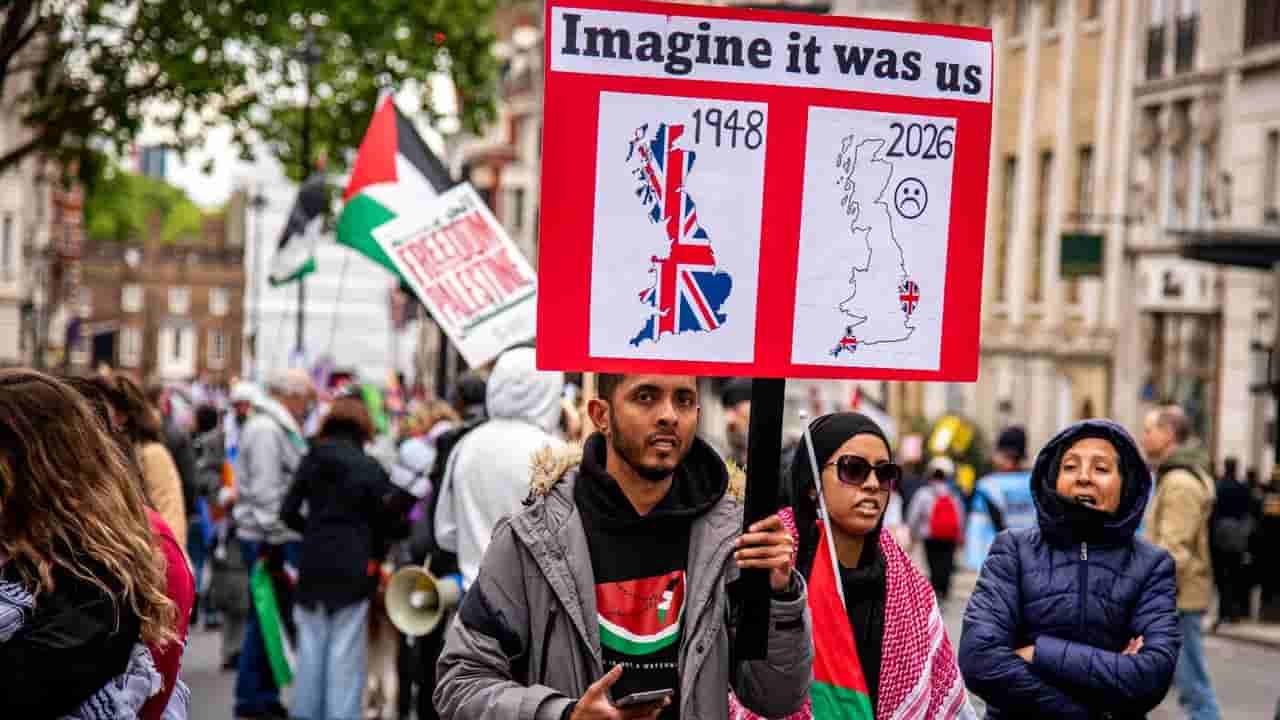
- A petition argues Britain's historical policies in Palestine led to the creation of a long-standing refugee crisis.
- Palestinian refugees were excluded from the convention's standard protections via a temporary arrangement.
- The petition demands the UK government formally acknowledge and apologize for its actions in Palestine.
- A coalition of 45 MPs and peers has urged the prime minister to address the petition.
- The government has not responded to the petition after 10 months.
On the 75th anniversary of the 1951 Refugee Convention, a petition is urging the British government to confront its historical role in creating the Palestinian refugee crisis. The petition, co-authored by a legal scholar, argues that Britain acted unlawfully in Palestine between 1917 and 1948, leading to the displacement of over 750,000 Palestinians during the Nakba.
Despite Britain's role in negotiating the convention, Palestinian refugees were excluded from its ordinary protections through a temporary arrangement tied to UNRWA assistance, which has persisted for generations. The petition, a 400-page legal submission, calls for the UK to acknowledge its past actions, issue a formal apology in parliament, and consider reparations.
A cross-party group of 45 MPs and peers has called on the prime minister to respond to the petition, which has been pending for 10 months. The author emphasizes that legal obligations do not lapse due to inconvenience and that consistent application of international law, including self-scrutiny, is crucial for a state's credibility. Precedents for acknowledging and settling colonial-era wrongs exist, such as the 2013 settlement with Kenyan victims of Mau Mau uprising abuses. The petition asks Britain to apply its own principles consistently.