HomeAll NewsEducationTV
Equities & FundsCrypto & Digital AssetsAI & TechnologyBusiness & CorporateUS Politics & PolicyGeopolitics & Global RiskMacro, Rates & FXCommodities & EnergyEuropean Politics & MarketsAsia-PacificReal Estate & Property
Story archiveAll categories
← All Stories

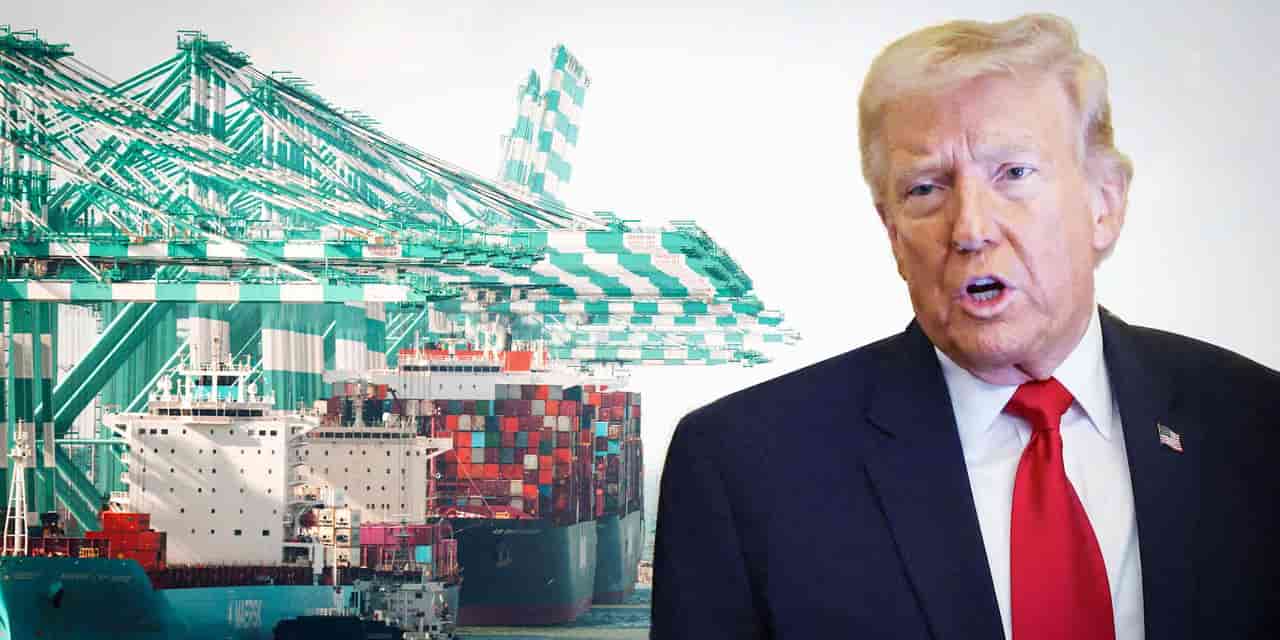
Asian economies question basis for Trump's 'forced labor' tariffs

Created at 24 Jul · 7:11 AM1 source↑ Market-relevant
IN SHORT

Asian nations have criticized new U.S. tariffs on imports, citing a lack of evidence for forced labor in their supply chains. The duties, ranging from 10% to 12.5%, replace expiring global tariffs and are seen by some as a protectionist measure.

✉Newsletter

PiQ Daily

Pick your topics. Get only what matters, on your cadence.

Key Numbers

10% to 12.5%tariff range on imports
60economies affected by tariffs
10%previous global import tax rate
12.5%Australian goods tariff rate increase

Who's Involved

Donald Trump
U.S. President whose administration announced new tariffs
Jamieson Greer
U.S. Trade Representative stating the U.S. rigorously enforces forced labor import bans
Todd McClay
New Zealand Trade and Investment Minister calling the decision disappointing and not credible
Don Farrell
Australian Trade Minister calling the action unjustified and inconsistent with free trade agreement
Minoru Kihara
Japanese Chief Cabinet Secretary expressing regret over tariffs and seeking confirmation
Vivian Balakrishnan
Singapore Foreign Minister questioning the economic justification for the tariffs
Wendy Cutler
Former U.S. trade negotiator at Asia Society Policy Institute commenting on legal aspects
Global Trade Research Initiative (GTRI)
India-based think tank questioning the evidence for tariffs on Indian exports
Asian economies question basis for Trump's 'forced labor' tariffs

↳ Why This Matters

The imposition of these tariffs by the U.S. on a broad range of economies, particularly those in Asia, signals a continuation of protectionist trade policies that could disrupt global supply chains and strain international trade relations, potentially leading countries to seek greater economic independence from the U.S.

Key facts

  • The U.S. has imposed tariffs of 10% to 12.5% on imports from around 60 economies.
  • The tariffs are based on allegations of inadequate measures to prevent forced labor in supply chains.
  • Asian nations like Japan, Australia, Singapore, and India have criticized the tariffs as baseless and unjustified.
  • These countries assert they have strong measures against forced labor and question the U.S. investigation's evidence.
  • The new duties replace temporary global tariffs that are set to expire.

Asian governments and analysts have expressed disappointment and skepticism regarding the White House's announcement of new tariffs, ranging from 10% to 12.5%, on imports from approximately 60 economies. The U.S. stated these duties are aimed at economies that have not adequately enforced bans on imports made with forced labor, a move that replaces temporary global tariffs expiring the same day.

Several Asian nations, including Japan, Australia, Singapore, and New Zealand, have pushed back against the tariffs, describing them as baseless and unjustified. They argue that their measures to combat forced labor and modern slavery are robust and globally recognized, questioning the U.S. investigation's findings and calling the rationale a 'legal pretext.' Australia stated the action is inconsistent with its free trade agreement with the U.S. and urged its withdrawal, noting its tariff rate would increase to 12.5% from 10%. New Zealand's Trade and Investment Minister called the decision disappointing but not unexpected, given President Trump's campaign focus on tariffs.

Singapore's Foreign Minister questioned the economic justification for the new duties, while Japan's Chief Cabinet Secretary expressed regret and sought assurances that the levies would not exceed those stipulated in last year's bilateral trade agreement. A U.S. Trade Representative asserted that the U.S. has a long-standing and rigorously enforced ban on forced labor imports, urging trading partners to adopt similar measures. Analysts suggest these tariffs are part of an effort to re-establish protectionist trade policies following a legal setback earlier in the year, with retaliation from trading partners being unlikely but a continued effort to reduce dependence on the U.S. market anticipated.

Frequently asked questions

The U.S. stated the tariffs are aimed at economies that have not adequately adopted or enforced bans on imports made with forced labor.

Key affected economies include Japan, Australia, Singapore, India, and New Zealand.

They have largely described the tariffs as disappointing, unjustified, and lacking credible evidence, while stopping short of signaling retaliation.

They replace temporary global tariffs that expire on the same day and are seen as a way to re-establish protectionist measures after a legal setback.

What Happens Next

01Japan will continue confirming with the U.S. that tariffs do not exceed those in last year's agreement.
02Trading partners are expected to continue efforts to reduce their dependence on the U.S. market.

Get the newsletter.

Pick the topics you actually care about. We'll email when there's news worth your time, on the cadence you choose. Cancel any time from your account.

Cadence

How It Developed

The U.S. announced tariffs of 10% to 12.5% on imports from approximately 60 economies.
These new tariffs are intended to address alleged failures to prevent forced labor in supply chains.
The duties replace temporary global tariffs that expire on the same day.
Asian nations, including Japan, Australia, Singapore, and India, have expressed disappointment and skepticism.
These countries deny the existence of forced labor in their economies and question the U.S. investigation's findings.
Some officials described the U.S. investigation as a 'legal pretext' for imposing new duties.
New Zealand and Australia called the action 'unjustified' and inconsistent with their trade agreements.
Japan is seeking assurances that the new levies align with its bilateral trade agreement with the U.S.
Sponsored

London Quick Take - 22 July - UK inflation softens, oil rises and chips rally ahead of Alphabet, Tesla earnings

SAXO

Sources

T1
Asian economies question basis for Trump's 'forced labor' tariffsNikkei Asia
T2
Asian Allies Push Back Against Trump's Forced-Labor Tariffsbloomberg.com
T2
Donald Trump finds a new way to impose tariffs but Asia isn't buying ...economictimes.indiatimes.com
T2
'Unjustified': Asian allies push back against Trump's forced-labor tariffsbusiness-standard.com

Related Stories

US prepares new tariffs as 10% levy expires
23 Jul · 9:16 AM
US Imposes Tariffs on 60 Nations Over Forced Labor Concerns
23 Jul · 9:36 PM
Switzerland disputes US forced labour claims as new tariffs take effect
24 Jul · 6:01 AM
Trump slaps Australian exports with 12.5% tariff over forced labor claims
23 Jul · 11:55 PM
US exempts Brazil, India pig iron from forced labor tariffs
23 Jul · 10:04 PM