Key facts
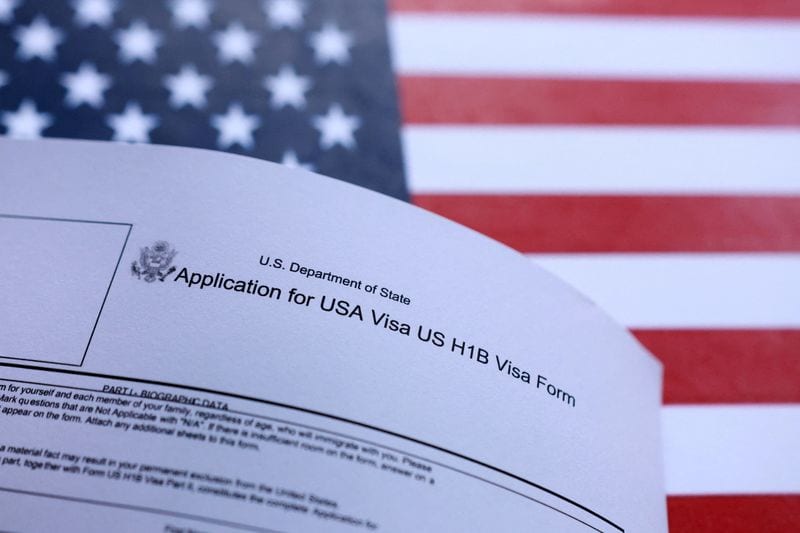
- A federal appeals court rejected the Trump administration's request to halt a ruling that blocked a $100,000 fee on new H-1B visas.
- The fee was intended to protect American workers and address national security concerns.
- The lower court judge ruled the fee constituted an unlawful tax and exceeded the president's authority.
- The H-1B visa program allows companies to hire foreign workers with specialized skills and a bachelor's degree.
A federal appeals court has rejected the Trump administration's attempt to pause a ruling that invalidated a $100,000 fee on new H-1B visas for highly skilled foreign workers. The 1st U.S. Circuit Court of Appeals in Boston stated that the government had not demonstrated it was likely to succeed in its challenge to the lower court's decision.
Earlier, a federal judge had ruled that the fee, imposed by the Trump administration, constituted an unlawful tax and exceeded the president's authority, violating the Constitution's separation of powers. The administration had argued that the fee was necessary to address national security concerns and protect American workers, and that it was a justified use of presidential powers related to foreign commerce and immigration.
The H-1B visa program, established by the 1990 Immigration Act, allows U.S. companies to hire foreign professionals with specialized skills, typically requiring a bachelor's degree or equivalent. The visas are generally valid for three years and can be renewed for an additional three years. A significant portion of these visas are allocated to computer-related jobs, though various sectors, including healthcare, finance, and education, utilize the program.
The lawsuit challenging the fee was brought by a coalition of Democratic state attorneys general. Separate challenges to the fee are still pending in other courts.