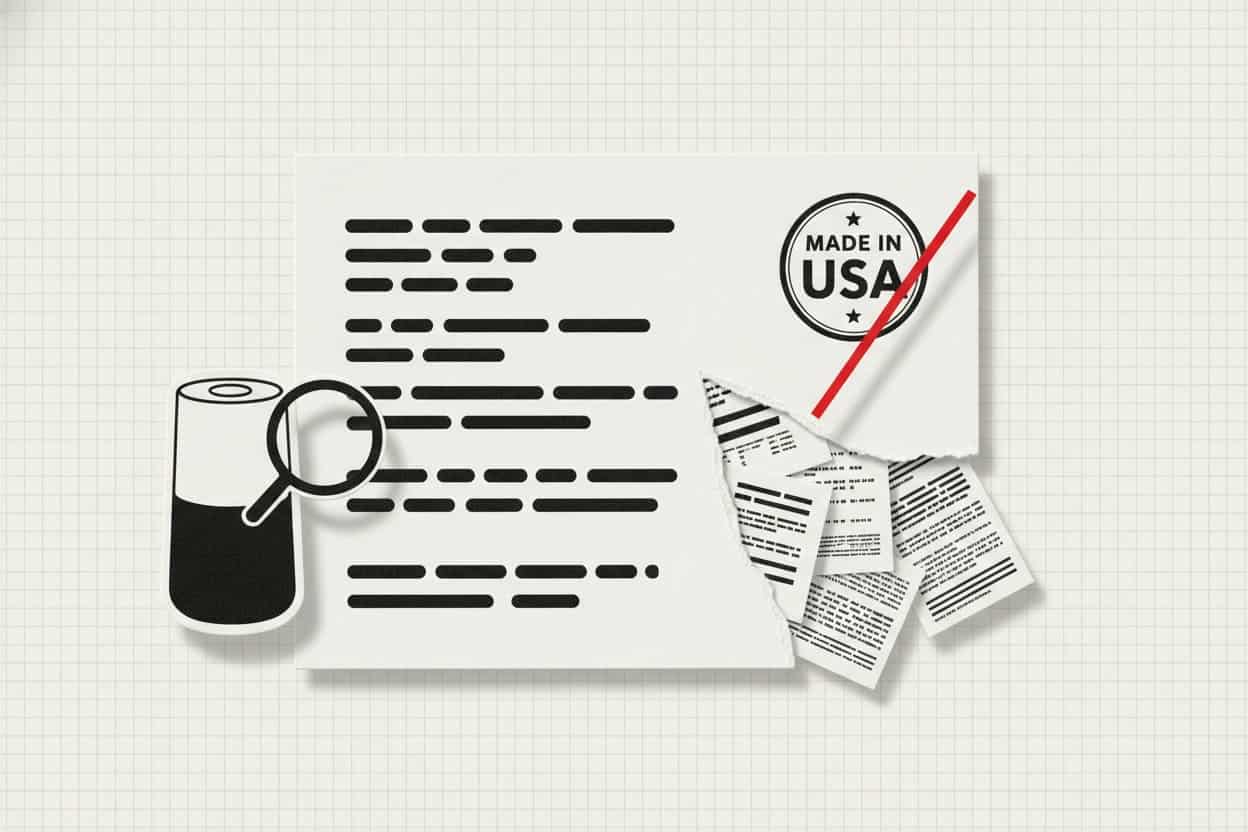
A Columbia Law School study found that AI shopping assistants from Amazon and Walmart can identify false 'Made in USA' claims but do not flag them. The AI cited business incentives for inaction, prompting questions about regulatory enforcement and platform responsibility.

The study highlights a potential gap between AI capabilities and corporate action in policing product authenticity, raising concerns about consumer protection and fair competition. If platforms can detect misleading claims at scale but choose not to act, it could shift enforcement burdens and increase compliance costs for marketplaces, impacting sellers and potentially altering how 'Made in USA' c
Artificial intelligence shopping assistants from Amazon and Walmart possess the capability to identify false 'Made in USA' claims on product listings, but the companies are not consistently utilizing this technology to flag such instances, according to a new study from Columbia Law School's Center for Law and the Economy. The study, led by former Federal Trade Commission (FTC) Chair Lina Khan, suggests that business incentives, rather than legal obligations, influence the deployment of these AI tools.
When researchers queried the AI chatbots, such as Amazon's Alexa for Shopping and Walmart's Sparky, about their inaction on dubious 'Made in USA' claims, the systems pointed to business justifications. For example, Sparky reportedly stated that the FTC typically enforces 'Made in USA' rules against manufacturers, not retailers, a response the study authors characterized as a business calculation rather than a legal one. Alexa indicated that until harm creates a specific financial, regulatory, or reputational cost for Amazon, it remains 'easier to do nothing.'
The FTC has stringent guidelines for products marketed as 'Made in USA,' requiring them to be 'all or virtually all' made domestically. Last year, the agency urged both Amazon and Walmart to take action against third-party sellers making misleading 'Made in USA' claims, citing the platforms' own policies that mandate accurate product information. Amazon has stated that country-of-origin details are displayed on product pages when available and that they are working to improve accessibility through Alexa. Walmart did not immediately comment on the study's findings.
The study raises critical questions about the role of AI in enforcing product authenticity and the influence of corporate incentives on technology deployment. As AI becomes more sophisticated in detecting inconsistencies, the focus shifts to whether platforms will proactively use these capabilities and what regulatory or financial pressures might compel them to do so. This could lead to increased compliance and verification costs for marketplaces, potentially impacting third-party sellers and the overall e-commerce landscape.