Key facts
- Yemeni government forces have advanced in the southern Taiz governorate, reclaiming several areas and strategic high ground.
- Jabal Bazel, a mountaintop that places Houthi supply lines within target reach, was among the areas retaken.
- The Chairman of the Presidential Leadership Council, Rashad al-Alimi, stated that Yemeni forces have regained the advantage and their deterrence capabilities.
- Government troops seized control of the strategic Qarfan mountain and secured its surroundings.
- Over 800 Houthi fighters' bodies were found in mountains and valleys after fighting.
- The number of internally displaced people in Yemen has risen to 169,000.
Yemeni government forces have advanced in the southern Taiz governorate, reclaiming several areas and strategic high ground, according to Al Jazeera. The gains include Jabal Bazel, a mountaintop that places Houthi supply lines within target reach. The Chairman of the Presidential Leadership Council, Rashad al-Alimi, stated that Yemeni forces have regained the advantage and their deterrence capabilities and are capable of restoring control over the entire country.
Fierce fighting intensified on Wednesday in southern Taiz province as government troops pushed into new areas shortly after seizing control of a strategic mountain southwest of the city, Arab News reported. Col. Abdul Basit Al-Baher, a Yemeni Army officer in Taiz, told Arab News that government troops had seized control of the strategic Qarfan mountain and secured its surroundings before advancing into Houthi-controlled areas across a chain of mountains near the southern province of Lahj, Bab Al-Mandab Strait and the Red Sea. He added that government forces had captured a number of Houthis, including a senior field commander.
As government troops advanced into the newly recaptured areas, they found the bodies of more than 800 Houthi fighters scattered across mountains and valleys, apparently killed in airstrikes or shelling by the Yemeni Armed Forces. Al-Baher said government forces had handed over the bodies of 860 Houthi fighters killed since the beginning of September to the International Committee of the Red Cross.
Fighting has intensified across several districts of Taiz province since early this month, when the Houthis launched their largest military offensive, resulting in their capture of large swathes of Yemen’s western coast, including Mokha and Bab Al-Mandab Strait. The Houthis faced stiff resistance as they attacked government-controlled areas in western and southern Taiz, seeking to seize strategic mountains to secure their gains along the Red Sea. Al-Baher said the Houthis had employed guerrilla warfare tactics and dispatched successive waves of fighters to the battlefields in an attempt to break through government defenses.
Yemeni government forces, including troops from several military regions and the Giants Brigades, said they had carried out drone strikes against Houthi gatherings, military reinforcements, vehicles and fighters on battlefields in Marib, Al-Bayda, Lahj and Al-Jawf. Footage released by the military showed drones striking Houthi positions and military vehicles.
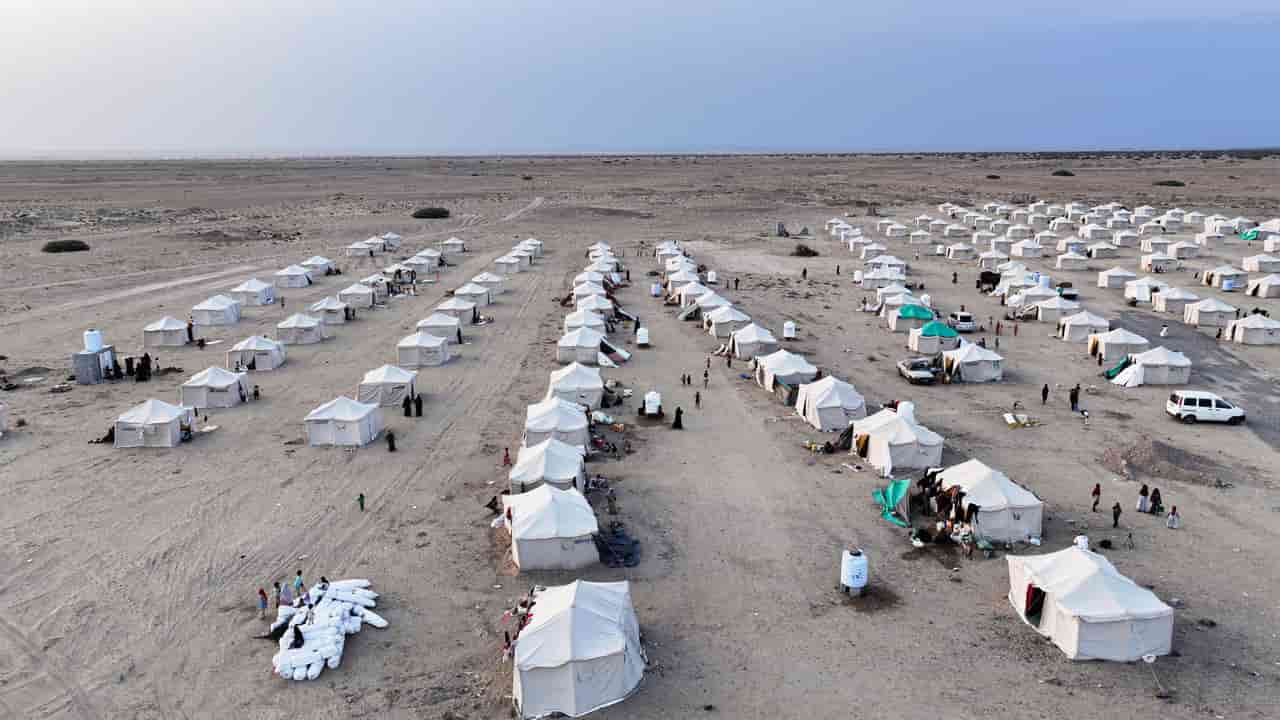
Meanwhile, the Executive Unit for the Management of Displaced Persons Camps, a government body responsible for managing internal displacement, said that the number of internally displaced people had risen to 169,000, up from 131,000 five days earlier, as fighting continued to force families to flee their homes. Local aid workers said the displaced were in urgent need of shelter, food and healthcare. Taiz continued to receive the largest number of displaced people, with 88,324 seeking refuge in the province, followed by Lahj with 39,375 and Aden with 15,003.
Fighting in Yemen intensified on Sunday as government forces claimed fresh gains against the Houthis in Taiz, state news agency Saba reported. Yemeni government forces recaptured positions overlooking the Jardad area in western Taiz and advanced toward Gail Bani Omar, the agency reported citing a military source. The source said government forces seized military equipment and inflicted heavy losses on the Houthis. Government aircraft also carried out strikes on Houthi positions, gatherings and vehicles in several parts of Taiz, including Dhubab, Al-Wazaiya and Haifan, according to the source. An airstrike on a Houthi gathering in the Afira area of Jabal Habshi district destroyed several military vehicles and detonated a stockpile of medium-weapons ammunition, killing at least 10 Houthi fighters, the source said. The latest fighting comes amid a wider escalation across Yemen, with government forces also conducting operations in Marib, Jouf, Al-Bayda and Al-Dhalea, according to the Yemeni presidency. President Rashad Al-Alimi has held talks with members of the Presidential Leadership Council, the prime minister, military commanders and provincial officials to assess developments on the various fronts. He said individual changes along the front lines would not alter the government’s objective of restoring state control across Yemen. The fighting has also triggered a major new displacement crisis inside Yemen. Yemen’s Ministry of Human Rights said on Sunday that 150 civilians had been killed and more than 200 wounded since Sept. 3 in fighting and attacks in Taiz, Hodeidah and Marib. The ministry said about 85,000 people had been displaced during the same period, while citing International Organization for Migration data showing that around 2,000 people had arrived in Djibouti as a result of the escalation. The ministry accused the Houthis of launching ballistic missiles, drones and other weapons on populated areas, displacement camps and civilian convoys. It also reported attacks on civilian and medical facilities, kidnappings, arbitrary detention, looting and alleged field executions.