Key facts
- US Vice President JD Vance described Iran's leadership as "very confused."
- Vance said a deal with Iran is possible if its leaders honor commitments to Washington.
- Washington's approach will be based on Iranian actions, not statements.
- Vance said Iran's leadership involves "a number of different constituencies."
- President Donald Trump stated that "a lot of progress" had been made in negotiations with Iran.
- US officials told the BBC that the two countries had agreed a framework of a deal, pending approval.
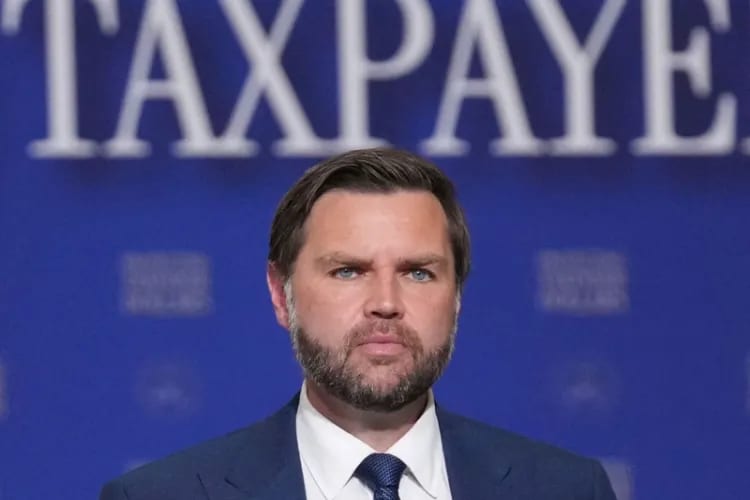
US Vice President JD Vance stated that a deal with Iran is possible if its leaders honor their commitments, while characterizing Tehran's political decision-making system as "very confused." In an interview with journalist Vince Coglianese, Vance indicated that President Donald Trump has made it clear that a deal could be struck if Iran "behaves," and that Washington's approach would prioritize Iranian actions over mere statements.
Vance elaborated on the complexity of Iran's leadership, noting the involvement of "a number of different constituencies," including hardliners, conservatives, moderates, and clerics. He also described Iran's new supreme leader as "very detached" and not actively involved in daily decision-making or public discussions regarding negotiations.
Speaking to Fox News, Vance described talks with Tehran as a complex and potentially "messy" process that would "take some time." He asserted that the US would employ military, economic, and diplomatic tools to secure a favorable outcome. Vance expressed confidence that oil prices would decrease and remain stable, that Iran would not acquire nuclear weapons, and that the US would emerge in a stronger position.
Earlier, President Trump had indicated that "a lot of progress" had been made in negotiations, stating that Iranian officials had reached out seeking talks. He suggested that Tehran would be "very smart" to reach a deal and that the situation would become clearer within 48 hours.
US officials also informed the BBC that a framework for a deal, known as a memorandum of understanding, had been agreed upon, pending approval from both Trump and Iran's leadership. This framework reportedly includes a 60-day ceasefire extension and the initiation of talks on Iran's nuclear program. Vance mentioned that negotiators were addressing "language points," including "the question of enrichment," and expressed optimism that the US believed Iran was negotiating in "good faith."
However, Iran's semi-official Tasnim news agency reported that the deal had not been finalized or confirmed. The White House had previously labeled a purported draft of a 14-point memorandum of understanding, which included lifting a US naval blockade and restoring non-military traffic through the Strait of Hormuz, as a "complete fabrication."