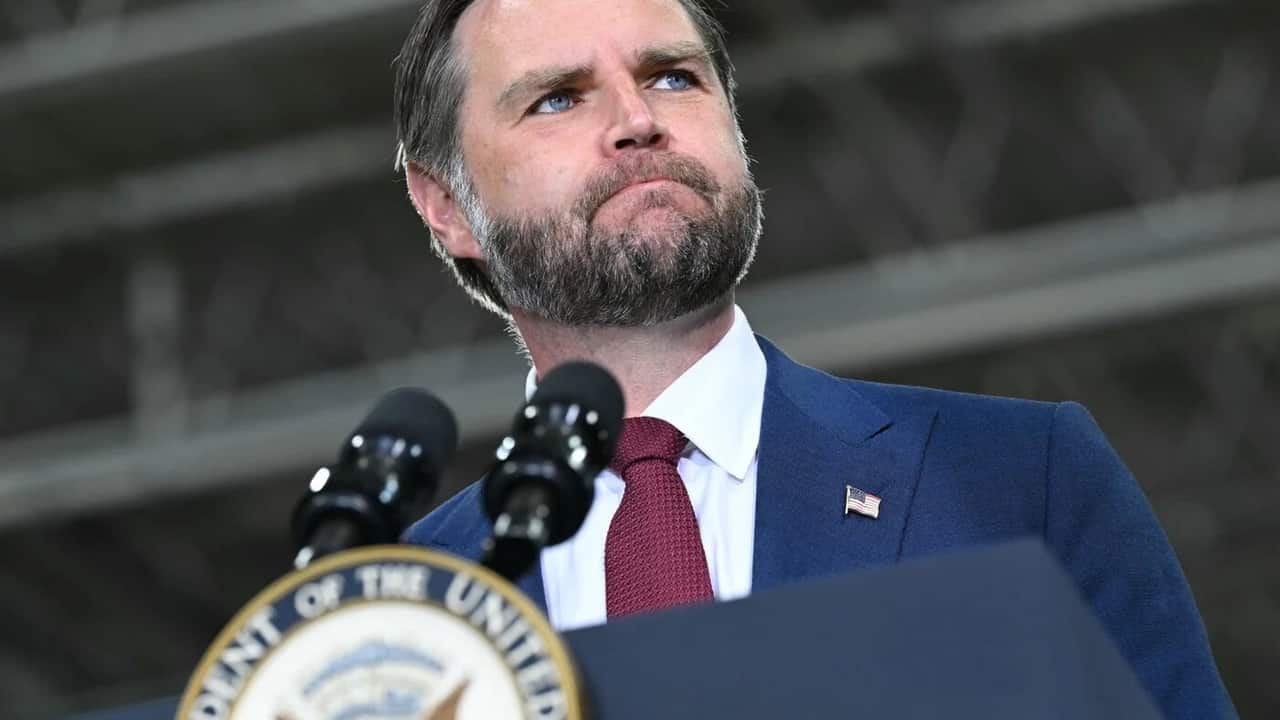
Former Republican presidential candidate Nikki Haley has called on Vice President JD Vance to clarify his position on Israel, urging him to "choose a side" between supporting the nation and his association with conservative commentator Tucker Carlson. Haley posted on social media that "Right is right. Wrong is wrong. In life, you must choose a side. You are either with the Tucker Carlson wing of the country or you are with the pro Israel wing of the country." She further quoted Nobel Prize-winning writer Elie Wiesel, stating, "We must always take sides. Neutrality helps the oppressor, never the victim."
Vance has sought to reassure pro-Israel Republicans, including President Trump, about continued U.S. support for Israel. However, his stance has been described as unclear due to previous criticisms. Vance told podcast host Joe Rogan in July that some within the Israeli government seek to "manipulate" and "change" U.S. public opinion regarding the war in Iran. He also reportedly lauded the U.S. relationship with Israel at a Republican Jewish Coalition summit, emphasizing its importance to the United States.
Vance has also faced backlash for his ties to Tucker Carlson, who has drawn criticism for hosting individuals with antisemitic views, including Nick Fuentes, a Holocaust denier. Vance has reportedly condemned antisemitism and mentioned Fuentes, describing him as someone "who really does hate Jews" and himself. Despite these efforts, Jewish Republicans have reportedly criticized Vance for not directly addressing his ties to Carlson during the RJC event.