Key facts
- Iran's parliament speaker stated the country must plan to overcome 'unjust sanctions.'
Iran's parliament speaker stated the country must plan to overcome 'unjust sanctions,' a day after U.S. Treasury Secretary Scott Bessent announced plans for the toughest sanctions ever imposed on Iran. Bessent urged China to support the sanctions, which he said could lead to the reopening of the Strait of Hormuz and lower energy prices.
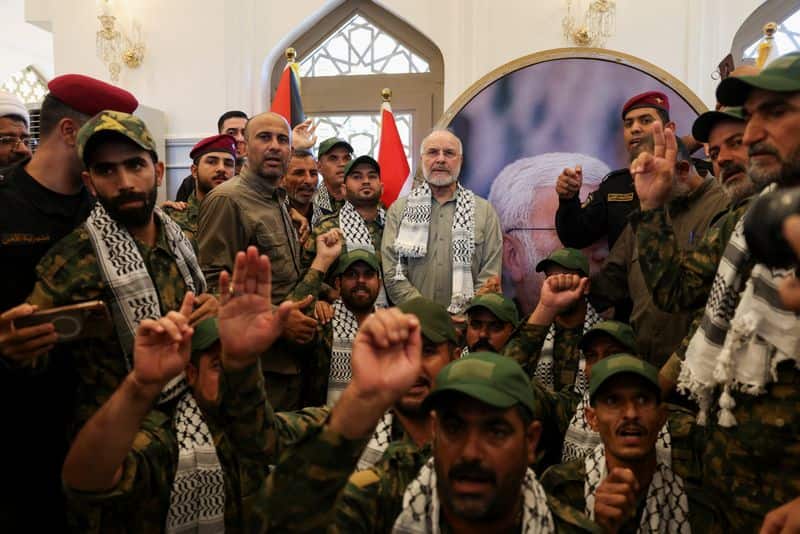
The escalating U.S. pressure on Iran, coupled with calls for international cooperation and Iran's defiant stance, highlights the ongoing geopolitical tensions in the Middle East and the potential for significant disruptions to global energy markets.
Iranian parliament speaker Mohammed Baqer Qalibaf stated that Iran must plan to overcome 'unjust sanctions,' a day after U.S. Treasury Secretary Scott Bessent announced what he described as the toughest sanctions ever imposed on Iran. Bessent said the measures, to be detailed soon, could lessen the need for further military operations.
Qalibaf, a key political figure and negotiator, accused the United States and Israel of waging economic and 'cognitive' warfare after concluding they could not win a direct military confrontation. He also called for stronger economic ties between Iran and Iraq, suggesting the use of their national currencies in trade to reduce reliance on the U.S. dollar.
Earlier, the U.S. had urged China to support its sanctions campaign against Iran, with Bessent highlighting potential benefits for China, such as lower energy prices and the reopening of the Strait of Hormuz. China, however, has indicated that sanctions and pressure do not help resolve the issue and has continued to import significant amounts of Iranian oil.
Pick the topics you care about. Get only what matters, on your cadence.