
Key facts
- US stocks closed higher on Thursday, recovering from early losses.
- The S&P 500 index bounced from a two-week low.
- The 10-year US Treasury yield reached a 24-year high of 5.33% before receding.
- The 30-year US Treasury yield hit a 24-year peak of 5.64% on Thursday.
- Fed Vice Chair Philip Jefferson indicated potential patience on future interest rate hikes.
- The two-year US Treasury yield fell following Jefferson's remarks.
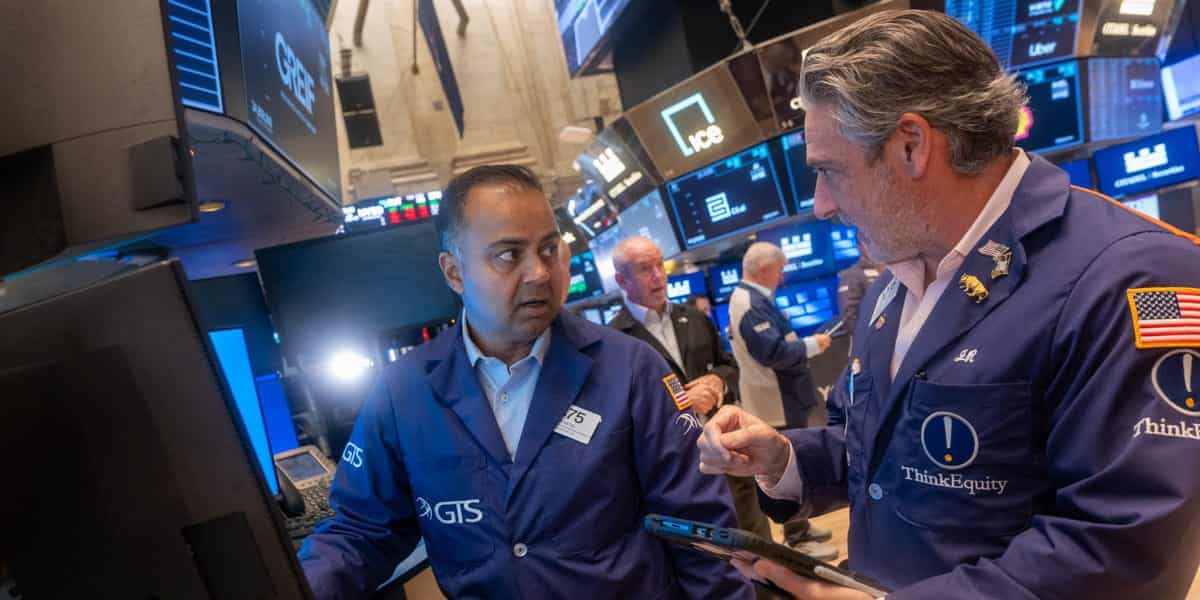
US stocks recovered from earlier losses to finish higher on Thursday, with the S&P 500 index rebounding from a two-week low. This market movement occurred as a global bond selloff reversed, causing US Treasury yields to recede from multi-decade highs.
The benchmark 10-year US Treasury yield had surged to 5.33%, its highest level since 2002, while the 30-year yield reached a 24-year peak of 5.64% on Thursday. Despite this bond market turmoil, US stocks have remained near all-time highs. The S&P 500 is up nearly 12% year-to-date and is only 2% below its all-time closing high, while the Nasdaq 100 has gained almost 20% year-to-date. In contrast, the Vanguard Total Bond Market ETF has fallen 5% this year.
Federal Reserve Vice Chair Philip Jefferson's comments suggesting the central bank might exercise patience before implementing further interest rate hikes contributed to a drop in the two-year US Treasury yield. Analysts noted that while high yields are typically detrimental to stocks by tightening financial conditions, the recent bond market moves, prior to the latest surge, had been more gradual. This steady increase allowed investors to adjust to the higher rate environment, according to Kriti Gupta, a global investment strategist at JPMorgan Private Bank. Mark Malek, chief investment officer of Siebert Financial, described the divergence between stocks and bonds as 'abnormal' and approaching 'extreme' levels.