Key facts
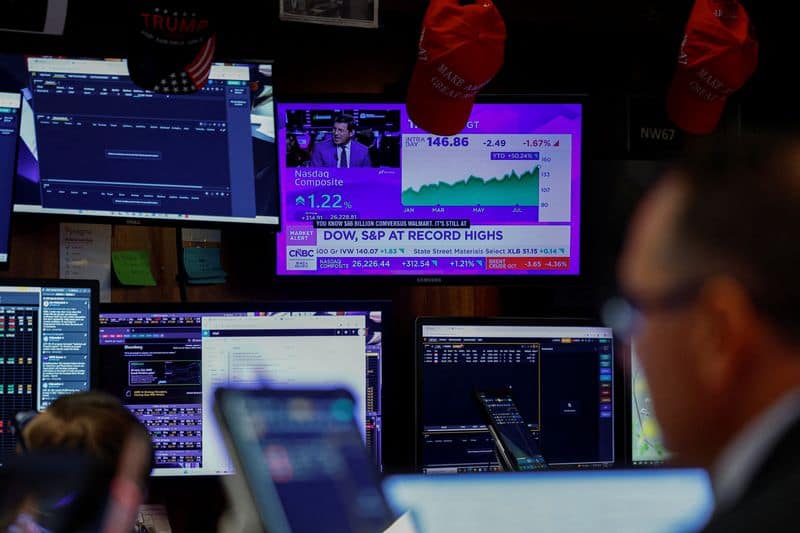
- The S&P 500, Dow Jones Industrial Average, and Nasdaq Composite reached record highs on Tuesday.
- Strong corporate earnings, particularly from AI and heavy equipment companies, fueled the rally.
- Easing oil prices and hopes for Middle East peace talks contributed to market gains.
- The S&P 500 is on track for nearly 50% earnings per share growth for the quarter.
- The 10-year Treasury yield has fallen to 4.63%, aided by lower oil prices.
- Valuations have moderated, with the S&P 500's forward P/E ratio at 20.4.
The U.S. stock market has reached new record highs, with the S&P 500 closing at a two-month high on Tuesday. This rally is underpinned by strong corporate earnings, particularly from companies involved in AI infrastructure and heavy equipment manufacturing, as well as a cooling in oil prices and easing geopolitical tensions.
Investors are optimistic that the current earnings season, which has surpassed expectations, will continue to support equities. The significant spending on AI-related infrastructure by major tech companies like Alphabet, Microsoft, Amazon, and Meta Platforms is boosting semiconductor firms and related industries. Despite a recent pullback in some high-flying AI stocks, the overall earnings growth for S&P 500 companies is projected to be robust.
Valuations have also become more attractive, with the S&P 500's forward price-to-earnings ratio decreasing. This moderation, coupled with strong fundamental support from earnings, suggests potential for further gains. However, rising Treasury yields remain a concern, as they can increase competition for stocks and raise borrowing costs, potentially hindering economic growth.
Market participants are monitoring the impact of Middle East tensions on oil prices and inflation, which in turn influences Treasury yields. Additionally, the upcoming U.S. midterm elections introduce a period of seasonal market weakness, and sentiment shifts around the AI trade could also pose a risk.