Key facts
- Three Republican-led US states are suing over the mailing of abortion drugs.
- Louisiana, Alabama, and Arkansas claim out-of-state providers mailing abortion pills create a 'public nuisance'.
- The states allege New York, California and Massachusetts aided this conduct through shield laws.
- Experts say the lawsuits are an unprecedented attempt to use public nuisance law to curb abortion access.
- About 91,000 abortions were provided in 2025 via telehealth to patients in states with total abortion bans.
Three Republican-led US states are employing a novel legal strategy to restrict access to abortion pills for their residents, even when those pills are obtained from out-of-state providers. Louisiana, Alabama, and Arkansas filed lawsuits last week, asserting that medical providers mailing abortion drugs across state lines constitute a "public nuisance." The states also contend that New York, California, and Massachusetts have facilitated this conduct by enacting "shield laws" designed to protect abortion providers from out-of-state legal repercussions.
Legal experts suggest these lawsuits are an unprecedented application of public nuisance law, typically used for environmental pollution or other public harms, to limit abortion access. They also represent the first direct challenge by abortion-banning states to the shield laws adopted by other states. This legal maneuver comes as anti-abortion groups and officials seek methods to counter the increasing use of telehealth for prescribing abortion drugs, particularly in states where abortion is banned.
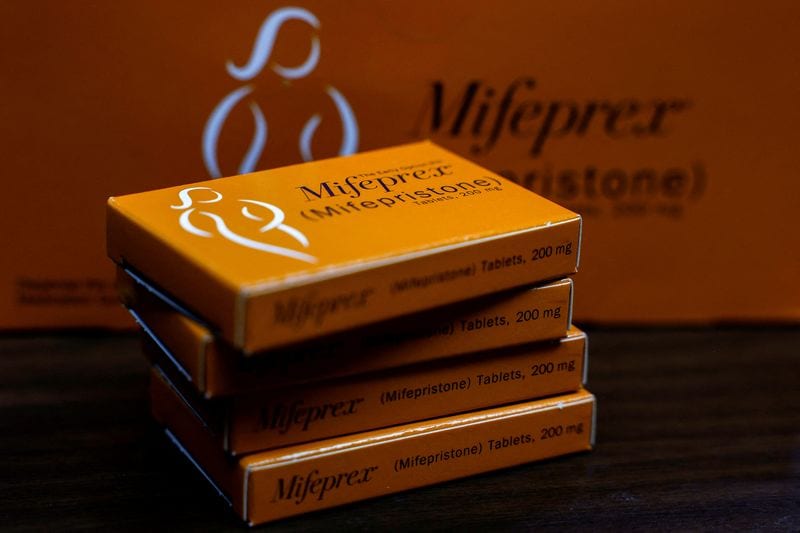
According to the Guttmacher Institute, a reproductive rights advocacy group, approximately 91,000 abortions were performed in 2025 via telehealth for patients residing in states with total abortion bans, an increase from 74,000 in 2024. Medication abortion, which involves a two-drug regimen of mifepristone and misoprostol, accounted for 65% of US abortions in 2023. In response to this trend, Republican-led states have pursued various legal actions, including suing doctors and challenging the federal approval of mifepristone. The Supreme Court previously declined to block the nationwide telehealth prescribing and mail delivery of mifepristone while a related case proceeds.
Public nuisance claims generally target activities that unreasonably interfere with public health and safety, such as blocking roads or polluting waterways. However, experts note that the current claims are unusual because they involve federally approved abortion drugs and focus on enforcing state abortion bans rather than direct public safety concerns. Linda Goldstein, senior counsel at the Center for Reproductive Rights, stated that these actions are not protecting residents from harm and deviate from typical public nuisance claims.
One of the new lawsuits was filed directly with the US Supreme Court, which has the discretion to hear disputes between states. The second lawsuit, naming nearly 30 individual medical practitioners and groups as defendants, was filed in Louisiana federal court. Both filings include a variety of other legal claims.