Key facts
- Virtual power plants (VPPs) aggregate small-scale electricity generation resources to support grid flexibility.
- Technologies like EVs, batteries, and smart appliances can be combined to create VPPs.
- The US Department of Energy is supporting VPP deployment to address rising energy costs and grid congestion.
- Vermont's Green Mountain Power (GMP) has seen its VPP become the state's largest power source.
- US VPP capacity is over 40 GW, with projections to reach 160 GW by 2030.
- Increased grid utilization by 10% could save consumers over $100 billion in the next decade.
- Virginia and Minnesota have launched VPP pilot programs with capacities of 450 MW and 200 MW, respectively.
- California's new legislation is expected to accelerate VPP rollout.
Virtual power plants (VPPs) are gaining traction across the United States as states and utilities seek innovative solutions to manage grid costs, enhance flexibility, and improve resilience. These systems aggregate distributed energy resources, such as smart thermostats, electric vehicles, appliances, batteries, and solar installations, allowing them to collectively deliver electricity to the grid when needed.
The US Department of Energy's Loan Programs Office is actively supporting the deployment of VPPs to make the national grid more adaptable, affordable, clean, and resilient, particularly as electrification increases. VPPs are seen as a key tool to address challenges like rising energy costs, interconnection delays, growing peak demand, and distribution system congestion.
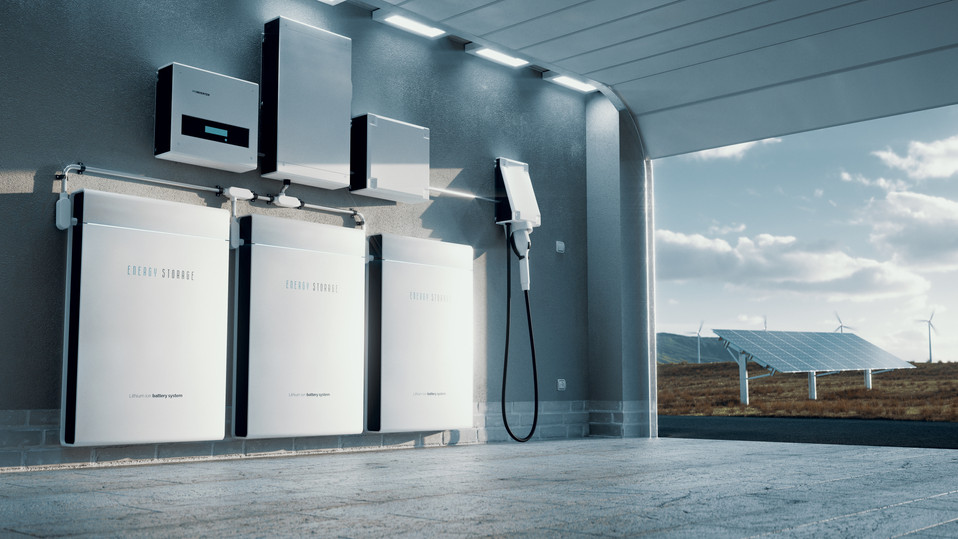
In Vermont, Green Mountain Power (GMP), the state's largest utility, has implemented a VPP initiative that utilizes home battery installations. This program, costing participants $55 per month over a 10-year lease, provides backup power during outages and contributes to grid stability. The initiative has become Vermont's largest power source, with over 5,500 residents invested in similar battery systems and GMP aiming to eliminate power outages by 2030.
Artificial intelligence (AI) is also a significant driver for VPP growth, as the technology sector's demand for power to run data centers intensifies. While tech companies are investing in large-scale power generation projects, VPPs offer a more immediate solution for power needs.
According to an internal analysis by Wood Mackenzie, the US currently has over 40 GW of VPP capacity. A 2025 Department of Energy report projects this could increase to 160 GW by 2030, representing about one-fifth of the country's anticipated peak energy demand. Ian Magruder, head of the industry-led Utilise Coalition, suggests that a mere 10% increase in grid utilization could save consumers over $100 billion in the next decade. AI-driven grid analysis can optimize this utilization by planning for actual demand rather than theoretical peaks, potentially reducing the need for new transmission infrastructure.
Several states are introducing legislation to encourage VPP development. Virginia has enacted a 450-MW VPP pilot program, and Minnesota has committed to 200 MW. California Governor Gavin Newsom recently signed energy-affordability legislation, including policies expected to accelerate VPP rollout, despite previous opposition from some major utilities. These programs can be deployed much faster than traditional energy projects.