Key facts
- China is seeking to revive a $6 billion-a-year trade in US liquefied natural gas.
- A 15% Chinese tariff imposed in February 2025 has blocked American gas shipments.
- Iranian missiles destroyed 17% of Qatar's LNG export capacity in March.
- China has increased LNG imports from Australia, Southeast Asia, Russia, and Canada since the US tariff was imposed.
- China Gas Holdings signed a 20-year deal with Venture Global on September 14 for 500,000 metric tons of LNG a year, starting in 2030.
- US and China are discussing a tariff reduction package ahead of President Xi Jinping's September 24 visit.
The US is aiming to revive a significant liquefied natural gas (LNG) trade with China, which has been hampered by a 15% Chinese tariff imposed in February 2025. This tariff effectively halted American LNG shipments to China, which previously constituted 12% of China's total imports in 2021, valued at $6.2 billion.
The disruption to US LNG exports to China occurred in the wake of Iranian missile strikes on March 18-19 that destroyed two of Qatar's 14 LNG production trains and a gas-to-liquids facility. This attack reduced Qatar's export capacity by approximately 17%, leading to an estimated annual revenue loss of $20 billion and forcing QatarEnergy to declare force majeure on long-term contracts. Repairs are expected to take up to five years. A subsequent explosion on June 22 during restart operations killed at least 13 workers, which Qatar attributed to a technical malfunction.
In response to its own supply shortfall, Qatar has been purchasing US spot LNG cargoes to meet its delivery commitments to countries like Japan, South Korea, India, Bangladesh, and Taiwan. Meanwhile, China has diversified its LNG sources, with Australia supplying 36% of its imports from January to July, Southeast Asia 20%, Russia 12%, and Canada 4%, while US cargoes accounted for only 0.2% during the same period, according to Banchero Costa data.
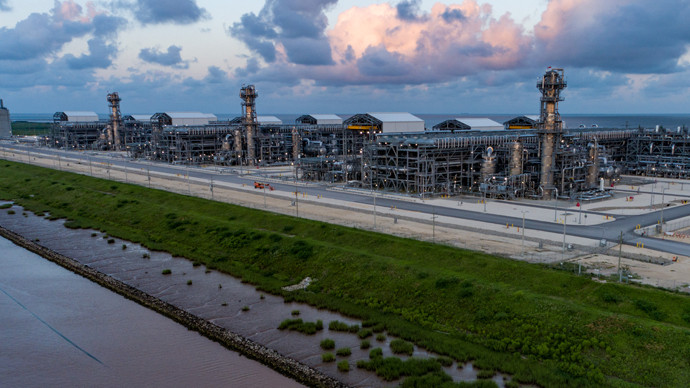
Despite the existing tariff, China Gas Holdings signed a 20-year deal with US producer Venture Global on September 14 for 500,000 metric tons of LNG annually, with deliveries commencing in 2030. This deal, which covers less than 1% of China's projected 2025 LNG imports, has been interpreted by Washington as a potential precursor to a tariff resolution. Chinese companies already hold contracts for nearly 25 million tonnes a year of US LNG offtake signed since 2018.
However, major forecasters like S&P Global, Wood Mackenzie, and JPMorgan have reduced China's LNG demand outlook for the early 2030s by 14 to 22 million tons, citing a shift towards piped gas and renewables. The US and China are reportedly discussing a broader tariff reduction package, which could restore the LNG trade to its former value, but within a significantly altered market landscape characterized by lower Chinese demand and established alternative supply relationships.