Key facts
- U.S. health regulators will review scientific evidence on testosterone use in menopausal women on Thursday.
- There is no FDA-approved testosterone therapy for women, despite off-label use for hypoactive sexual desire disorder (HSDD).
U.S. health regulators will review scientific evidence on testosterone use in menopausal women on Thursday, examining its benefits, risks, and role in female health. The Food and Drug Administration (FDA) meeting comes as more women turn to the hormone for menopause symptoms, despite no FDA-approved testosterone therapy for women.
The FDA's review could lead to the development of approved testosterone therapies for women, potentially changing treatment standards for menopause symptoms and impacting pharmaceutical companies involved in hormone replacement therapy.
U.S. health regulators are set to review the scientific evidence surrounding the use of testosterone therapy in menopausal women on Thursday. The U.S. Food and Drug Administration (FDA) will examine the benefits, risks, dosing, and overall role of testosterone in female health, incorporating perspectives from medical professionals and patients. This public meeting comes as an increasing number of women are seeking testosterone to alleviate menopause symptoms, particularly low sexual desire (hypoactive sexual desire disorder, or HSDD).
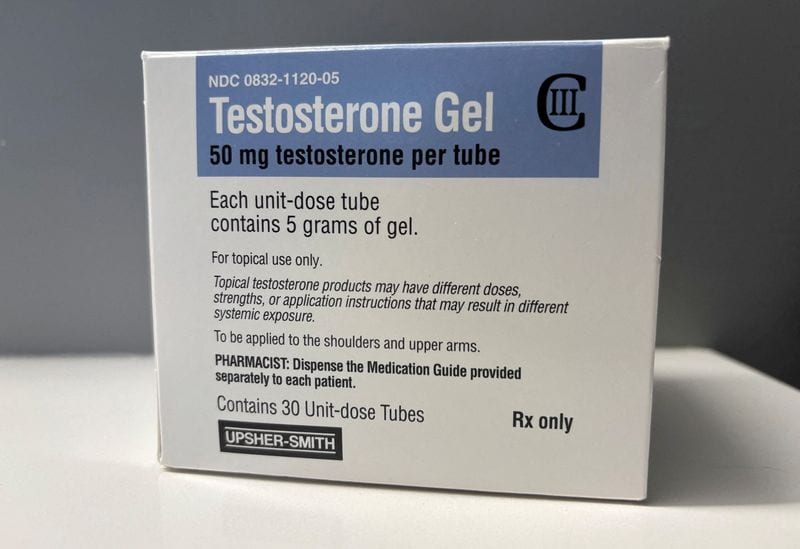
Currently, there are no testosterone therapies specifically approved by the FDA for women. Clinicians often prescribe low doses of products intended for men, such as AbbVie's AndroGel and Keenova Therapeutics' Testim, or utilize compounded formulations. This lack of a female-specific product presents practical challenges for doctors, according to Dr. Diana Tordoff, an instructor at Stanford University's obstetrics and gynecology department. An approved product could offer standardized dosing, labeling, and safety monitoring, potentially improving insurance coverage.
However, some experts, like Dr. Stephanie Faubion, director of Mayo Clinic's Center for Women's Health, emphasize that key questions remain unresolved, particularly regarding long-term safety. Other countries, including the United Kingdom, Australia, New Zealand, and South Africa, have already approved or licensed testosterone products for women. The FDA's call for public comments ahead of the meeting drew numerous submissions from women who reported improvements in libido, energy levels, and overall quality of life while using testosterone.
Specialists note that while interest in testosterone for menopausal women has surged, fueled by social media claims about benefits for energy, muscle mass, bone health, and cognition, the strongest evidence supports its use for HSDD. Dr. Karen Adams, director of Stanford Medicine's Program in Menopause and Healthy Aging, stated that the FDA has reviewed testosterone for women multiple times but has not approved it due to insufficient long-term safety data and concerns about cardiovascular and breast cancer risks. The FDA has approved alternative treatments for HSDD, such as Sprout Pharmaceuticals' Addyi and Cosette Pharmaceuticals' Vyleesi. Testosterone is generally not advised for women with a history of breast cancer due to its potential conversion to estrogen, which can promote certain cancers. Excessive exposure can lead to side effects like acne and increased hair growth, with rarer, potentially irreversible effects including voice deepening and hair loss. Studies indicate testosterone therapy is generally considered safe for men with medically diagnosed low testosterone levels when properly managed by a physician. Stanford's MIX-T pilot study, led by Tordoff and Adams, is currently examining the effects of low-dose testosterone on vaginal health in postmenopausal women, with results anticipated within two years.